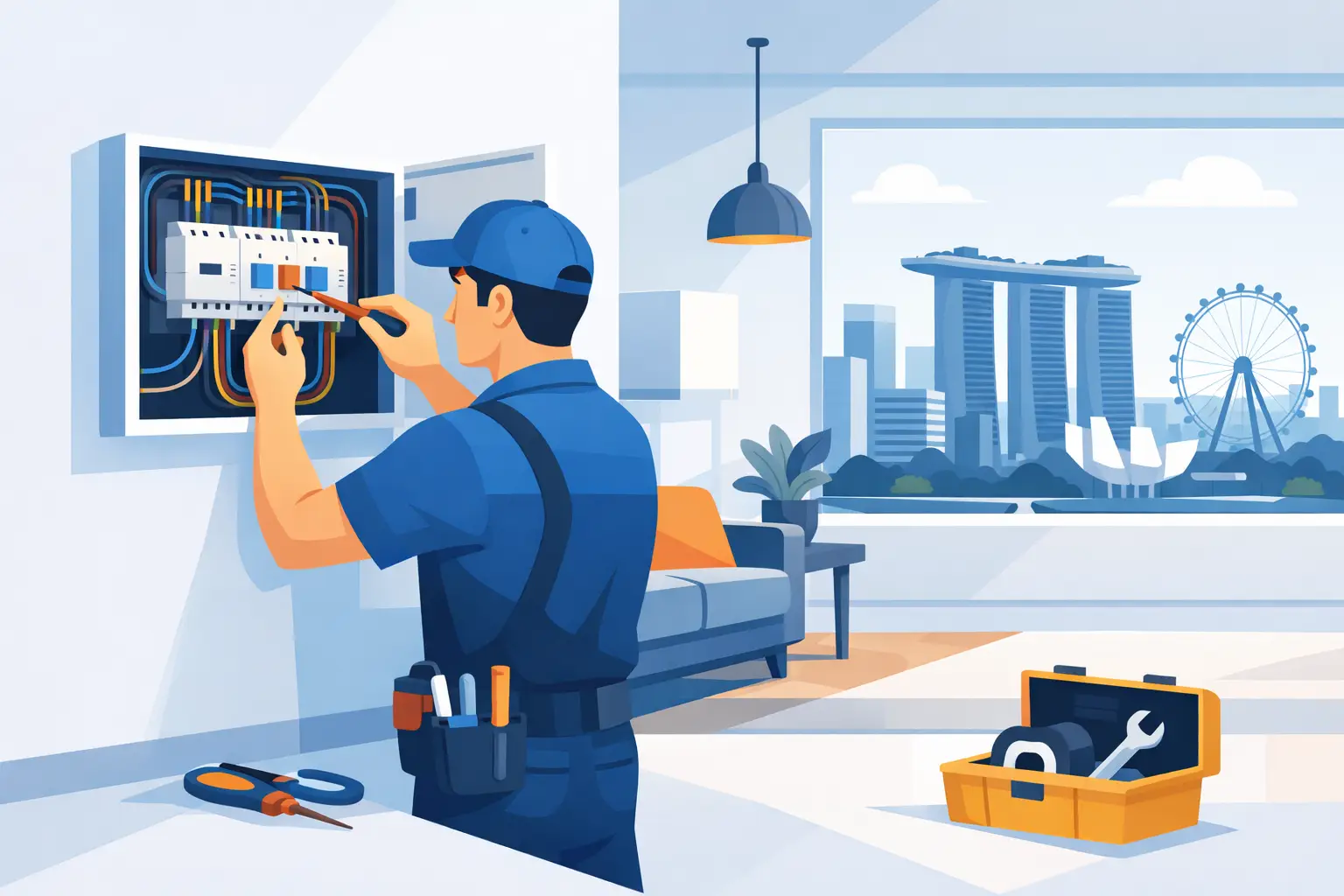
A DB box trips at 10pm, the kitchen goes dark, and the first worry is usually not the lights. It is whether there is a dangerous electrical fault hidden behind the wall, and whether the repair bill will suddenly become unreasonable. This DB box fault repair example shows how a proper diagnosis should work in a Singapore HDB flat or Condo unit: isolate the cause first, explain the finding plainly, then repair only what actually needs repair.
A distribution board, commonly called a DB box, is not a place for guesswork. Resetting a tripped switch repeatedly may bring power back for a few minutes, but it can also conceal a faulty appliance, water-damaged socket, loose connection, overloaded circuit or failing protective device. The correct fix depends on the test result, not on which component looks old.
The call-out: kitchen circuit keeps tripping
A homeowner in a four-room HDB flat reported that the kitchen power supply tripped whenever the rice cooker and microwave were used close together. The lights stayed on, but the power points serving the kitchen stopped working. They had already reset the relevant breaker twice. Each time, the circuit held briefly before tripping again.
That pattern matters. When only one circuit trips, the problem is often localised to the appliances, power points or wiring on that circuit. When the main safety switch trips and the whole flat loses supply, the possible causes are broader and require more careful testing.
Before any work began, the homeowner was asked to switch off and unplug the affected kitchen appliances. This does not prove that an appliance is at fault, but it prevents further loading while the issue is checked. No one should open a live DB box cover, touch internal wiring or replace a breaker based on an online video. Electrical work in Singapore must be handled by the appropriate licensed electrical worker.
DB box fault repair example: finding the real cause
The inspection began at the DB box, where the circuit breakers and residual current protection were checked for obvious signs of heat damage, burning smell, moisture or loose fittings. There were no visible scorch marks and no damaged breaker handle. That was reassuring, but not a diagnosis.
The electrician then isolated the kitchen circuit and tested the circuit condition with suitable equipment. The wiring itself tested satisfactorily. Attention moved downstream to the connected power points and appliances.
The actual cause was a worn extension lead behind the kitchen top. Its cable insulation had been compressed against the cabinet backing and exposed to ongoing heat and humidity. The extension lead supplied a microwave, rice cooker and kettle through a multi-plug adaptor. There were two issues: the damaged lead created an intermittent fault risk, while the combined appliance load was unsuitable for that arrangement.
The DB box had done its job. The breaker was not the item that needed replacing. Replacing it without checking the circuit would have cost the owner money and left the unsafe extension lead in place.
The repair involved removing the damaged extension lead, checking the nearby power point for heat damage, and advising the owner to use properly located power points rather than stacking high-wattage kitchen appliances onto one adaptor. Once the faulty item was removed and the circuit was retested, the breaker remained stable under normal use.
This is the difference between a real repair and a quick reset. The goal is not merely to restore power. It is to identify why the protective device operated so it does not become a repeat problem.
What a transparent DB box repair quote should cover
Electrical faults do not always have one fixed price because the fault may be in an appliance, a socket, concealed cable, DB box component or water-affected area. However, that does not give a contractor licence to be vague.
A clear quote should separate the attendance and diagnostic work from any replacement part or repair work recommended after testing. If a circuit breaker, residual current device, socket outlet or section of cable needs replacement, you should be told why. Ask what test result or physical evidence supports the recommendation.
For a simple fault caused by a damaged appliance lead or overloaded adaptor, the repair can be relatively contained. If testing points to concealed cable damage in a solid HDB wall, access work may be more involved. In a Condo unit, management rules may also affect work timing, contractor registration and access to electrical risers. A professional should explain these practical limits before starting, not present them as surprise charges afterwards.
Be cautious if someone immediately says the full DB box must be changed simply because a circuit trips. Older DB boxes can require upgrading, especially where protective devices are obsolete, damaged or unsuitable. But an upgrade should be based on the condition of the installation and proper testing, not used as a default sales pitch.
Common causes seen in Singapore homes
Singapore’s heat and humidity are hard on household fittings, especially in kitchens, service yards and bathrooms. Water vapour, slow leaks and condensation can affect sockets, appliance cables and connections over time. A leaking kitchen sink cabinet is not only a carpentry problem when water reaches a nearby power point or appliance connection.
Overloading is another common cause. New BTO kitchens may look tidy, but modern households often add air fryers, coffee machines, microwaves, induction cookers and water dispensers to the same small area. A multi-plug adaptor can be convenient for low-load chargers, yet it is not the right answer for several heat-producing appliances.
In older HDB flats, previous renovation work can also complicate fault finding. A power point may have been added, shifted or connected poorly years earlier. Concealed wiring cannot be assessed by appearance alone. Testing is what separates a faulty socket, a damaged cable and a tripping appliance.
What to do while waiting for help
If a breaker trips once, switch off or unplug the appliances on that circuit before attempting a single reset. If it holds after the appliances are removed, leave the suspect appliance unplugged until it is checked. If the breaker trips again with everything unplugged, stop resetting it and arrange professional diagnosis.
Treat burning smells, crackling sounds, discolouration around a socket, a hot DB box cover, water near electrical fittings or repeated whole-flat tripping as urgent warning signs. Keep people away from the area. Do not dry a wet socket with a hair dryer, tape over a damaged cable or force a breaker to stay on.
For tenants, report the issue to the landlord or managing agent promptly, especially if there is visible water damage or a fitting supplied with the unit. For landlords and property agents, a documented diagnosis helps establish whether the issue is ordinary wear, an appliance problem or an installation defect before a new tenant moves in.
FAQ: Is a tripping breaker always a DB box problem?
No. The DB box is often responding correctly to a fault elsewhere. A damaged appliance, overloaded adaptor, wet socket or wiring fault can cause the trip. Replacing the breaker first may solve nothing.
FAQ: Can I reset the DB box myself?
You may reset a tripped breaker once after switching off and unplugging the affected appliances, provided there is no burning smell, water exposure or visible damage. If it trips again, do not keep trying. Repeated resets can worsen a developing fault.
FAQ: Who is responsible in an HDB flat or Condo unit?
It depends on where the fault sits and who owns the affected item. Internal wiring and fittings within a flat are generally the owner’s responsibility, while common-property issues may fall under the Town Council or MCST. A diagnosis is the sensible first step before assigning blame or authorising unnecessary work.
A good electrical repair should leave you with power restored, a clear explanation and no lingering doubt about what was changed. If your DB box keeps tripping, send clear photos of the DB box, the affected socket or appliance, and any visible damage by WhatsApp to HRD Professional Handyman for a fast, transparent assessment and upfront quote before work starts.
0 Comments