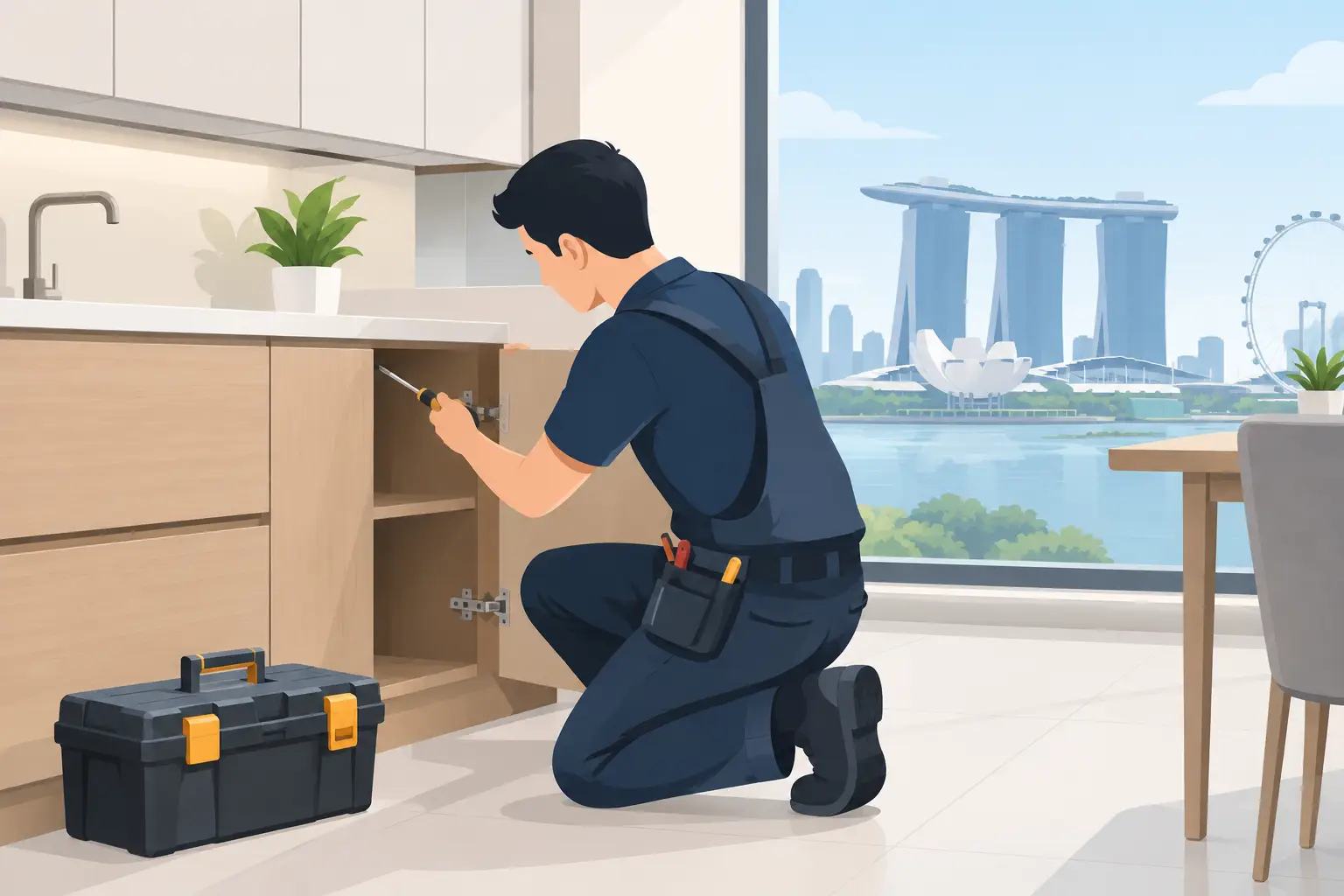
A swollen cabinet base under the kitchen sink is not automatically a full kitchen renovation job. In many HDB flats and Condo units, the damage is limited to the lower carcass, plinth, back panel or one side board. So, are cabinet repairs worth it? Very often, yes – provided the leak is stopped first and the remaining cabinet structure is still sound.
The expensive mistake is replacing every cabinet because one wet section has rotted. The equally costly mistake is covering damaged wood with a new laminate sheet while moisture continues to spread behind it. A proper assessment separates a repairable localised problem from a cabinet system that has reached the end of its service life.
Are Cabinet Repairs Worth It for Water Damage?
Singapore kitchens take a beating from humidity, daily cooking steam and small leaks that go unnoticed beneath the sink. Particleboard and MDF cabinet carcasses are particularly vulnerable. Once water enters an exposed edge, the board swells, loses strength and can crumble around hinges or screws.
A fractional repair is worth considering when the damage is contained. For example, the sink cabinet floor may be soft, but the cabinet sides, rear panel and neighbouring units remain firm. In that case, replacing the affected base panel, lower side section and plinth can restore the cabinet without disturbing the kitchen top, upper cabinets or full run of doors.
This is usually far less disruptive than a full replacement. There is no need to remove every cabinet, coordinate extensive hacking work or live without a usable kitchen for weeks. For landlords preparing a unit between tenancies, or families who need the kitchen functioning quickly, that matters as much as the price.
However, repair only makes sense after the source of water is dealt with. A slow leak from the sink trap, waste pipe, water tap connection or washing machine hose will destroy new boards just as easily as old ones. The correct order is simple: trace the leak, rectify it, dry the area, then rebuild the damaged cabinet section.
When a Targeted Cabinet Repair Makes Financial Sense
The strongest case for repair is a cabinet that is structurally healthy apart from one clear problem area. This is common under a kitchen sink, beside a dishwasher, near a water dispenser line or at the bottom of a tall cabinet where mopping water has repeatedly entered.
A good handyman should check more than the visible blistering. The job needs an inspection of the internal side panels, shelf supports, door hinge screw holes, rear board and adjacent cabinet units. Surface laminate can look acceptable while the board behind it has already softened.
Targeted repairs are often sensible in these situations:
- The damage is limited to one or two lower cabinet modules.
- Cabinet doors and drawer fronts are still straight, usable and worth retaining.
- The kitchen top is stable and does not need to be removed to access the affected section.
- The cabinet layout is otherwise practical, with no plan for a full renovation soon.
- A leak or moisture source can be permanently rectified before new material is fitted.
For many HDB kitchens, replacing only rot-affected boards can save thousands compared with engaging an interior designer for a complete kitchen overhaul. It also avoids replacing serviceable doors, handles, drawers and upper cabinets simply because the sink base failed.
Matching matters, of course. A repair may use a close laminate match rather than an invisible factory-perfect finish, especially for older cabinets where the original laminate is discontinued. In a concealed sink cabinet, most homeowners prefer a durable, neat repair over paying renovation-level pricing to chase an exact colour match. Where an exposed panel is involved, the options should be explained clearly before work starts.
When Full Replacement Is the Better Call
Honest advice sometimes means saying no to a patch repair. If water damage has travelled across several cabinets, weakened the floor supports, affected the kitchen top support or caused persistent mould and odour, replacing one panel may only delay a larger failure.
Full replacement may be more sensible when multiple doors no longer align, hinges have pulled out repeatedly, the carcass is soft across several sections, or the cabinet has suffered termite damage. The same applies where the layout itself is no longer working for the household and major electrical or plumbing changes are planned.
Be careful with a sink cabinet that appears to be holding the kitchen top. Some kitchen tops are properly supported by surrounding cabinets and wall brackets; others rely heavily on the cabinet carcass below. Removing damaged sections without assessing the load can cause cracking, movement or damage to the top. This is not a job for a quick nail-and-glue patch.
For older resale flats, there is another practical consideration: repairs can reveal hidden issues. A cabinet may conceal poor pipe routing, old flexible hoses, unsealed gaps around pipes or previous water damage that was simply painted over. A proper quote should identify what is visible, explain any likely additional work, and avoid pretending that concealed defects can be priced with certainty before inspection.
What a Proper Cabinet Repair Should Include
A durable repair is not just about installing a new board. The damaged material must be cut back to solid, dry sections. Fitting new board against wet, swollen particleboard leaves a weak joint and gives moisture somewhere to remain trapped.
The replacement material should suit the location. Under-sink areas need moisture-resistant options and properly sealed exposed edges. Pipe openings should be neat but not oversized, and the cabinet base should be protected from minor future drips. If the plinth is damaged, replacing it is often worthwhile because it closes the gap at floor level and improves the finished appearance.
The installer should also confirm that doors open and close correctly after the work. Cabinet hinges may need adjustment after a carcass panel is replaced. A crooked door is not always a door problem – it can be a sign that the cabinet box is no longer square.
Clear pricing is part of a proper job too. Ask what is included: removal of rotten board, replacement material, laminate finishing where needed, plumbing access, disposal and transport. Vague quotations are where unpleasant add-ons often appear. A transparent contractor will state the repair scope and flag the factors that could change it, such as hidden rot discovered after the base is opened.
Practical Checks Before You Book
Do not keep storing cleaning products in a damp sink cabinet while deciding what to do. Empty the cabinet, place a dry tissue around the pipe joints, and check again after running water and draining the sink. A tissue test can reveal a slow drip that is otherwise easy to miss.
Take clear photographs in daylight: one wide shot of the whole cabinet, close-ups of swollen or crumbling boards, the cabinet floor, pipes, hinges and nearby cabinets. If the cabinet door is misaligned or the kitchen top has moved, photograph that as well. These images allow a repair specialist to advise whether a fractional repair is likely and give a more meaningful preliminary quote through WhatsApp.
For Condo units, routine internal cabinet repairs generally do not involve structural work, but check your MCST requirements if contractors must use loading bays, lifts or restricted working hours. In HDB flats, the cabinet and internal plumbing are normally the owner’s responsibility, while common external pipe issues may require different reporting. If water is entering from a shared pipe or external source, solve that responsibility question before replacing your cabinetry.
Can a rotted cabinet base be repaired without changing the kitchen top?
Often, yes. If the kitchen top is stable and there is enough access, the damaged base can be removed and rebuilt in sections. The exact method depends on how the sink, pipes and cabinet sides are constructed. An inspection prevents unnecessary removal of a sound kitchen top.
Will cabinet repair stop mould?
Replacing wet, decayed boards helps, but mould will return if the leak, condensation or poor ventilation remains. The affected area must be dried and the moisture source rectified. If there is a strong musty smell or widespread black staining, ask for the surrounding sections to be checked rather than repairing only the most visible spot.
Is it worth repairing cabinets in a rental unit?
Usually, yes, when the repair protects the property and gets it ready for the next tenant quickly. A targeted under-sink repair is often more practical than replacing a whole kitchen that is otherwise functional. Keep records and photographs, particularly where the damage may relate to a leak or tenant use.
If your cabinet is swelling, sagging or turning soft near the sink, do not wait for the damage to spread into the next module. Send HRD Professional Handyman clear photos on WhatsApp for a fast, transparent assessment and quote. If a fractional repair can save your kitchen and your budget, that is the option worth taking. If replacement is genuinely safer, you should be told that plainly before spending a dollar.


0 Comments