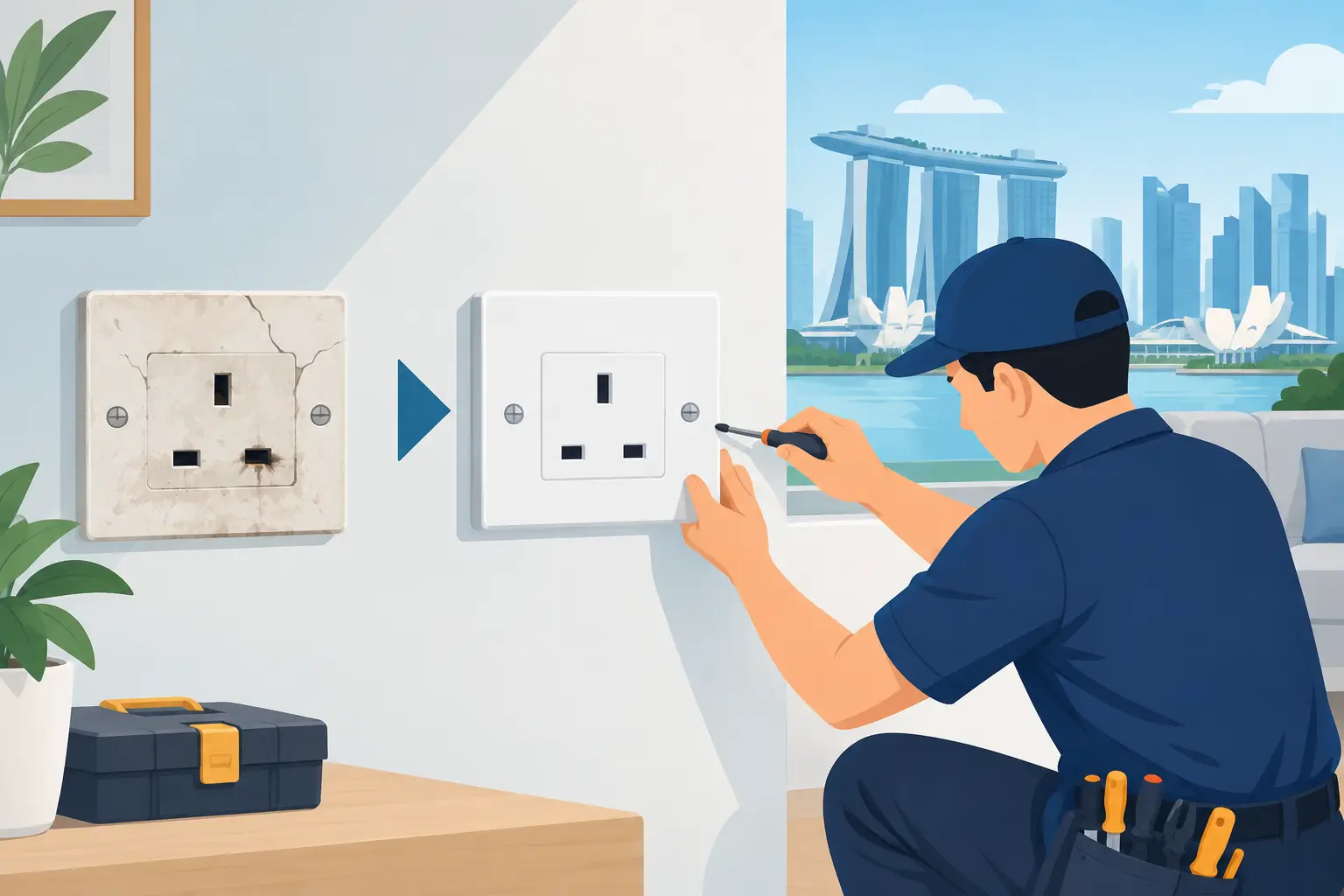
A plug that slips out of the wall socket, a faceplate that feels warm after charging a mobile phone, or a brown mark around the socket is not a minor annoyance to put off until the weekend. If you are asking when should sockets be replaced, the practical answer is: replace them before visible wear becomes a shock, fire or power-trip problem. In Singapore’s humid climate, ageing fittings and overloaded extension leads can turn a small electrical fault into an urgent call-out.
When should sockets be replaced?
A wall socket should be replaced when it is damaged, loose, overheating, unreliable or no longer suitable for how the circuit is being used. A socket can look acceptable from the front while its terminals behind the plate have loosened, corroded or overheated. That is why the signs matter more than its age alone.
For a newer BTO flat, a socket may not need replacement for many years. However, poor installation, repeated heavy use, renovation damage or moisture can shorten its life. In older HDB flats, landed properties and rental units where fittings have seen decades of use, proactive replacement is often cheaper and safer than waiting for a failure.
Do not keep testing a suspect socket by plugging appliances in and out. Switch off the relevant circuit at the distribution board if it is safe to do so, stop using the socket and arrange for proper electrical checking. Electrical works should be handled by a qualified professional, especially where wiring, circuit protection or a distribution board is involved.
Warning signs you should not ignore
The socket is warm, smells burnt or shows discolouration
A socket faceplate should not become hot during normal use. Slight warmth from a charger itself is one thing; heat at the wall outlet is another. Brown staining, melting plastic, scorch marks or a burnt smell can indicate a loose connection, an overloaded circuit or damaged wiring behind the socket.
Turn off the power and do not use that socket again until it has been inspected. Replacing only the faceplate may not solve the problem if heat has damaged the cable, terminal or back box.
Plugs are loose or fall out easily
A plug should fit firmly. If it droops, slips out, sparks when moved, or only works when held at a certain angle, the socket contacts may be worn. This is common in heavily used kitchen sockets, living room TV points and rental units where plugs have been changed frequently.
A loose fit creates poor contact. Poor contact creates resistance, and resistance creates heat. It is a straightforward fault that can become costly if ignored.
There are cracks, chips or exposed internal parts
A cracked socket plate is more than a cosmetic defect, particularly in homes with children or pets. Replace it if the plate is broken, the shutter is damaged, screw holes no longer hold securely, or you can see the back box or internal wiring.
In an HDB flat, solid concrete walls make a secure mounting especially important. A socket that has pulled away from the wall may need more than new screws. The back box, wall plugs or concealed wiring route may need assessment before it is fixed properly.
The socket sparks, crackles or causes power trips
A tiny spark can sometimes occur when unplugging a high-load appliance while it is switched on. Repeated sparking, crackling noises, buzzing, or a circuit breaker that trips whenever you use one outlet is not normal.
The source may be the socket, the appliance plug, the appliance itself or the circuit. Do not assume replacing the socket will automatically cure the fault. A proper diagnosis prevents you from paying twice and protects the rest of the electrical installation.
Moisture has reached the socket
Water and electricity do not give second chances. Replace or inspect sockets near a leaking kitchen sink, faulty water tap, air-conditioner condensation drain or bathroom wall where moisture has entered. In Singapore, persistent humidity also accelerates corrosion in poorly ventilated utility yards, storerooms and older kitchens.
If a kitchen sink cabinet has swollen chipboard, water-stained panels or mould, look beyond the carpentry. A concealed leak can travel to nearby electrical points. Fix the leak first, make the electrical area safe, then repair only the rot-affected cabinet sections where possible rather than replacing a whole kitchen unnecessarily.
Age matters, but usage matters more
There is no fixed calendar date for every socket replacement. Quality outlets in a dry, lightly used bedroom can last a long time. A socket serving a kettle, microwave, air fryer or washing machine sees much heavier demand and deserves closer attention.
As a working guide, arrange an inspection if fittings are more than 15 to 20 years old, especially after buying an older resale flat or taking over a commercial unit. This does not mean every socket must be changed. A targeted replacement of worn outlets, damaged switches and unsuitable points is usually more sensible than changing sound fittings for appearance alone.
Landlords should also check sockets between tenancies. A clean-looking unit can still have loose plates, damaged shutters or outlets hidden behind furniture. For property agents handling handovers, documenting faults early avoids arguments over whether damage happened before or after a tenant moved in.
High-load areas need a stricter standard
The kitchen is where socket problems most often show up. Modern households run more appliances than older electrical layouts were designed for. Avoid stacking adaptors or running multiple high-wattage appliances from one extension lead. A kettle and air fryer, for example, can place a significant load on the same circuit.
Bathrooms, utility areas and outdoor spaces need equal care because water exposure is higher. Use fittings appropriate for the location and never run extension leads across wet floors. In a condo unit, do not let renovation work alter electrical points without following MCST requirements and engaging the right professionals. Management approval may be needed for work that affects common property rules, work hours or contractor access.
For offices, replace outlets that are loose, cracked or overloaded by workstations. Daisy-chained power strips under desks are a frequent hidden risk. Staff should not be expected to decide whether a hot socket is safe to use.
Do not confuse a socket fault with an appliance fault
Before replacing a socket, consider what happens with other appliances. If one charger becomes hot or trips the circuit in several different sockets, the charger may be faulty. If several appliances fail only at one socket, the socket or circuit is the likely issue.
This distinction matters. Replacing an innocent socket wastes money and leaves the real hazard in place. Equally, continuing to use a suspect outlet because another appliance appears to work can mask an intermittent connection.
A professional inspection should check the outlet condition, terminal tightness, earthing, polarity and whether the circuit is carrying an appropriate load. If the distribution board trips, the fault investigation may need to go beyond the socket itself.
Can you replace a socket yourself?
Changing a faceplate looks simple online, but concealed electrical wiring is not a trial-and-error job. Wire colours, connection quality, earthing and circuit isolation all matter. In older properties, previous renovation work may also have left unexpected wiring arrangements behind the wall.
Do not drill or hack around a socket to make it sit flatter. In HDB and condo walls, concealed cables can run vertically or horizontally from electrical points. A misplaced drill bit can damage wiring inside a solid wall, creating a much larger repair than the original loose socket.
For any socket that is hot, damaged, wet, sparking or linked to repeated tripping, arrange a qualified electrical assessment rather than attempting a quick replacement.
Common Singapore socket questions
Is a loose wall socket an emergency?
It is urgent if the plate is coming away, the wiring is visible, the socket is warm, there is a burning smell or power is tripping. Switch off the circuit if possible and keep people away from the area. A loose but cool socket without visible damage still needs prompt repair because movement can loosen live connections over time.
Should I replace every socket during renovation?
Not necessarily. Replace damaged, dated or poorly located outlets, and assess high-use areas first. If the electrical installation is sound, selective replacement saves cost and reduces unnecessary wall work. Spend the budget where it prevents risk or solves a real daily problem.
Who is responsible for a faulty socket in a rental flat?
It depends on the tenancy agreement and the cause. General ageing and original fitting defects are commonly the owner’s responsibility, while tenant-caused damage may be treated differently. Report the issue immediately with clear photos and stop using the affected point. Do not make unauthorised electrical changes that could complicate the discussion.
Can humidity alone damage sockets?
Humidity usually works gradually, but it can contribute to corrosion where ventilation is poor or moisture is already present. A leak, condensation issue or damp wall is a more immediate concern. The best fix is to remove the moisture source, inspect the electrical point and repair affected materials properly.
A suspect socket is one household problem worth dealing with early. Send clear photos of the socket, surrounding wall and any scorch marks or water damage via WhatsApp to HRD Professional Handyman for a fast, transparent assessment and upfront quote. You will know whether a targeted replacement is enough, or whether the fault needs deeper electrical investigation before it becomes a dangerous interruption to your home or business.

0 Comments