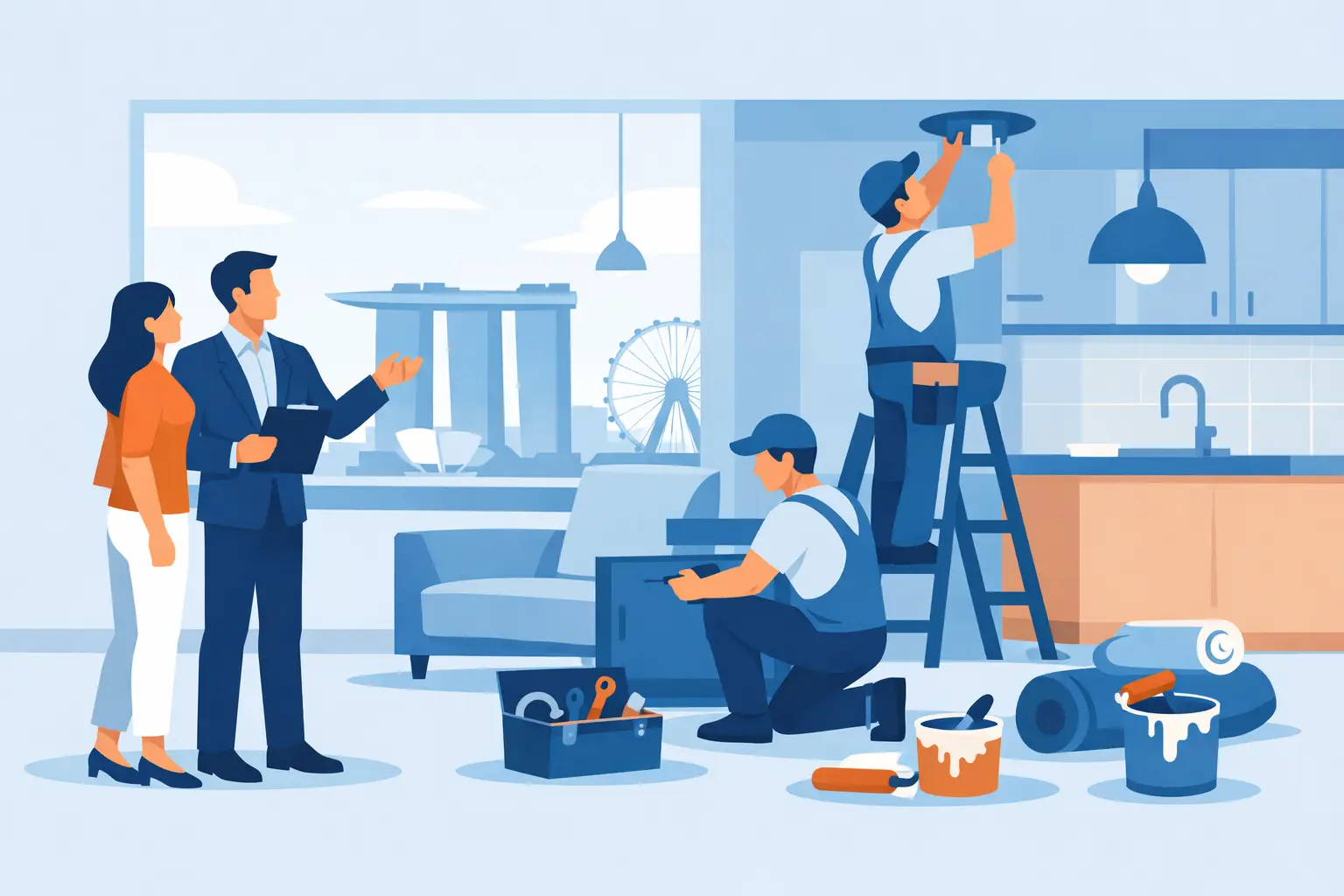
A handover inspection is where small defects become expensive arguments. The best pre tenant handover repairs deal with the issues an incoming tenant, agent or landlord will spot immediately: water stains, swollen kitchen cabinets, loose fittings, patchy paint, dripping taps and electrical points that do not work. Fixing them before the keys change hands protects your deposit, rental timeline and reputation.
For a Singapore HDB flat, Condo unit, landed home or office, speed matters. But so does fixing the actual cause. Covering a water-damaged cabinet with a fresh coat of paint may look acceptable for one viewing. It will not survive the next sink leak or a tenant placing cleaning bottles inside the cabinet.
Start with the repairs that can delay handover
A practical pre-handover inspection starts with water, power and access. These are the items most likely to trigger complaints, unit-viewing delays or a request for deductions from the security deposit.
Check every water tap, stopcock, flexible hose, bottle trap and floor trap. Open the kitchen sink cabinet and feel the base panel, side panels and plinth. In Singapore’s humidity, a slow leak under the sink can turn a firm cabinet carcass soft and powdery surprisingly quickly. Look for blackened chipboard edges, peeling laminate, musty smells and doors that no longer align.
Then test lights, switches, sockets, exhaust fans, water heaters and the electrical distribution board. A tripping circuit is not a cosmetic issue to leave for the next tenant. It needs proper troubleshooting to identify whether the fault comes from an appliance, socket, wiring connection or circuit breaker.
Finally, operate doors, windows, grilles, locks, sliding tracks and cabinet hinges. A stuck bedroom door, loose main gate handle or faulty digital lock can hold up a move-in even when the rest of the unit looks clean.
The best pre tenant handover repairs to prioritise
Not every mark needs a major repair. Fair wear from normal living is different from damage. The sensible approach is to spend where it prevents a dispute, stops further deterioration or makes the unit properly usable from day one.
Repair leaks before repairing the cabinet
The kitchen sink cabinet is one of the most common handover problem areas in HDB flats and older Condo units. Water may come from a leaking water tap, loose waste pipe joint, cracked bottle trap, failed silicone around the sink or moisture collecting around the dishwasher inlet.
The repair sequence matters. First stop and test the leak. Then assess the cabinet structure. If only the bottom panel, plinth or one side section is rotten, a fractional carpentry repair can often replace the affected section without tearing out the full kitchen cabinet run. This is usually far more sensible than paying for a full kitchen renovation when the kitchen top, doors and most carcass panels remain sound.
However, partial replacement is not always the right answer. If rot has spread through several carcasses, the kitchen top has been compromised, or termites are present, more extensive work may be necessary. An honest assessment should tell you where a targeted repair ends and a full replacement begins.
Make paint touch-ups disappear properly
Scuffed walls, picture-hook holes, adhesive marks and stains around switches are standard handover findings. Spot painting can save money, but only where the existing paint colour can be matched and the surrounding wall is in decent condition.
If one wall is heavily stained or faded from sunlight, repainting the whole wall is usually cleaner than leaving a visible patch. For rooms with multiple repairs, repainting the complete room may be the better result. In rental units, a consistent finish matters more than choosing an expensive designer paint.
Do not paint over damp patches. A brown ceiling mark below an upstairs bathroom, or bubbling paint beside a common toilet, needs the water source checked first. Otherwise, the stain will return after the tenant moves in and you will pay twice.
Secure loose fittings and damaged hardware
Loose towel bars, toilet roll holders, curtain brackets, shelves and wall-mounted televisions create a poor impression and can become a safety problem. Singapore walls are usually solid concrete, so old drill holes, wrong anchors and corroded screws need proper attention. Simply forcing a larger screw into a damaged hole is not a lasting repair.
Mounting in a bomb shelter also needs caution. Do not drill into the bomb shelter door, frame or structural sections. Where mounting is allowed, the fixing method must suit the wall and the item weight. This is especially relevant for shelves, mirrors and television brackets left behind as part of a furnished tenancy.
Cabinet hinges, drawer runners and wardrobe sliding doors deserve the same attention. A hinge that is only slightly loose now can pull out of a swollen chipboard panel after a few weeks of daily use. Replace worn hinges or reinforce the mounting area before handover rather than waiting for a complaint.
Sort electrical and plumbing faults, not just appearances
A working light fitting is not proof that the electrical point is safe. Flickering lights, warm switches, cracked socket plates, buzzing sounds and repeated breaker trips require a proper check. If the unit has been vacant, test the water heater, cooker hood, ceiling fans and air-conditioning isolator switches as well.
For plumbing, test more than visible leaks. Flush every toilet several times, run water through basins and inspect whether floor traps drain freely. A slow floor trap may become a choking issue once a family moves in and begins using the bathrooms daily. If there is a foul smell from a floor trap, it may be a dry trap seal, trapped debris or a drainage issue that needs investigation.
Handover standards depend on the tenancy agreement
Landlords, tenants and agents often assume the other party will handle repairs. The tenancy agreement and signed inventory list should guide the discussion. Tenant-caused damage, such as broken fittings or unauthorised wall holes, is different from age-related failure of a worn water heater or failing cabinet hinge.
For HDB flats, some exterior and common-area issues may fall under Town Council maintenance, while internal fittings and renovation works generally remain the owner’s responsibility. In a Condo, MCST rules may affect working hours, lorry access, lift protection, renovation permits and disposal arrangements. Plan repair work early, especially where painting, drilling or carpentry cutting is involved.
Office handovers can be even stricter. Building management may require contractor registration, insurance documents, after-hours work approval and reinstatement of partitions, blinds or data trunking. A quick repair job is only quick if access has been arranged properly.
Take evidence before and after the work
Clear photographs protect everyone. Take wide shots of each room, then close-ups of existing defects, repaired cabinet sections, water-stained areas, meter readings and any supplied appliances. Date-stamped videos are useful for showing that taps, lights, locks and toilet flushes worked at the point of handover.
This is not about creating unnecessary tension with the tenant. It is about making the condition of the unit clear. A detailed handover record prevents a small issue from becoming a vague, costly dispute later.
If you are managing several repairs, arrange them in the right order. Plumbing and electrical fault checks come first. Carpentry restoration follows once moisture problems are resolved. Painting should be near the end, followed by cleaning and the final inspection. Reversing that sequence is how fresh paint gets damaged while a leaking pipe is being repaired.
Get the repair scope right before you quote
The cheapest quote is not always the lowest final cost. Be careful with vague pricing that excludes transport, materials, disposal, access fees or additional fault-finding. Ask what is included, what happens if hidden rot is found, and whether the workmanship is covered after completion.
For cabinet damage, send photos showing the full cabinet, the affected panel, the sink pipes and any swelling around the plinth. For electrical issues, show the affected switch or socket and describe when the trip occurs. Better information means a more accurate first quote and fewer surprises on site.
Before the handover date closes in, send HRD Professional Handyman clear photos and a short video on WhatsApp. You can get a transparent repair recommendation for the actual problem – whether that is a small adjustment, a leak repair, or a cost-saving partial cabinet replacement – so the next tenant receives a unit that is ready to use, not a list of problems waiting to surface.
0 Comments