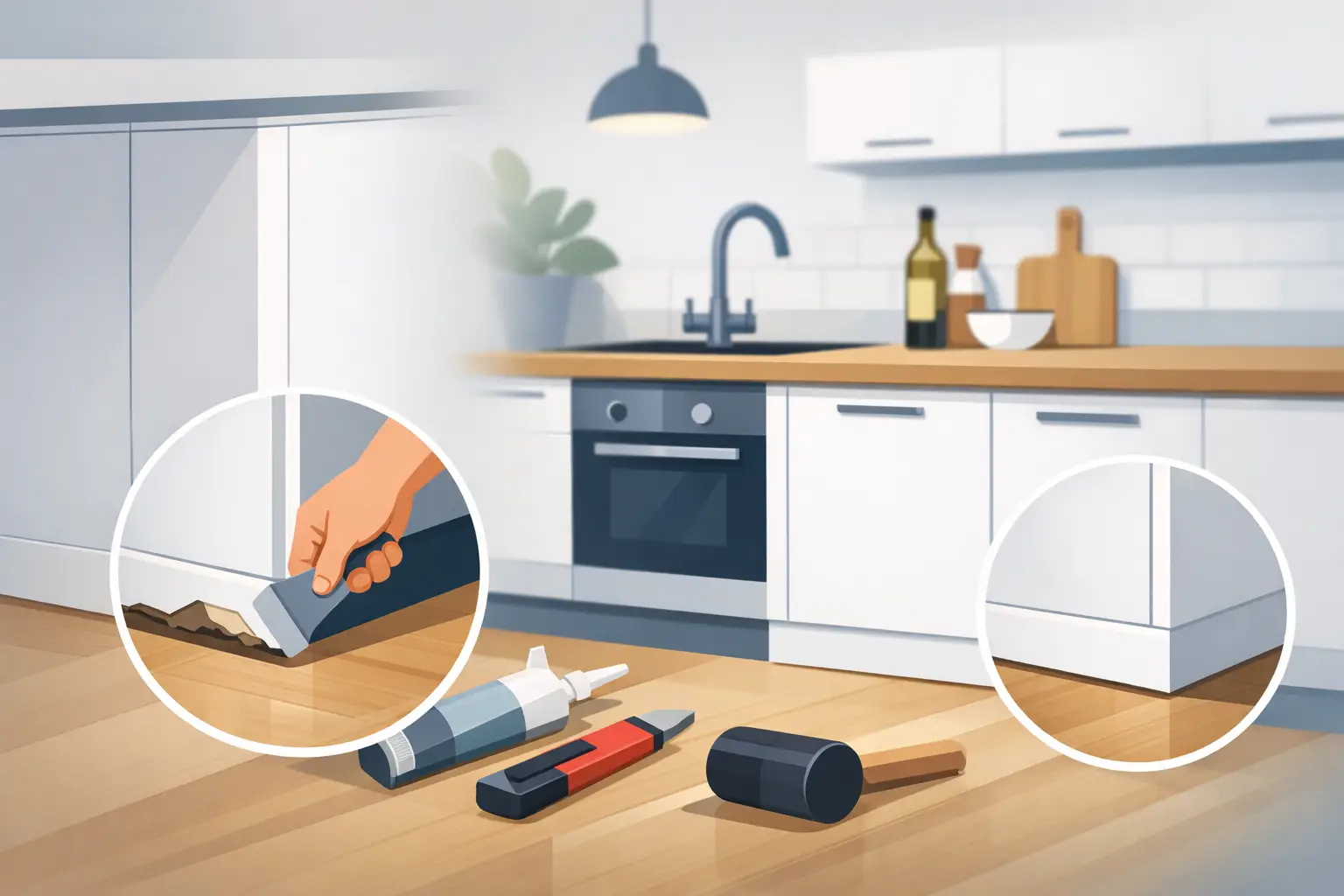
A swollen cabinet base beneath the kitchen sink is rarely just an ugly patch of wood. In Singapore, a slow water tap leak, loose waste pipe or damp cloth left in the cabinet can turn the plinth and lower side panels soft within months. This cabinet base panel repair example shows how a targeted repair can restore a usable kitchen without paying for a full cabinet overhaul.
A real-world cabinet base panel repair example
Picture a typical HDB kitchen: the sink cabinet is built against a solid wall, with laminated doors that still look acceptable from the front. But when the doors open, the base panel is dark, puffed up and crumbling along the back corner. The cabinet smells damp, and the plinth below the doors has started to bow.
The first temptation is to replace the entire lower cabinet run. Some renovation firms will recommend exactly that. It may be justified if several cabinets are structurally failing, the kitchen top has been damaged, or the layout needs changing. But for one affected sink cabinet, it is often excessive.
In this case, the sound cabinet doors, kitchen top and neighbouring carcass panels were retained. The damaged base, lower side section and plinth were removed only after confirming the leak source had been fixed. A new moisture-resistant board was cut to size, fitted around the pipe openings, sealed at vulnerable edges and finished to sit neatly behind the existing doors. The result was a stable cabinet base, a cleaner interior and far less disruption than a full replacement.
That is fractional carpentry repair: replace what has failed, protect what is still sound and be honest about where the repair should stop.
Start with the leak, not the wood panel
Replacing a rotten panel before finding the water source is wasted money. The new board will absorb moisture and fail again if the waste trap is dripping, the water tap hose is seeping, or water is travelling down the wall from the kitchen top joint.
A proper inspection checks the pipe connections while water is running, looks for stains around the sink rim, and feels the cabinet corners and rear panel for dampness. In older HDB flats, concealed pipe routes and ageing fittings can make a small leak look like a cabinet problem. In newer BTO units, poor silicone sealing or a loose connection after the defect period can cause the same damage.
The cabinet should be allowed to dry before new material is installed. If mould is present, the affected surfaces need cleaning and treatment rather than simply being covered. A panel fitted over damp timber traps the problem where you cannot see it.
What a targeted repair normally includes
The repair scope depends on how far the water has travelled. A simple job may involve only a new cabinet base board and front plinth. A more involved repair can include a lower side panel, back panel, internal shelf and replacement of damaged edging.
For a sink cabinet, the carpenter measures around the waste pipe, water tap hoses and any water filter equipment. The replacement panel needs proper clearance, but not huge gaps that allow splashed water to reach unfinished edges. Where practical, moisture-resistant board is a sensible choice. It costs more than basic particleboard, but Singapore’s humidity and repeated kitchen use make it worthwhile in wet areas.
Finishing matters too. Exposed cut edges should be sealed, particularly at the rear and around pipe cut-outs. If the existing cabinet has a laminate face, the visible plinth or side panel should be matched as closely as possible. A perfect colour match is not always realistic for older cabinetry with faded laminate, but a clear explanation before work starts prevents unpleasant surprises.
When a panel repair is the cost-saving answer
A fractional repair is usually the right call when the damage is localised and the main cabinet structure remains firm. If the doors align properly, the kitchen top is stable, and the adjacent units have no swelling, replacing only the affected section can save a significant amount compared with dismantling the full kitchen.
This approach is especially useful for landlords preparing a unit between tenancies, property agents handling a handover, and families who cannot lose their kitchen for weeks. The work is contained to the damaged area, so there is less dust, less hacking and less chance of creating new problems with tiles or plumbing connections.
For Condo units, a smaller repair also reduces coordination headaches. Many MCST management offices require renovation timing, lift protection or contractor registration for major works. A focused cabinet restoration is often easier to arrange, though you should still check your building’s access rules before booking.
When repair is not enough
There are cases where replacing one panel is only a short-term patch. If the base and side walls of multiple cabinets are soft, the cabinet carcass has pulled away from the wall, or the kitchen top has sagged, the structure may no longer support a reliable repair.
Termite damage is another warning sign. Tiny holes, hollow-sounding board and powdery residue require a wider assessment before new carpentry goes in. The same applies if a concealed plumbing leak has spread into the wall or flooring. In those situations, stopping the water issue and assessing the extent of damage comes before cosmetic work.
A trustworthy handyman should say this plainly. Saving money does not mean fitting a new panel over failing wood and hoping it holds. It means recommending the smallest repair that will genuinely last.
How to prepare your kitchen for a fast repair
Clear the sink cabinet of cleaning bottles, bins and stored items before the visit. If you have noticed dripping, place a container under the trap and avoid storing anything absorbent inside. Take photos with both cabinet doors open, then include close-ups of the swollen base, plinth and pipes.
Also mention whether the cabinet is in an HDB flat, Condo unit, landed property or office pantry. Access conditions affect planning. For example, a Condo may have restricted delivery hours, while an older HDB block may have limited lift space for materials. Clear information upfront helps avoid vague add-on charges later.
Do not try to screw a loose plinth back onto rotten board. It may look better for a day, but screws have nothing solid to grip and can split the remaining material. Likewise, avoid sealing over an active leak with silicone. Silicone belongs at joints after the area is dry and the leak source is resolved.
Questions Singapore homeowners often ask
Can a cabinet base be repaired without removing the kitchen top?
Often, yes. If the kitchen top and cabinet frame are stable, the damaged base can usually be cut out and replaced from inside the cabinet. This avoids disturbing the sink and top. However, if the top has dropped, the sink is leaking at its rim, or the supporting side panels have failed, partial dismantling may be necessary.
Will the replacement panel look exactly like my old cabinet?
The internal base is normally hidden, so durability is the priority. For visible plinths and side panels, a close laminate match can be selected. Older cabinets may have colour changes from heat, grease and sunlight, so exact matching depends on material availability and the current condition of the surrounding panels.
Is this the Town Council’s responsibility in an HDB flat?
Kitchen cabinets inside your flat are generally the owner’s responsibility. Town Council matters usually concern common areas and external estate maintenance. If damage comes from a shared pipe or a suspected building issue, document it quickly and check with the relevant party, but do not leave a leak unattended while responsibility is being discussed.
Get the repair scope before the damage spreads
A soft sink-cabinet base will not improve on its own. The longer water sits in the board, the more likely it is to spread into the side panels, plinth and adjacent cabinets. HRD Professional Handyman can assess the damaged section, explain whether a fractional repair is suitable and provide clear pricing before work begins.
Send clear photos of the cabinet interior, damaged panels and plumbing through WhatsApp for a fast, transparent quote. A targeted repair done early keeps your kitchen usable, protects your budget and avoids turning one leaking corner into a full renovation bill.

0 Comments