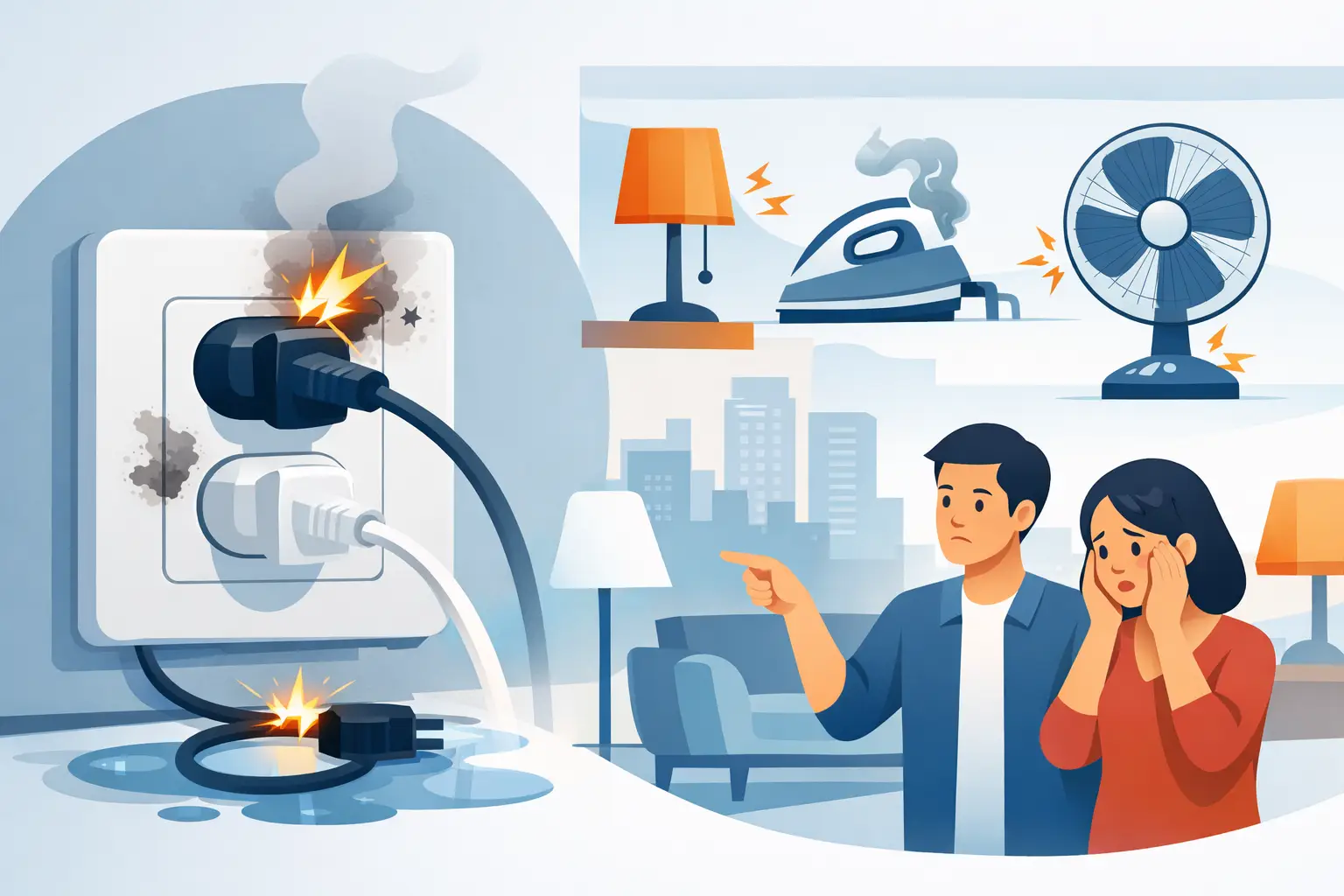
A socket that works only after you wiggle the plug is not being fussy. It is often one of the earliest faulty power socket signs, and ignoring it can turn a small contact problem into heat damage, a tripped circuit, or a genuine fire risk. In Singapore homes, where extension leads, air fryers, water heaters and mobile phone chargers are used heavily every day, a loose or damaged socket deserves prompt attention.
The sensible rule is simple: if a socket looks damaged, feels hot, smells burnt, sparks repeatedly, or keeps cutting power, stop using it. Do not test it again with another appliance and do not try to tighten internal parts yourself. The immediate inconvenience of using another socket is far cheaper than repairing scorched wiring inside a solid wall later.
Faulty power socket signs you should never ignore
Heat around the faceplate or plug
A socket faceplate should remain cool during normal use. If it feels warm after running a low-power device such as a phone charger, unplug the device and leave the socket alone. Heat usually means poor contact between the plug pins and the socket terminals, a loose wire connection, or an overloaded circuit.
A warm plug can sometimes be caused by a faulty appliance lead rather than the wall socket. That is why a qualified electrician needs to assess both safely. What you should not do is keep swapping appliances into the same socket until it fails completely.
Burning smell, discolouration or melted plastic
Brown marks around the pin holes, yellowing, bubbling plastic, or a sharp burning smell are urgent warning signs. Electrical arcing can happen when current jumps across a poor connection. It produces heat quickly, even when the appliance appears to be running normally.
Switch off the relevant circuit at the DB box only if you can identify it safely and the area is dry. Then arrange an electrical inspection. Never paint over the mark or replace only the plastic cover, as the damage may sit behind the faceplate in the wiring or terminal block.
A loose plug or cracked faceplate
A plug should fit firmly without drooping or slipping out. If it moves excessively, the internal contacts may have worn out. This is common in older HDB flats and rental units where the same kitchen socket has handled kettles, microwaves and multiple adaptors for years.
A cracked faceplate is also more than a cosmetic issue. It can expose live parts or allow moisture and dust into the socket. In kitchens, keep an especially close eye on sockets near the kitchen top, water tap and sink cabinet. A slow leak below the sink can raise humidity and damage nearby fittings long before obvious water stains appear.
Sparks, buzzing or a flickering appliance
A tiny spark when inserting a plug can occur occasionally, particularly with appliances that draw power immediately. Repeated sparking, a buzzing sound, crackling, or a plugged-in lamp that flickers are not normal. Stop using that outlet and unplug the appliance by holding the plug body, not pulling the cable.
Do not spray water, cleaning fluid or air freshener into a socket. If there is a fire, use the appropriate fire extinguisher only if it is safe to do so, leave the area, and call the emergency services where necessary.
The socket has no power or trips the DB box
One dead socket does not always mean the socket itself has failed. It may be a loose connection, a damaged cable, a tripped circuit breaker, or a fault in an appliance connected to that circuit. If your DB box trips once after using a particular device, unplug that device before resetting the breaker.
If it trips again, do not keep resetting it. Repeated tripping is the protective device doing its job. A licensed electrical worker should locate the cause, particularly where sockets in a kitchen, bathroom-adjacent area, study or office pantry are affected.
Why overloaded sockets are common in Singapore homes
The problem is often not one appliance. It is the accumulated load. A single double socket may end up serving a rice cooker, kettle, coffee machine and air fryer through a multiway adaptor. In a home office, monitors, a laptop charger, printer and portable air-conditioning unit can end up on one extension lead.
Extension leads are useful for temporary, light-duty use. They are not a permanent substitute for enough properly installed wall sockets. Daisy-chaining one extension lead into another is particularly risky because the first lead can be overloaded without looking unusual.
Higher-wattage appliances need extra care. Kettles, induction cookers, ovens, irons, hair dryers and portable heaters draw significant current. If you have recently added one to an older kitchen setup and notice warmth, tripping or a burnt smell, stop and get the circuit checked. It may need a dedicated solution rather than another adaptor.
What to do before help arrives
First, unplug any appliance from the affected socket if it is safe to do so. Switch off the circuit at the DB box if there is heat, smoke, visible damage, repeated tripping or water exposure. Keep children and pets away from the area, and do not cover the socket with tape, furniture or a decorative panel.
Take clear photos from a safe distance. Show the socket faceplate, any discolouration, the plug and appliance involved, and the DB box if a breaker has tripped. These details help a professional arrive prepared and give you a clearer indication of what may be required. They do not replace an on-site test, but they avoid vague descriptions and unnecessary back-and-forth.
For landlords and property agents, record when the tenant first reported the issue and whether any appliances were connected. For Condo units, electrical repairs inside the unit are generally the owner’s responsibility, while common-area electrical issues should be reported through management. If a shared corridor or common facility socket is damaged, do not arrange private alteration without checking MCST procedures.
Do not confuse a socket repair with a DIY cover replacement
It is tempting to buy a new faceplate and fit it yourself because the visible part looks simple. The risk is behind the wall. A loose live conductor, incorrect termination or damaged cable can remain hidden, and Singapore electrical work should be handled by the appropriately licensed professional.
This matters even more in HDB flats with solid concrete walls. Chasing a new cable route or adding a socket is not the same as mounting a shelf. It may involve concealed wiring, reinforcement bars and building restrictions. In newer BTO flats, report defects during the relevant defect-liability period where applicable, and photograph the issue before any work is carried out. For older flats, an inspection can establish whether a local repair is enough or whether ageing wiring on that circuit needs wider attention.
The honest answer is that it depends on the fault. A loose terminal or worn socket mechanism may be a contained repair. Charred wiring, recurring trips or moisture damage may need the circuit tested and repaired beyond the faceplate. A proper diagnosis costs less than replacing parts blindly and hoping the smell does not return.
A quick safety check for tenants and office managers
You do not need to open anything to spot a problem. Walk through high-use areas once a month, especially the kitchen, TV console, bedrooms and office pantry. Look for damaged plug tops, pin holes that look darkened, tangled extension leads, cables trapped under furniture, and sockets close to a water leak.
In an office, do not let staff load one socket with multiple chargers and pantry appliances simply because it is convenient. Keep power strips visible and dry, and replace any lead with split insulation. For a rented HDB flat or Condo unit, notify the landlord or managing agent in writing as soon as a socket shows damage. Continuing to use it after reporting it is not worth the risk.
Get a clear answer before the damage spreads
A faulty socket is one of those small household issues that can become expensive only when it is left alone. If you have noticed heat, burning marks, looseness, sparking or repeated tripping, stop using the socket and send clear photos by WhatsApp to HRD Professional Handyman for an upfront, transparent assessment and the right electrical support. The aim is not to sell you a full overhaul when a contained repair will do – it is to make the affected area safe, with no hidden surprises and as little disruption to your home or workplace as possible.
0 Comments