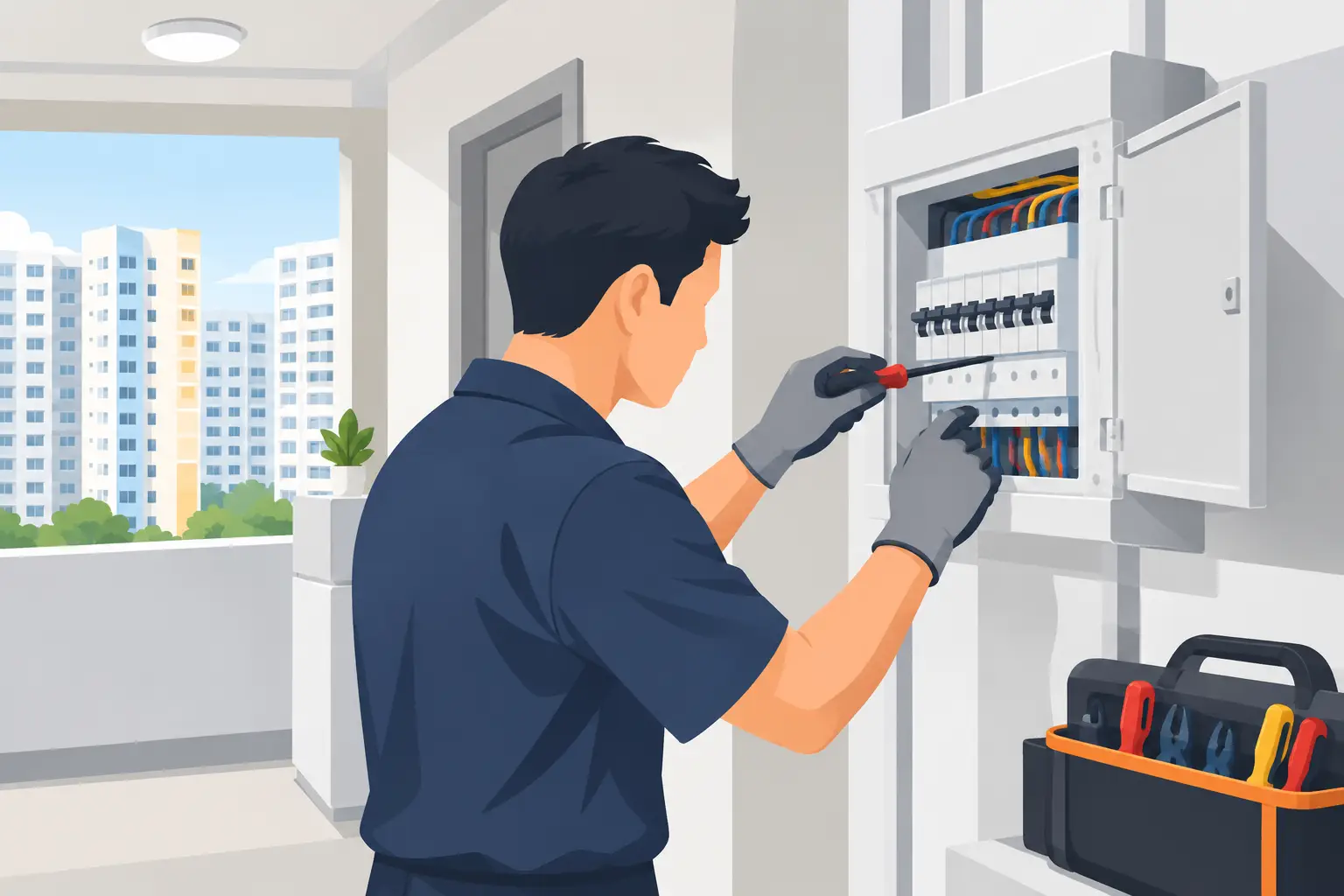
A breaker trips at 11 pm, the kitchen goes dark, and the first instinct is to push the switch back up. This faulty breaker troubleshooting example shows why that is sometimes fine, but repeatedly resetting a breaker can turn a small appliance fault into damaged wiring, a burnt DB box, or a genuine fire risk. For HDB flats, Condo units and landed homes in Singapore, the goal is simple: isolate the cause safely, restore only what is safe to restore, and call a licensed electrician before the problem becomes expensive.
What a tripped breaker is telling you
Your distribution board, often called the DB box, is designed to cut power when it detects an abnormal condition. That may be an overloaded circuit, a faulty appliance, damaged cable insulation, moisture entering an electrical point, or a fault within the breaker itself.
A single trip is not always an emergency. For example, running a kettle, microwave, air fryer and washing machine from the same kitchen circuit may overload it. But a breaker that trips immediately after being reset, feels hot, gives off a burning smell, crackles, or shows brown marks is not a nuisance to ignore. Leave it off and arrange professional electrical troubleshooting.
In many older HDB flats, electrical circuits have been added or altered over the years to support more appliances. In newer BTO flats, faults may appear around a loose socket connection, water ingress beneath the kitchen sink, or a defective appliance supplied during move-in. The symptoms can look similar, so the checks need to be methodical.
A faulty breaker troubleshooting example at home
Consider a common situation: the kitchen lights and several power points stop working after dinner. You open the DB box and see one miniature circuit breaker, or MCB, in the down position. The main switch remains on.
First, do not touch exposed wires, remove the DB cover, or force the breaker lever. Make sure your hands and the floor are dry. Switch off and unplug the appliances on the affected circuit. In a typical HDB kitchen, that could include the rice cooker, kettle, microwave, coffee machine, dishwasher, washing machine and any plug-in oven.
Next, reset the tripped MCB once. Push it fully down first, then firmly back up. If it stays on with everything unplugged, the breaker itself may not be the immediate issue. Plug appliances back in one at a time, allowing a short pause between each one.
If the breaker trips when the kettle is plugged in or switched on, stop using that kettle. Its heating element or internal wiring may have failed. If it trips only when the washing machine runs, the machine, its socket, or nearby moisture may be responsible. Do not keep testing the same item repeatedly.
Now consider the other outcome. If the breaker trips again with every appliance unplugged, the likely fault is on the fixed electrical circuit. It could be a damaged cable behind a solid wall, a failed socket outlet, loose connection, water entering a concealed point, or the MCB itself. This is where DIY ends. A licensed electrician needs to test the circuit properly with the correct instruments.
That distinction matters. Replacing a breaker without identifying why it tripped can hide the warning sign while leaving the actual fault in the wiring.
When the main safety switch trips instead
Some DB boxes include a residual current circuit breaker, commonly called an RCCB, or an RCBO for individual circuits. These devices react to electrical leakage, which can be caused by a damaged appliance, wet wiring or insulation failure. If this switch trips, especially after rain, a water leak, air-con servicing or a kitchen sink cabinet leak, treat moisture as a serious possibility.
A leaking water tap or pipe beneath the kitchen top can soak the cabinet base, warp the carcass panels and reach a socket or cable route. In Singapore’s humidity, damp wood and concealed moisture do not dry quickly. Switch off the affected circuit, stop using nearby sockets, contain the leak, and have both the plumbing and electrical sides assessed. Repairing only the cabinet panel while ignoring a wet electrical point is false savings.
Signs the breaker itself may be faulty
Breakers do wear out, but they are less often the root cause than people assume. A proper diagnosis checks both the breaker and the circuit it protects. You should arrange urgent attention if you notice any of the following signs:
- The breaker will not stay in the on position even after the circuit has been isolated.
- The DB box is warm, smells burnt, makes a buzzing sound, or has visible scorch marks.
- A breaker lever feels loose, jammed or unusually difficult to reset.
- Lights flicker, sockets cut in and out, or power returns only when the DB box is touched.
- The same circuit trips without a clear load, particularly during wet weather or after a plumbing leak.
Do not tape a breaker in place, replace it with a higher-rated unit, or ask a handyman to bypass the circuit. A higher-rated breaker may allow cables to overheat before it trips. The rating must match the cable size, circuit design and load requirements.
What you can safely check before booking help
Homeowners and tenants can save time by observing the pattern, not by dismantling electrical parts. Take a clear photo of the DB box with the affected switch visible. Note what stopped working, what appliances were running, when the trip happened, and whether there was recent drilling, renovation work, water leakage or pest activity.
For example, a sudden trip after mounting a TV, shelf or mirror onto a solid wall may indicate that a concealed cable was disturbed. This needs immediate inspection. Do not continue drilling or turn the circuit back on repeatedly. In HDB flats, walls around service areas can contain concealed services, and a quick mounting job should never become a cable repair.
For Condo units, keep MCST requirements in mind. Some management offices require notice or approved contractors for work involving common electrical risers or alterations. Inside your unit, an electrical fault still needs prompt attention, but clear photos and a proper diagnosis help prevent disputes over whether the issue is inside the property or part of a building-wide system.
If you are a landlord or property agent, do not assume a tenant has overloaded the circuit simply because a breaker tripped. Ask what was plugged in and whether the issue returns with all appliances disconnected. This avoids blaming the wrong party and speeds up the right repair.
When to stop troubleshooting immediately
Switch off the main power if it is safe to do so and seek urgent professional help when there is smoke, sparking, a burning smell, a buzzing DB box, electric shocks from an appliance or socket, or visible water near electrical points. Keep children and pets away from the area. Never throw water onto an electrical fire.
A circuit that trips after a flood, major leak or water coming through the ceiling needs inspection before power is restored. The same applies if you have recently discovered chewed wiring, a damaged extension lead, or scorch marks at a socket. These are not watch-and-wait problems.
Why an electrician’s test saves money
A licensed electrician can test insulation resistance, continuity, earth leakage and load conditions rather than guessing from the breaker position. That identifies whether the repair is as small as replacing a damaged socket or appliance lead, or whether a cable, junction point or breaker requires replacement.
This is the transparent way to handle an electrical fault. You should know what failed, why it failed, what is being replaced, and whether there is any related water damage or overloaded circuit to address. It is often cheaper to repair one faulty outlet or section of cable early than to wait until heat damages the DB box, kitchen cabinet interior or nearby finishes.
HRD Professional Handyman can help assess the visible household issue quickly and coordinate the right trade work, including making safe good after access is required. For electrical diagnosis and electrical repair, use a properly licensed electrician. Send clear photos of your DB box, the affected room and any visible leak or damaged socket via WhatsApp for a fast, transparent quote before work starts.
A breaker that trips once may be protecting you from an overloaded kitchen circuit. A breaker that keeps tripping is asking for attention – give it the right one before a small interruption becomes a costly home repair.
0 Comments