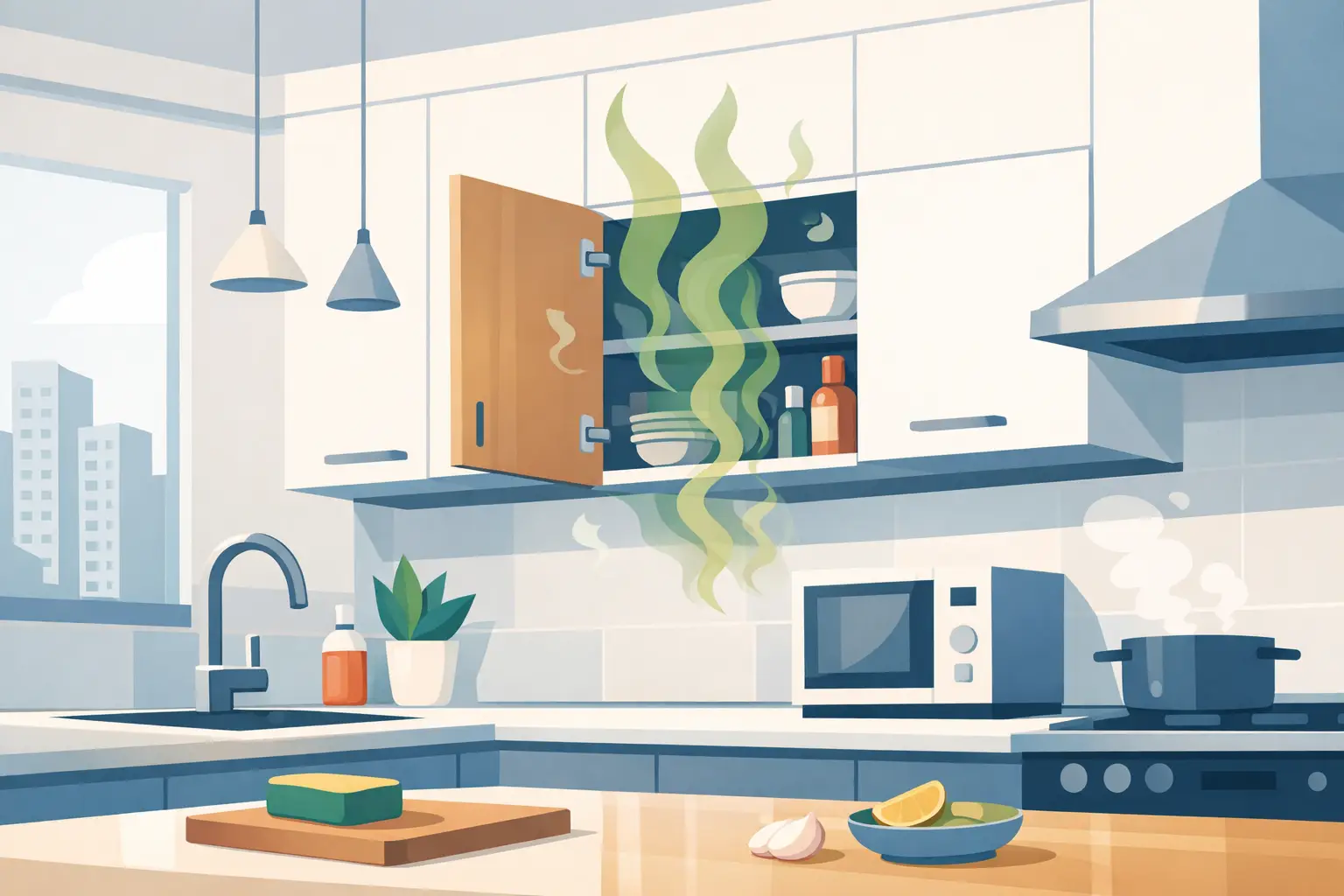
That sour, musty smell from the cabinet below your kitchen sink is rarely just “old cabinet smell”. In Singapore, where humidity stays high all year and HDB kitchen cabinets often sit tightly against solid walls and tiled floors, a smell usually means moisture, trapped dirt, pest activity, or damaged board is hiding somewhere. If you are asking, why does my kitchen cabinet smell, start by treating it as an early warning sign, not something to cover with air freshener.
A cabinet can still look acceptable from the outside while its base, rear panel, or internal carcass is already swollen and breaking down. Catching the cause early can mean replacing one affected panel or plinth instead of paying for a full kitchen overhaul.
Why Does My Kitchen Cabinet Smell? Start With the Sink Area
The cabinet under the sink is the usual culprit because it deals with water taps, waste pipes, washing-up liquid spills, wet rubbish and condensation. Even a slow drip can soak into particleboard without leaving a visible puddle on the kitchen floor.
Open the doors and remove everything inside. Check the cabinet base with your hand. If it feels soft, rough, swollen, or cool and damp, water has likely entered the board. Look closely around pipe joints, the bottle trap, flexible water hoses and the silicone line where the sink meets the kitchen top. Run the tap for a minute, then fill the sink and release the water while watching underneath. Some leaks only appear when the waste pipe is under pressure.
A stale, earthy or mushroom-like smell usually points to damp timber or mould. A sharp sewage smell may come from a loose waste-pipe connection, cracked trap, dried floor trap, or residue in the sink overflow and drain line. A rotting smell that becomes stronger after rain or when the cabinet is closed can indicate moisture trapped behind the cabinet rather than a current plumbing leak.
The Most Common Causes in HDB Flats and Condo Units
A slow plumbing leak
This is the most common reason. A worn washer, loose compression fitting, corroded valve, cracked bottle trap or pinhole in a flexible hose can release a small amount of water every day. In an enclosed cabinet, it cannot dry properly. The odour develops before many homeowners notice major visual damage.
Do not assume a leak is the plumber’s issue only. Once water has entered the cabinet board, stopping the leak does not restore the damaged wood. The board may keep smelling, swelling and attracting mould until the affected section is removed and replaced.
Mould and fungal growth in damp board
Most older kitchen cabinets use particleboard or MDF with a laminate surface. The laminate can look fine, but exposed edges, screw holes and cut-outs absorb water quickly. Singapore humidity then gives mould the conditions it needs to grow.
Mould does not always appear as obvious black spots. It may sit behind the rear panel, under a swollen base, around cabinet legs, or inside dark gaps near the wall. Wiping visible marks with cleaner may reduce the smell temporarily, but it will return if the board remains damp. Bleach is also not a repair for decomposing particleboard, and excessive liquid cleaning can worsen the swelling.
Food residue and bin moisture
A pull-out bin, recycling bag or forgotten onion can create a strong odour surprisingly fast. Grease splashes, wet cardboard and spilled sauces feed bacteria in corners that are hard to reach. This is the simpler outcome, but it still needs a proper clean and complete drying rather than another fragrance spray.
Take everything out, vacuum crumbs, wash removable organisers, and wipe non-damaged surfaces with a mild cleaning solution. Leave the doors open with a fan directed towards the cabinet for several hours. If the smell disappears and does not return over the next few days, food residue was likely the cause. If it returns, investigate moisture or rot.
Pest activity
Cockroaches favour warm, dark, damp spaces near food and water. Their droppings and nesting material can leave a persistent oily or musty smell. Rats may leave a stronger urine-like odour, while dead pests trapped behind a fixed cabinet can smell unpleasant for days.
Look for droppings, gnaw marks, insect skins, gaps around pipe penetrations and a damaged kickboard or plinth. Pest treatment is necessary where there is active activity, but close the entry gap only after the affected area has been inspected. Sealing a gap without checking the damp cabinet behind it can lock in the original problem.
Water entering from outside the cabinet
Not every wet cabinet is caused by the sink. In some HDB flats, water may travel along a shared wall, come through a failed kitchen-top silicone joint, or drip from a concealed pipe route. Condo units can have similar issues around service ducts. If the cabinet backs onto a bathroom, yard, or common plumbing route, inspect that side too.
Responsibility can depend on the source. Internal fittings and your own cabinet are normally the owner’s responsibility. A leak involving common property, a neighbour above, or building pipework may require the Town Council, MCST management, or relevant owner to investigate. Take dated photos before any dismantling, particularly if you may need to report the issue.
When a Smell Means the Cabinet Needs Repair
A cleaning job is reasonable when the cabinet board is dry, firm and intact. Repair becomes the sensible option when you see bubbling laminate, blackened edges, flaking chipboard, a sagging base, rusty screws, or a cabinet that moves when pressed.
This is where many homeowners are pushed towards an expensive full kitchen replacement when it is not necessary. If the damage is localised below the sink, a fractional carpentry repair can often remove only the rotten base panel, plinth, side panel or rear carcass section. The sound portions of the kitchen cabinet stay in place, which reduces material cost, mess and downtime.
It depends on the construction. Some older built-in cabinets are tied into several sections, and extensive damage may make wider replacement safer. But a competent inspection should distinguish between a local water-damaged panel and a cabinet system that has genuinely failed. Ask for clear photos of the affected sections and an upfront explanation of what will be retained, replaced and sealed.
What You Can Do Today Before Calling for Help
First, remove stored items and keep children and pets away from loose or mouldy board. Dry any visible water, then place tissue paper beneath pipe joints and check again after using the sink. Tissue reveals minor drips better than a quick visual check.
Next, avoid drilling, screwing or mounting anything through the cabinet until the source is clear. HDB kitchens have concealed services, and a swollen cabinet may not hold a screw securely. Do not simply lay a plastic sheet over a soft base either. It hides the damage, traps moisture and can make pest inspection harder.
If there is active leaking, turn off the under-sink isolation valve if you can do so safely. If the valve itself is leaking or seized, shut off the relevant water supply and arrange plumbing help. For a sewage smell, avoid using harsh chemical drain cleaners repeatedly. They can damage older pipes and will not solve a loose connection or rotten cabinet board.
A Fast Repair Should Deal With the Cause, Not Just the Smell
The right sequence is straightforward: trace and stop the leak, dry the area, remove unsalvageable board, treat any mould or pest issue, and install a properly fitted replacement section. The replacement edges and pipe cut-outs should be sealed where appropriate, because these are the weak points that allow the next minor leak to become major rot.
For landlords and property agents, this approach is particularly useful between tenancies. A musty cabinet can trigger complaints, affect viewings and become a dispute over pre-existing damage. Photograph the leak source, the affected cabinet sections and the completed repair for your records.
If your kitchen cabinet smells, send clear WhatsApp photos of the cabinet interior, cabinet base, pipes and any swelling or staining to HRD Professional Handyman. You can get a transparent quote for the actual repair needed, including a targeted fractional cabinet repair where that saves money. A dry, sound cabinet is the practical fix – and it is far better than masking an odour while the damage spreads out of sight.


0 Comments