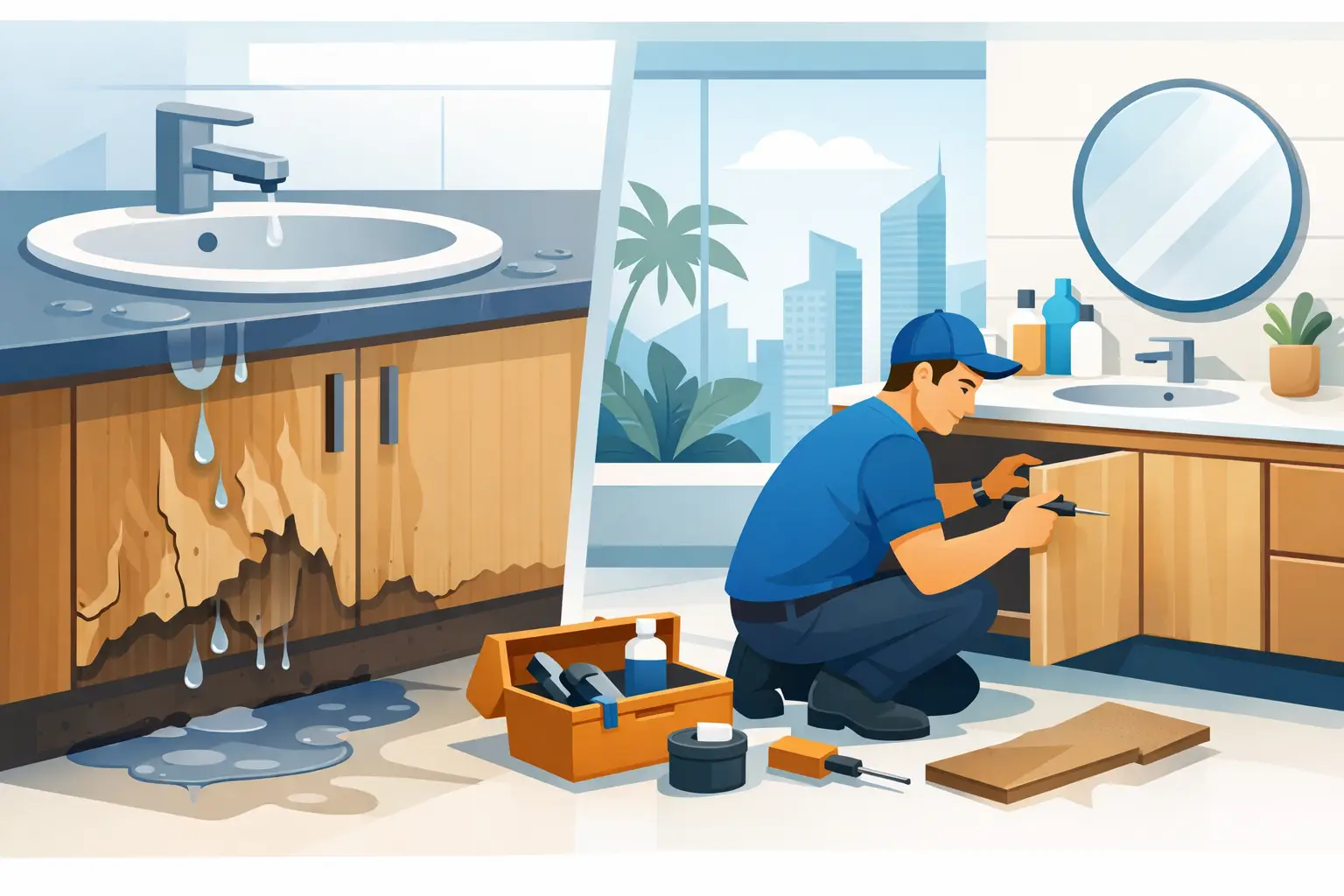
A swollen bathroom vanity door, soft cabinet base or musty smell under the basin is rarely just a cosmetic problem. In Singapore, water damaged vanity repair usually starts with finding the leak, not covering up the damage. If the water tap connection, bottle trap, flexible hose or basin seal is still leaking, a new panel will simply absorb water and fail again.
The good news is that many vanities do not need a full bathroom renovation. Where the damage is limited to the plinth, side panel, cabinet floor or one door, a fractional carpentry repair can restore the unit at a much lower cost and with far less disruption to your HDB flat or Condo unit.
What water damage does to a bathroom vanity
Most bathroom vanities in Singapore are made from particleboard, MDF, plywood or a combination of these materials with laminate finishing. Particleboard is common because it is affordable and neat when new, but its exposed edges are highly vulnerable to water. Once moisture gets through a chipped laminate edge or an unsealed screw hole, the board swells from the inside.
You may first notice a door that rubs against the carcass, laminate lifting near the bottom, or a base panel that feels soft when pressed. Left alone, the board can turn crumbly, hinges can pull loose, and the cabinet may no longer support the basin safely. High humidity makes drying slower, particularly in bathrooms without a window or with weak exhaust ventilation.
There is also a practical hygiene issue. Water trapped behind swollen panels can create mould and a persistent damp smell. A quick coat of paint or silicone over the outside may hide the symptoms, but it does not remove the wet and damaged board beneath.
Check the source before repairing the vanity
A proper repair begins with a simple inspection under and around the basin. Common culprits include a slow drip from the angle valve, a loose flexible hose, a cracked bottle trap, a leaking basin waste, or water running down the back of the vanity after handwashing. In some older flats, a failed silicone joint between the basin and wall allows water to track behind the cabinet for months.
Do not assume the cabinet is at fault because it is swollen. Place dry tissue around the pipe joints, turn on the water tap, fill and drain the basin, then check for moisture. Look at the underside of the kitchen top-style basin rim too. A leak may only appear while the basin is draining.
If a pipe connection is leaking, fix that first. If the water is coming from a concealed pipe in the wall, the repair scope changes. This may require targeted plumbing work before carpentry can begin. A reliable handyman should explain this clearly rather than quote for a new vanity panel and disappear after the board gets wet again.
When water damaged vanity repair is worth doing
Repair is usually the sensible option when the main carcass remains firm and square, the basin is stable, and the rot is confined to one or two accessible components. Replacing a damaged cabinet base, a side return, a door or a plinth can extend the life of the vanity without forcing you to replace matching wall tiles, basin fittings and mirrors.
This is especially useful in HDB bathrooms where the vanity may have been fitted after the original renovation. Removing the whole unit can expose unpainted wall areas, old tile cut-outs or plumbing points that do not match a new ready-made cabinet. For landlords preparing a unit between tenancies, a clean fractional repair can also be faster than waiting for a full renovation contractor.
Full replacement makes more sense when the cabinet has widespread swelling, the basin is sinking, multiple vertical panels are soft, or the rear section has deteriorated against the wall. It may also be the better choice if the existing vanity is a very low-grade unit with no practical way to separate the damaged components. The honest answer depends on what is sound after the affected panels are opened up.
Repairing only the affected sections
A targeted repair normally involves removing the water-damaged board, checking the adjacent carcass for moisture, and fabricating a replacement panel to fit the existing dimensions. The replacement should be chosen based on location. For a cabinet floor directly beneath plumbing, moisture-resistant plywood is generally a better long-term choice than standard particleboard. Exposed edges need proper sealing, and the new panel should be installed without blocking access to the trap or stop valves.
If the door has swollen but the cabinet body is sound, replacing or re-skinning the door may be enough. If a hinge screw has torn out of wet board, simply moving the hinge is not always reliable. The affected section needs reinforcement or replacement so the door stays aligned after daily use.
Colour matching deserves a straightforward discussion. A white or neutral laminate is easier to match than an older woodgrain finish that has faded over time. Where an exact match is unavailable, replacing both doors or using a complementary finish can look more intentional than fitting one almost-matching panel.
Do not ignore the vanity base
The cabinet base is where small leaks do the most damage. It is hidden by the plinth, receives water from wet bathroom floors, and often sits close to tile grout lines where moisture lingers. If the vanity shifts when touched or the plinth is bulging, ask for the base to be checked before approving a surface-only repair.
For wall-hung vanities, the concern is different. The cabinet is supported by wall brackets or structural fixings. If water damage has weakened the rear board, or if the unit is pulling away from the wall, stop using the basin until it has been inspected. HDB and Condo bathroom walls are commonly solid concrete or masonry, so secure reinstatement needs suitable anchors and correct drilling. It is not a job for random screws pushed into a damaged cabinet back.
In a Condo unit, noisy drilling and work timing may be subject to MCST rules. It is worth confirming the permitted hours before booking, particularly if the repair needs new wall fixings. The cabinet belongs to the owner, while a leak from a shared concealed pipe or common stack may need separate management attention. Clear photos and an early inspection help establish where the problem starts.
What to do before the handyman arrives
If water is actively dripping, turn off the angle valve below the basin where possible. Put a pail or towel beneath the leak, remove toiletries from the cabinet, and avoid storing tissue boxes or cleaning chemicals on a wet base. Do not keep opening a swollen door forcefully, as this can tear hinges from the carcass.
Photos make the first assessment much faster. Take one wide photo of the full vanity, close-ups of the swollen sections, and a clear shot of the pipes under the basin. If you can, include the cabinet width and show whether the damage is on the left, right, base or back. This helps a handyman determine whether the likely solution is a plumbing repair, panel replacement, or a full vanity change.
Questions Singapore homeowners often ask
Can a swollen vanity cabinet be dried and reused?
Sometimes, but only if the board is still firm and the swelling is minor. Particleboard that has expanded, softened or started shedding chips does not return to its original strength after drying. Drying stops further deterioration only after the leak is fixed. It does not rebuild damaged board fibres.
Is this the Town Council’s responsibility in an HDB flat?
Usually not if the issue is inside your flat and involves your vanity, basin fittings or internal plumbing. Town Council responsibilities generally relate to common property and estate maintenance. If you suspect a shared pipe or external water ingress, document the issue and check with the relevant party, but do not delay stopping an active internal leak.
How long does a fractional vanity repair take?
A straightforward leak fix and accessible panel replacement can often be completed within one visit once the correct materials are available. More complex work may need a return visit for fabrication, drying or colour matching. The fastest route is not always the cheapest if wet carcass sections are left behind, so the repair scope should be based on the actual damage.
Will a new panel look different from the rest of the vanity?
It can, especially on older laminate finishes. A good repair focuses on a neat, durable result and will set expectations upfront. In some cases, changing the damaged base and both doors together gives a better visual finish than trying to copy an aged pattern exactly.
A wet vanity does not need to become a full bathroom renovation bill. Send clear photos of the leak area, underside of the basin and damaged panels by WhatsApp to HRD Professional Handyman for a fast, transparent assessment. You will know whether a targeted repair can save the cabinet before spending money on a replacement you may not need.
0 Comments