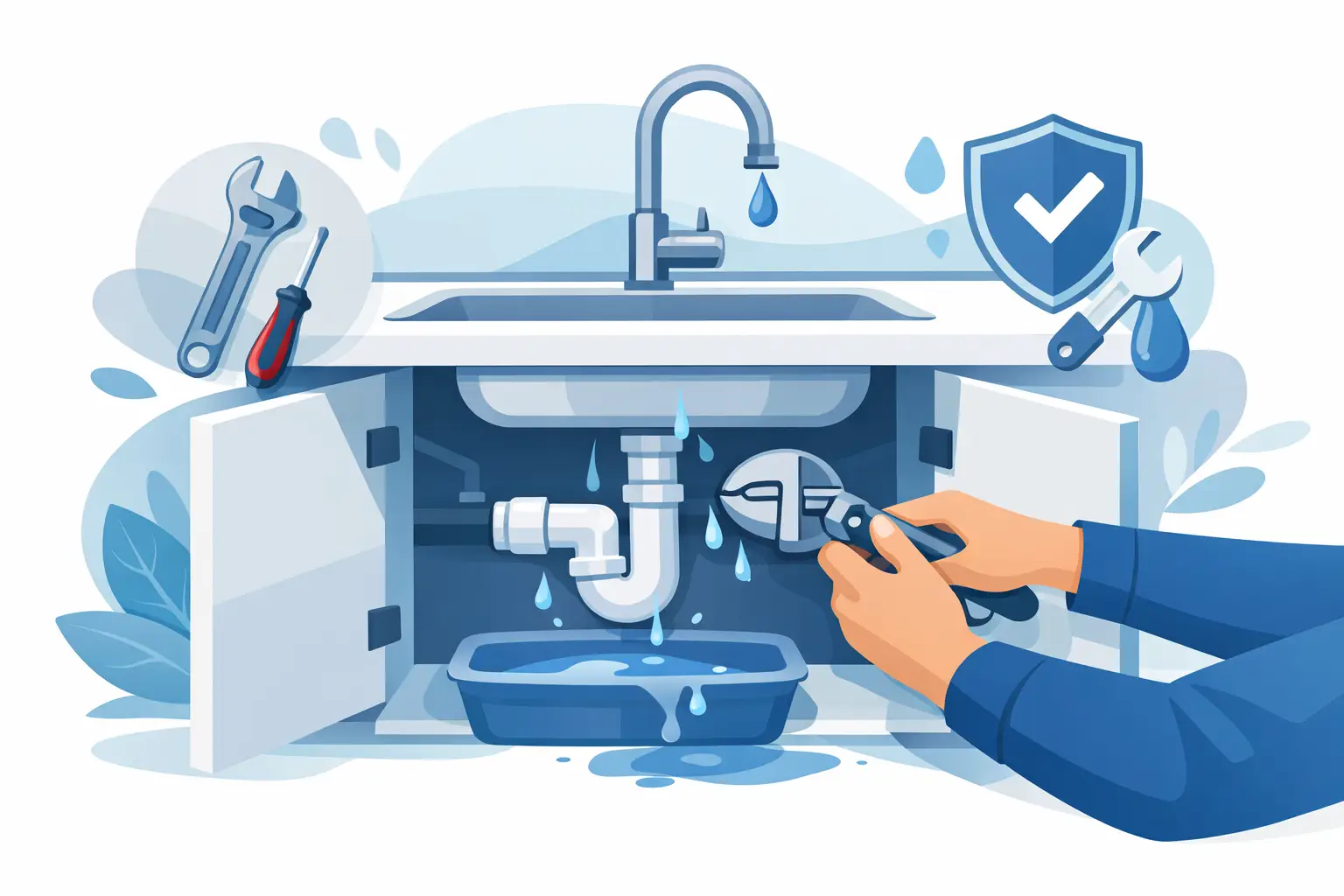
That slow drip under the kitchen sink is rarely just a plumbing annoyance. In Singapore homes, especially in HDB kitchens and Condo units with enclosed sink cabinets, one small leak can quietly soak the base panel, swell the carcass, and turn a simple repair into a carpentry job. If you want to stop recurring sink leaks, you need to fix the actual source, not just tighten random parts and hope for the best.
Most repeat leaks happen because the first repair was incomplete. Someone changes the bottle trap, adds too much sealant, wraps thread tape where it should not be used, or replaces one fitting while leaving a cracked connector beside it. The water stops for a few days, then comes back. Meanwhile, the cabinet interior stays damp in Singapore’s humidity, and the damage keeps spreading.
Why sink leaks keep coming back
A recurring leak usually means one of three things. The wrong part was repaired, the right part was repaired badly, or water is travelling from a different point than expected.
Under many local kitchen sinks, the leak is not always from the obvious joint. Water can run down the underside of the sink, along the water tap hoses, across the trap, and drip from the lowest point. That is why many owners assume the bottle trap is faulty when the real issue is the tap base, sink strainer, angle valve, or flexible inlet hose.
In HDB flats and older resale units, we also see mismatched fittings from previous works. A plumber changes one connector, then another contractor forces an incompatible hose onto an old thread. It may hold for a while, but pressure, vibration, and daily use eventually reopen the leak. In newer BTO flats, the issue can be poor alignment, loose factory fittings, or defects that only show up after regular use.
Then there is cabinet damage. Once a leak has been left for too long, the chipboard or laminated board below starts swelling. Even after the plumbing leak is repaired, the softened panel may keep trapping moisture and make the area smell musty. Homeowners think the leak is back, but sometimes what they are noticing is old water damage, mould, or a cabinet base that has already failed.
The real way to stop recurring sink leaks
The proper approach is simple, but it has to be done in order. First identify whether the leak appears during tap use, while draining, or even when no one is using the sink. That timing tells you a lot.
If water appears only when the tap is running, the likely suspects are the water tap body, flexible hoses, angle valves, or the sink rim area. If it leaks when water drains out, focus on the sink strainer, trap joints, waste pipe alignment, and any hairline cracks in the pipe. If it leaks even when untouched, there may be residual seepage from a supply line under pressure or trapped water inside damaged cabinetry.
A proper technician will dry the entire area first, then test one section at a time. This matters. Without isolating the source, many people just reseal everything. That usually creates a mess, hides the problem, and makes the next repair harder.
Check the sink strainer and seal first
The sink strainer is a common failure point. If the seal between the sink bowl and strainer body has shifted, cracked, or was badly installed, water seeps down whenever you wash dishes. This can be mistaken for a trap leak because the drip often shows below.
In stainless steel kitchen sinks common in Singapore flats, poor installation or movement over time can break that seal. The right fix is to remove, clean, and reseat the fitting properly. Smearing fresh sealant around the visible edge is usually not enough.
Inspect the bottle trap or P-trap alignment
A trap should not be under strain. If the waste pipe is slightly misaligned, or if someone forced the trap into position, the joint washers wear unevenly and start leaking again. Replacing only the washer may buy a bit of time, but if the alignment is wrong, the leak often returns.
This is common in older kitchens where sinks were changed but the outlet position was not adjusted properly. In those cases, the trap setup may need reconfiguration instead of another quick patch.
Don’t ignore flexible hoses and angle valves
Many recurring under-sink leaks come from the pressurised side, not the drainage side. A worn flexible hose, corroded nut, or loose angle valve can release a fine trickle that only becomes obvious after it has wet the cabinet floor.
These parts are especially worth checking if the leak appears even when the sink is not draining. In some homes, the leak worsens at night due to pressure changes or after someone uses another tap nearby.
Stop recurring sink leaks before the cabinet is ruined
If your sink cabinet base feels soft, flakes at the edges, or has black staining, the leak has likely been there longer than expected. This is where many homeowners spend unnecessarily. They are told to replace the full kitchen cabinet run when only the rot-affected base, side panel, or plinth section actually needs changing.
That is not always true, but very often it is. If the damage is localised under the sink, a fractional carpentry repair can make more sense than a full overhaul. The key is to stop the water source first, then assess what timber board sections are still structurally sound.
In Singapore, humid conditions speed up swelling and mould growth. Even a minor leak can cause laminated board to bubble, cupboard doors to misalign, and the toe kick to crumble. Landlords and property agents should take this seriously because a small leak today can become a tenancy dispute later.
When it is a plumbing job and when it is also a carpentry job
If the leak is fresh and caught early, you may only need a plumbing repair. If the board below is already swollen, smells damp, or breaks when pressed, the job is no longer just plumbing.
This matters because replacing plumbing parts without addressing rotten cabinet sections leaves an ongoing problem. The space stays unhygienic, pests are more likely, and the next leak check becomes harder because the base is already compromised.
For office pantries and rental units, this is where speed matters. A fast repair with clear scope is better than dragging out a full renovation discussion that the space does not need.
What you can do before calling a professional
You do not need to dismantle the whole trap system straight away. Start by emptying the cabinet, drying everything completely, and placing tissue around each joint and hose. Run the tap for a short test, then drain a full sink of water. The first wet patch usually points you in the right direction.
Take clear photos of the trap, sink strainer underside, hoses, valves, and any swollen board. This saves time when asking for a quote, and it helps distinguish between a simple fitting replacement and a more involved repair.
Do not keep applying silicone to every visible gap. Do not overtighten plastic trap fittings either. That often cracks the thread or distorts the washer, which creates a bigger leak later.
If you live in a Condo, remember that access timing, MCST rules, and protection for nearby finishes may affect how the work is arranged. In HDB flats, internal sink plumbing is generally the owner’s responsibility, not the town council’s. If the issue involves shared stacks or concealed piping beyond your own fixture, then the scope changes.
When to stop troubleshooting and get it fixed properly
If the leak has returned after one repair attempt, that is your sign to stop guessing. Repeat leaks are usually more expensive than first-time leaks because they damage more than pipes. They affect cabinets, hygiene, and in some cases even nearby electrical points if the splash zone is close.
A proper repair should answer three questions clearly: where the leak starts, which parts need replacement, and whether the cabinet below is still salvageable. If a contractor cannot explain that in plain terms, you are not getting a proper diagnosis.
For homeowners, tenants, landlords, and office managers, the best next step is simple. Send clear photos of the under-sink area, the leak point if visible, and any cabinet swelling on WhatsApp. A straightforward assessment can tell you whether you need a trap replacement, hose repair, reseating of the sink fitting, or a targeted cabinet panel replacement instead of an expensive full kitchen rebuild.
That small drip does not stay small for long in Singapore humidity. Fix the source properly, deal with any hidden board damage early, and your sink area can stay dry, usable, and far cheaper to maintain.

0 Comments