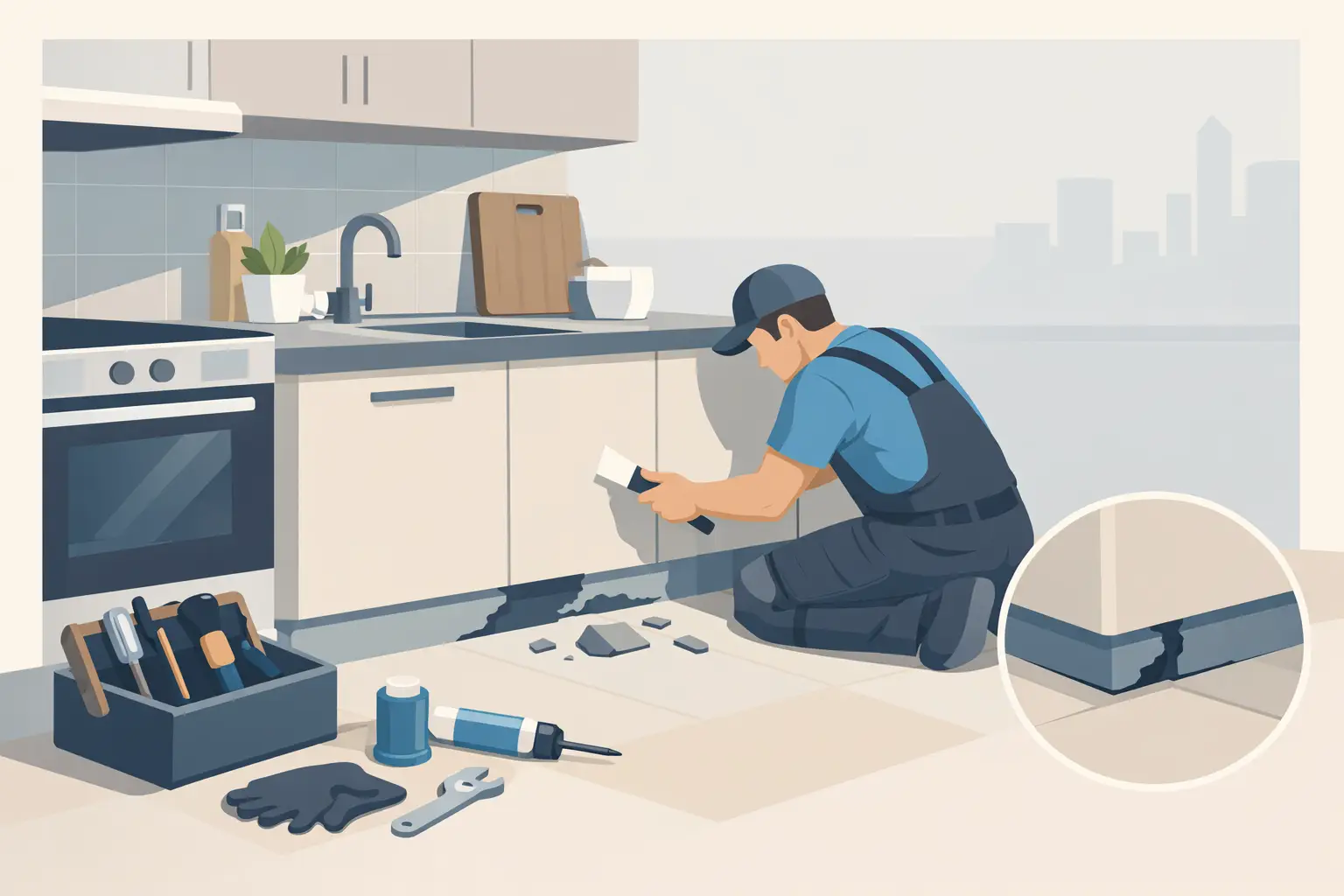
That skirting panel under your kitchen cabinets usually gets ignored until it starts swelling, peeling, or falling forward every time you mop the floor. In Singapore homes, kitchen cabinet plinth repair is one of the most common carpentry fixes after sink leaks, repeated wet mopping, and trapped moisture under lower cabinets. The good news is simple – a damaged plinth does not always mean you need to rip out the whole kitchen.
What a cabinet plinth actually does
The plinth is the bottom-facing panel running along the base of your lower kitchen cabinets. In many HDB flats, Condo units, and landed kitchens, it covers the cabinet legs or support base and gives the whole run a clean, finished look. It also helps stop dust, pests, and mop water from collecting deep under the cabinet carcass.
When the plinth fails, the damage is not only cosmetic. A loose or rotten base panel often points to a deeper moisture issue nearby. Sometimes the plinth is the only affected part. Sometimes it is the first visible sign that the cabinet side panel, sink base, or lower carcass has already started absorbing water.
Why kitchen cabinet plinth repair is so common in Singapore
Local kitchen conditions are hard on low-level carpentry. Humidity stays high, floors are mopped often, and the area near the sink cabinet sees regular splashes that owners may not notice at first. Once laminated chipboard or low-grade board starts taking in moisture, it swells fast.
In HDB and Condo kitchens, the plinth usually sits close to wet zones and cleaning chemicals. If there is even a slow drip from the sink waste pipe, bottle trap, water tap connection, or washing machine point, the base area can remain damp for weeks. By the time the laminate bubbles, the board inside is often already soft.
Another issue is previous renovation work. Some cabinets are installed too low, with poor ventilation and no allowance for repeated floor cleaning. Others use materials that look fine on handover day but do not last well in a humid service environment. That is why a proper assessment matters before anyone tells you to replace every cabinet in sight.
Signs your plinth needs repair, not just cleaning
If the panel has started bowing out, flaking at the edges, or turning soft when pressed, it is no longer a cleaning problem. It is a material failure problem. The same applies if the laminate is lifting, the fixing clips have come loose because the board has swollen, or the panel smells musty.
You should also pay attention if only one section near the sink is damaged while the rest of the lower cabinets still feels solid. That usually means a fractional repair is possible. On the other hand, if multiple base panels are swollen and the cabinet sides are crumbling near the floor line, the scope may need to expand.
Repair or replace the whole cabinet?
This is where many owners get pushed into overspending. If the damage is limited to the plinth and perhaps one adjoining lower panel, a targeted repair is usually the sensible route. Replacing only the affected section can restore the appearance and function without the cost, mess, and downtime of a full kitchen overhaul.
A full replacement becomes necessary only when the cabinet structure itself has failed extensively. For example, if the sink base has rotted through, the side gables are soft, shelving is collapsing, and the internal floor panel is gone, then changing only the front plinth will not hold up. Honest advice matters here. A proper tradesman should tell you clearly whether the damage is surface-level, localised, or structural.
How a proper kitchen cabinet plinth repair is done
A decent repair starts with finding the source of moisture. There is no point fitting a fresh plinth if a hidden leak is still wetting the same area every day. The base section should be inspected around the sink waste, water tap points, floor line, and adjacent cabinet joints.
If the plinth alone is damaged, the old section is removed and measured accurately. The replacement material needs to suit the kitchen environment, not just match the colour roughly. In many cases, the damaged piece can be remade and laminated to blend closely with the existing cabinet finish. If exact matching is not possible because the kitchen is old or the laminate is discontinued, the practical approach is to replace the affected run neatly so it still looks intentional.
The fixing method matters too. Some plinths are clipped to cabinet legs. Others are screw-fixed or bonded to a timber support. If the old supports have also deteriorated, they should be replaced or reinforced. Simply gluing a new face over a wet, swollen backing board is a short-term patch, not a repair.
Where damage has spread slightly beyond the plinth, a fractional carpentry repair may include the bottom edge of a cabinet side panel or sink cabinet base. This is often the most cost-effective route because it deals with the actual weak section without rebuilding the whole kitchen run.
Material choice matters more than most owners realise
Not all board types survive kitchen base conditions equally well. Standard particle board is usually the first to fail when exposed to standing moisture. Plywood-based repairs generally hold up better, especially in wet-prone zones, though the best choice still depends on the existing cabinet construction and budget.
For landlords preparing a unit quickly, a neat, durable partial replacement often makes more sense than spending on a full carpentry rebuild before handover. For owner-occupiers planning to stay long term, it may be worth upgrading the affected lower section with more moisture-resistant materials even if the original cabinet was made from cheaper board.
That said, there is always a trade-off. Better material costs more upfront. But replacing the same swollen panel twice is usually the more expensive mistake.
What makes Singapore jobs different
Local site conditions affect how repairs are planned. In HDB flats, kitchen layouts are often compact, so removal and refitting need to be controlled carefully to avoid unnecessary disruption. In Condo units, work timing and access may need to follow MCST rules, especially if carpentry debris removal is involved. In landed homes, older kitchens may have non-standard dimensions or previous patchwork repairs hidden behind the plinth line.
There is also the practical issue of responsibility. If you are a tenant, the damaged plinth may look minor, but if the cause is a long-term leak from under the sink, the owner should assess it properly before it becomes a larger cabinet failure. If you are a landlord or property agent preparing for the next move-in, a fast partial repair often protects the unit better than waiting until the whole base section deteriorates.
When not to delay the repair
A loose plinth is easy to ignore because the kitchen still seems usable. But once water-damaged board breaks down, it attracts more trouble. Cleaning becomes harder, insects can hide in the gap, and adjacent boards start absorbing moisture from the same area.
If the damaged section is under the sink cabinet, delaying is especially risky. That is usually the wettest cabinet in the whole kitchen. A small repair done early is often the difference between replacing one panel and rebuilding the lower cabinet section later.
How to keep the repaired plinth from failing again
After repair, the biggest priority is moisture control. Check below the sink occasionally, especially after using the water tap heavily or after any choke issue. Do not let wet floor mats stay pressed against the cabinet base. If you mop daily, keep the base area dry rather than leaving water to sit along the plinth line.
It also helps to fix tiny leaks immediately. Many cabinet failures start from a slow drip that looked harmless for months. Once the board swells, the repair bill rises quickly.
The smart way to get a quote
For this kind of work, clear photos save time. Take one wide shot of the full cabinet run, one close-up of the damaged plinth, and if possible one internal shot of the sink cabinet base. If the board feels soft, mention that. If there is a leak, say whether it is from the waste pipe, bottle trap, or water tap point. The more accurate the first assessment, the faster you can get a realistic price instead of vague guessing.
At HRD Professional Handyman, this is exactly the sort of repair we handle every week across Singapore – targeted carpentry work that saves owners from paying for a full kitchen replacement when only the lower damaged sections need attention. No hidden transport charges, no dramatic upselling, and no pretending a small cabinet base problem needs a full renovation package.
If your kitchen plinth is swollen, rotten, loose, or coming away near the sink cabinet, send photos on WhatsApp and ask for a direct quote. It is the fastest way to know whether you need a simple kitchen cabinet plinth repair or a more focused fractional carpentry fix before the damage spreads further.

0 Comments