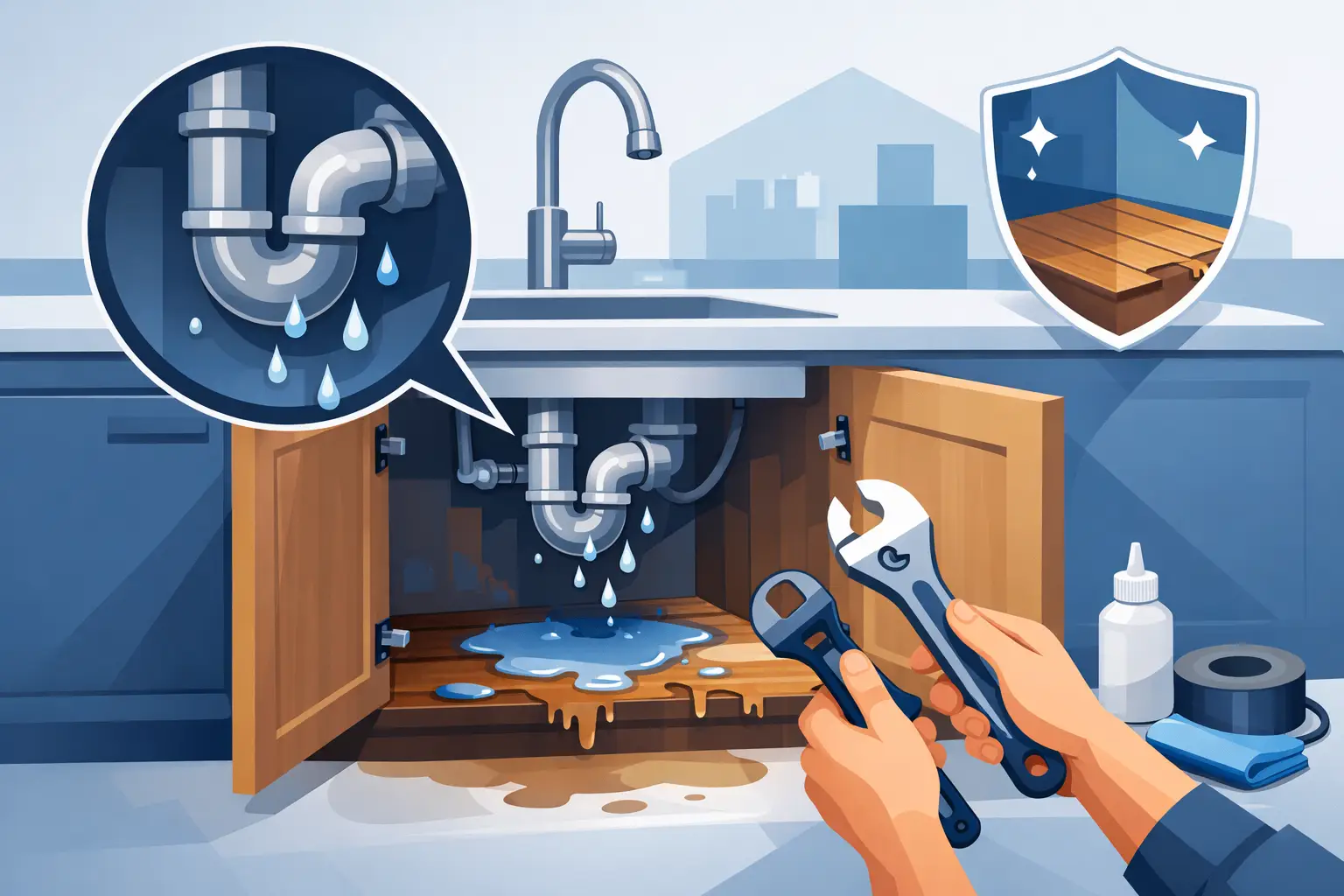
A sink that drips once every few seconds looks harmless until you see the swollen cabinet base underneath. In Singapore’s humidity, that slow water exposure can quickly lift laminate, rust hinges, grow mould and rot the chipboard carcass below your kitchen top. Knowing how to stop sink dripping early is not only about saving water. It is about preventing a small plumbing repair from becoming a costly kitchen cabinet repair.
The first job is to identify exactly where the water is coming from. A drip from the water tap spout needs a different fix from a leak at the flexible hose, drain trap or sink rim. Do not keep placing a pail underneath and hoping for the best. A pail hides the leak while moisture continues damaging the cabinet.
Find the source before you touch anything
Dry the entire sink area with kitchen towels, then place dry tissue around the suspected points. Check the water tap spout, the base of the tap, both flexible hoses, the angle valves, the drain trap and the waste pipe connection. Run the tap for a minute, then close it firmly without forcing the handle.
If water continues falling from the spout after the tap is closed, the internal cartridge, valve seal or washer is usually worn. This is the common cause for mixer taps and older two-handle taps. If the tap drips only from its base while it is running, the O-ring or internal seal around the tap body may be failing.
Water appearing inside the cabinet only when you use the sink points more often to the waste trap, sink strainer, drain hose or a loose connection. If the cabinet is wet even when nobody has used the sink, inspect the water supply hoses and angle valves first. A slow pressurised leak can be more serious than a dripping spout because it can continue day and night.
Also rule out condensation. Cold water pipes can sweat in an enclosed HDB kitchen cabinet, especially if ventilation is poor. Condensation usually leaves a light, even dampness on the pipe exterior rather than a focused drip at a joint. It still needs attention, but tightening fittings will not solve it.
How to stop sink dripping from the water tap
Start by turning off the angle valves below the sink. Turn each valve clockwise until it stops, then open the tap to release remaining water pressure. Put a towel in the cabinet and cover the sink drain so that no small screw, clip or seal disappears into the pipe.
For a mixer tap, remove the handle cap carefully, loosen the retaining screw and lift off the handle. Beneath it is normally a ceramic cartridge held by a nut or collar. Take a clear photo before removing anything, then bring the old cartridge to a hardware shop to match its size, stem and locating pins. Cartridges can look nearly identical but differ by a few millimetres.
Replace the cartridge and any damaged rubber seals, reassemble the tap and turn the water back on slowly. Test both hot and cold positions if your kitchen tap has them. Do not overtighten the retaining nut. Excess force can crack a plastic cartridge housing or distort the seal, creating another leak.
For a traditional two-handle tap, the repair may involve replacing the rubber washer at the end of the spindle. If the spindle threads are worn, or the tap body is badly scaled with mineral deposits, replacing the complete tap can be more sensible than repeatedly changing washers.
There is a trade-off here. A basic cartridge replacement is usually economical when the tap body is sound. But if the tap is loose on the kitchen top, corroded underneath, or has been repaired several times, a new quality tap with proper installation may save repeat call-outs and further cabinet damage.
Do not force a stuck valve or tap fitting
Many older HDB flats have angle valves that have not been touched for years. A valve can seize, snap or begin leaking from its spindle when forced. If it will not close with moderate hand pressure, stop there. Shutting off water at the wrong point, especially near a shared riser, can affect other units or create a bigger problem.
In a Condo, access work and water shut-offs may also need to follow MCST rules. A professional can isolate the correct line, replace the faulty valve if necessary and confirm that the repair has not affected neighbouring plumbing.
Stop leaks below the sink before the cabinet swells
If the drip comes from a flexible hose, check whether the water is coming from the threaded connection, the hose itself or the angle valve. A loose threaded connection can sometimes be tightened gently with the correct spanner. If the hose is bulging, rusted, frayed or wet along its length, replace it. Do not wrap it in tape and leave it inside a closed cabinet.
For leaks at the drain trap, first make sure the trap has not been knocked loose by stored items. Hand-tighten plastic trap fittings only until secure, then run water and watch closely. Over-tightening can crack plastic threads or pinch the washer. If water still appears at the joint, the washer may be flattened, missing or incorrectly seated.
A leaking sink strainer, where the drain meets the sink bowl, needs more care. Water can travel down the outside of the fitting and soak the cabinet floor before you notice it. This repair may require removing the strainer, cleaning away old sealant and refitting it with the correct gasket and seal. It is a good point to call a plumber if you are unsure, particularly where the sink is mounted tightly against a stone or solid-surface kitchen top.
Never ignore a cracked waste pipe. A temporary container is acceptable for a few hours while arranging help, not for days. Water inside an enclosed cabinet has nowhere to dry properly, and Singapore’s moisture levels make mould and wood deterioration much faster.
Protect the kitchen cabinet after the leak is fixed
Stopping the water is only half the job. Empty the cabinet completely and dry the base, sides and back panel. Leave the doors open and use a fan to move air through the space. Do not place liners, storage baskets or cleaning bottles back until the area is fully dry.
Check for soft spots, bubbling laminate, black mould marks, rusting hinges and a swollen plinth. Press gently around the cabinet floor and side panels. If chipboard feels soft or flakes at the edges, it has already absorbed water. Drying may stop further deterioration, but it will not restore the board’s original strength.
This does not always mean you need a full kitchen renovation. In many HDB and Condo kitchens, only the sink-base floor panel, lower side panel, plinth or a small section of carcass is affected. A fractional carpentry repair can remove and replace the rotten portion while retaining sound cabinet doors, kitchen top and surrounding units. That is often the honest, cost-saving option when the damage is localised.
Avoid covering swollen wood with a plastic sheet or thick silicone. It traps moisture and makes future inspections harder. A proper repair should deal with the leak first, remove compromised material where needed and leave access to valves and pipes for future maintenance.
When a dripping sink needs professional help
Call for help promptly if the angle valve will not close, water is coming from a concealed pipe, the cabinet base is soft, or the drip continues after a cartridge or washer change. The same applies if you smell mustiness, see mould, notice a damp patch on the wall beside the kitchen, or have water reaching nearby electrical sockets or appliances.
Landlords and property agents should document the area with dated photos before repairs begin. This protects everyone and makes it easier to distinguish a sudden plumbing fault from older cabinet deterioration. Tenants should report the leak immediately rather than attempting a major repair without approval.
For new BTO flats, photograph the leak and surrounding cabinet damage clearly during the defect liability period. A dripping tap or loose fitting may be a defect worth reporting, but do not delay emergency action while waiting for an inspection. Preventing water damage comes first.
Common questions about stopping a sink drip
Can I keep using the sink if the tap only drips slowly?
You can use it briefly, but arrange the repair soon. A drip from the spout may waste water without wetting the cabinet, yet it can worsen as the cartridge or washer degrades. If any water is appearing below the sink, minimise use until the source is fixed.
Is a leaking kitchen sink the Town Council’s responsibility?
Usually not. Internal plumbing fixtures, water taps, sink traps and kitchen cabinets within an HDB flat are generally the flat owner’s responsibility. Town Council matters usually relate to common property, not your own kitchen fittings. Where a leak may involve a shared pipe or common riser, get a proper assessment before assuming responsibility.
Why is my cabinet still damp after the pipe is repaired?
The board may have absorbed water, there may be a second small leak, or condensation may be forming on cold pipes. Dry the cabinet thoroughly and inspect it again after using the sink. Persistent dampness needs investigation, not more air freshener or a cabinet liner.
Send clear photos of the dripping point, pipes under the sink and any swollen cabinet panels by WhatsApp for a fast, transparent quote. HRD Professional Handyman can assess whether you need a straightforward plumbing repair, a replacement fitting, or a targeted cabinet repair instead of an expensive full kitchen overhaul. The earlier you act, the more likely the repair stays small, clean and affordable.

0 Comments