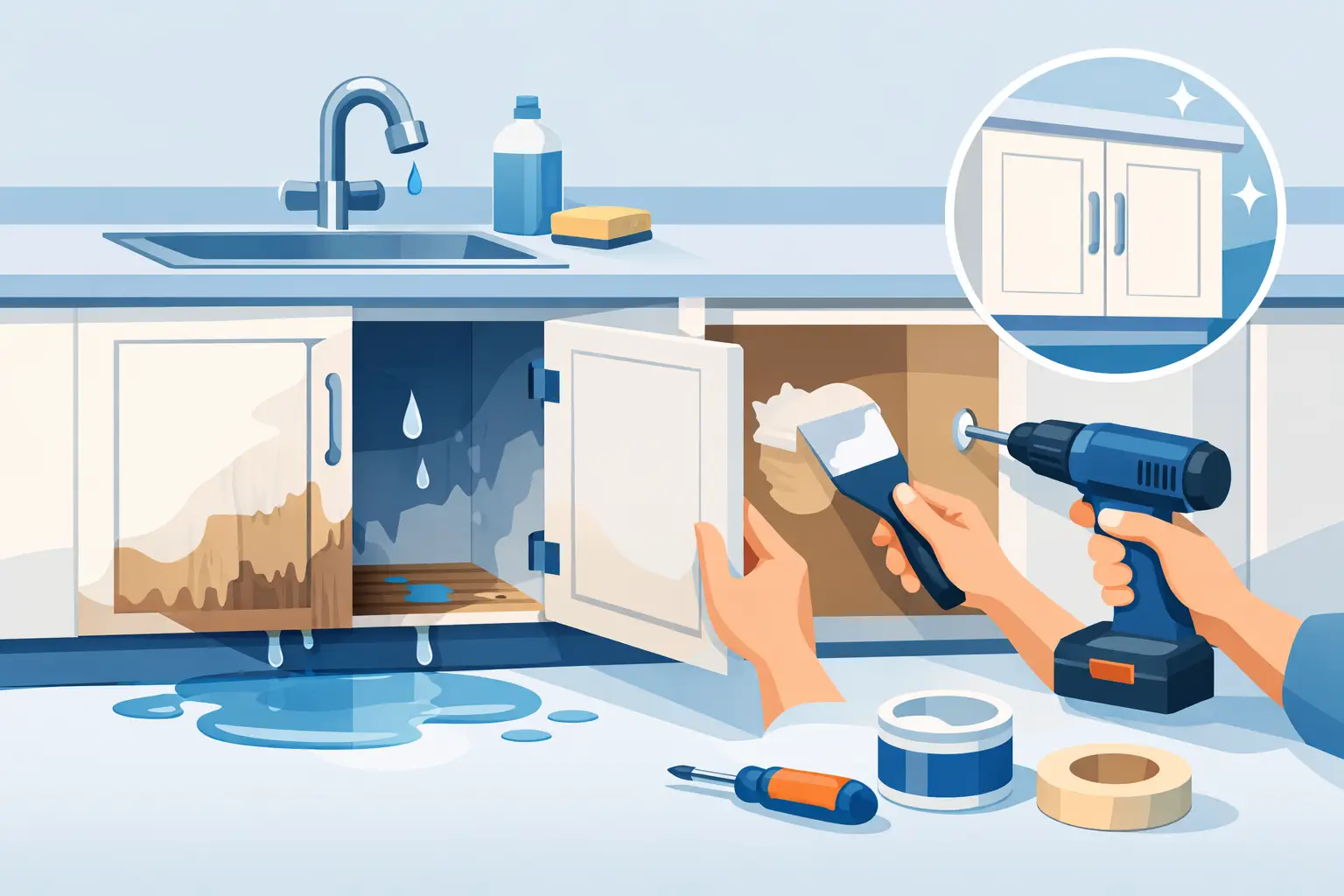
The usual story starts under the kitchen sink. You open the cabinet to grab detergent, and the base panel feels soft, the laminate is bubbling, or there is that stale, damp smell that tells you water has been sitting there for weeks. If you are searching for how to repair water damaged cabinets, the first thing to know is this: not every damaged cabinet needs a full replacement. In many Singapore homes, especially HDB flats and Condo units, a targeted repair to the affected panel, plinth, or internal carcass section is enough.
That matters because full kitchen replacement is expensive, messy, and often unnecessary. We see this all the time with sink-base cabinets, cabinet sides near a leaking water tap, and low plinth sections exposed to repeated mopping. The real job is to assess whether the cabinet is only swollen on the surface, structurally weakened, or already rotting through.
How to repair water damaged cabinets without wasting money
Before any repair starts, the water source must be stopped. If the leak is still active, no carpentry fix will last. In Singapore kitchens, the usual culprits are loose bottle traps, old sealant around the sink, slow drips from angle valves, cracked pipe joints, or water running down from the kitchen top after washing.
Once the leak is dealt with, the damaged cabinet needs a proper inspection. Surface bubbling on laminate is very different from a chipboard carcass that has absorbed water and expanded. If the board has only minor swelling and still feels firm, it may be repairable. If it is crumbling, flaking, blackened, or soft enough to press in with your thumb, that section usually needs replacement.
This is where many owners get pushed into unnecessary full overhauls. The truth is, kitchen cabinets are often modular enough for partial work. A damaged base panel under the sink, one side gable, or the front plinth can frequently be cut out and replaced without touching the rest of the kitchen.
First check what the cabinet is made of
Most water-damaged kitchen cabinets in Singapore are not solid timber. They are commonly built from chipboard, particle board, plywood, or MDF with laminate finishing. Chipboard is the most vulnerable. Once water gets in, it swells badly, loses strength, and rarely returns to its original shape.
Plywood handles moisture better, but it can still delaminate if exposed long enough. MDF swells fast and usually does not recover cleanly. This material check tells you whether the job is cosmetic, structural, or a replacement of one affected section.
If your cabinet door is still straight and the damage is only on the inner base, that is usually a good sign. If the hinges have pulled loose because the side panel is soft, the repair becomes more involved but is still often localised.
When a cosmetic repair is enough
A cosmetic repair works when the board is dry, firm, and only the finish is damaged. This may involve removing loose laminate, sanding the raised area, filling shallow surface defects, sealing the exposed portion, and applying a matching finish. It can improve appearance, but it does not rebuild strength if the core material has already broken down.
This is why honest assessment matters. A cabinet can look acceptable for a month after patching, then fail again once daily use starts. If the sink cabinet base is holding cleaning products and constant moisture exposure, cosmetic work alone is often false savings.
When partial replacement is the smarter fix
If the base panel has puffed up, smells damp, or bends under light pressure, partial replacement is usually the proper route. The affected board is removed, the surrounding area is dried and treated, and a new panel is fabricated to fit. If needed, the plinth or side support beside it is replaced at the same time.
For under-sink units, this approach makes far more sense than tearing out the whole lower run of cabinets. It saves money, cuts downtime, and avoids turning a repairable problem into a renovation project.
A practical repair approach for Singapore homes
In HDB flats and Condo units, kitchen layouts are often tight, and access can be awkward. That means repair work has to be precise. The damaged section should be isolated first. Stored items come out, the cabinet interior is dried fully, and any hidden mould or residue is cleaned off. If the leak came from plumbing, that should be tested again before new board goes in.
Next, the damaged panel is measured and removed cleanly. Good repair work is not about covering over rot. It is about cutting back to sound material. If the side walls of the cabinet are still solid, only the bottom board may need changing. If the lower edges of the side panels have wicked up water, those sections may need to be trimmed and rebuilt as well.
Replacement material also matters. In wet zones, using the same low-grade board again is asking for repeat damage. A better board with proper edge sealing will last longer, especially under sinks where condensation, minor splashes, and humidity are constant. In Singapore, that extra moisture resistance is worth it.
The final part is finishing and prevention. Exposed edges should be sealed. Pipe penetrations should be cut neatly, not left open and ragged. If there was no protective lining inside the sink cabinet before, adding one can help reduce future damage from small drips or spilled detergent.
What homeowners should not do
Trying to dry a swollen chipboard base with a fan and hoping it shrinks back rarely works. Once the board has expanded, the structural damage is usually done. Painting over a damp, soft panel is another common mistake. It hides the problem for a while, then the smell and bubbling return.
Be careful with stick-on vinyl patches sold as quick cabinet fixes. They may improve appearance temporarily, but under a sink cabinet they often trap moisture inside. The same goes for laying a new loose board over a rotten base without removing the damaged one below. That only conceals decay and can attract pests.
If the cabinet sits against a solid wall and the leak has been ongoing for a long time, also check whether water has affected the skirting, nearby laminate, or the back panel. A proper repair should solve the surrounding risk, not just the visible damage.
Local issues that affect water damaged cabinets
Singapore homes face two problems at once: leaks and humidity. Even a minor plumbing drip can become a major cabinet issue because enclosed kitchen cabinets do not dry quickly. In older HDB flats, long-term under-sink leaks are especially common because of ageing fittings. In newer BTO flats, some owners discover early defects around sealant or pipe joints during the defect liability period.
For Condo units, management rules may affect timing and access if repair works involve noisy cutting during restricted hours. For landlords and agents preparing a unit for handover, partial cabinet repair is often the fastest way to restore appearance without overspending.
Responsibility also depends on the cause. If the issue is from your own sink plumbing or cabinet wear, it is usually owner responsibility. If water is entering from a neighbouring unit or a building pipe route, that becomes a different discussion. Either way, delaying the cabinet repair only increases the spread of damage.
How to know if repair is still worth it
Repair is worth it when the damage is limited to one or two sections, the rest of the cabinet line is stable, and the door alignment and usable structure remain sound. If multiple carcasses are collapsing, mould is widespread, and the kitchen is already at the end of its service life, replacement may be more sensible.
That said, many people are told to replace an entire kitchen when only one sink cabinet base and one side panel are affected. That is exactly where fractional carpentry repair saves serious money. You keep the usable structure, replace only what has failed, and get the kitchen back into service quickly.
If you are unsure, the fastest way to judge is simple. Open the cabinet, take clear photos of the base, side panels, hinges, and leak area, then get an assessment before the damage spreads. A straightforward contractor should tell you honestly whether it is a patch job, a partial rebuild, or not worth repairing.
If your cabinet is already swollen, soft, or giving off that damp smell, do not wait for the board to collapse completely. Send clear photos on WhatsApp and get a transparent quote for the exact sections that need work – no hidden transport charges, no pressure to redo the whole kitchen, and no guessing. A proper repair done early is usually the cheapest fix you will get.

0 Comments