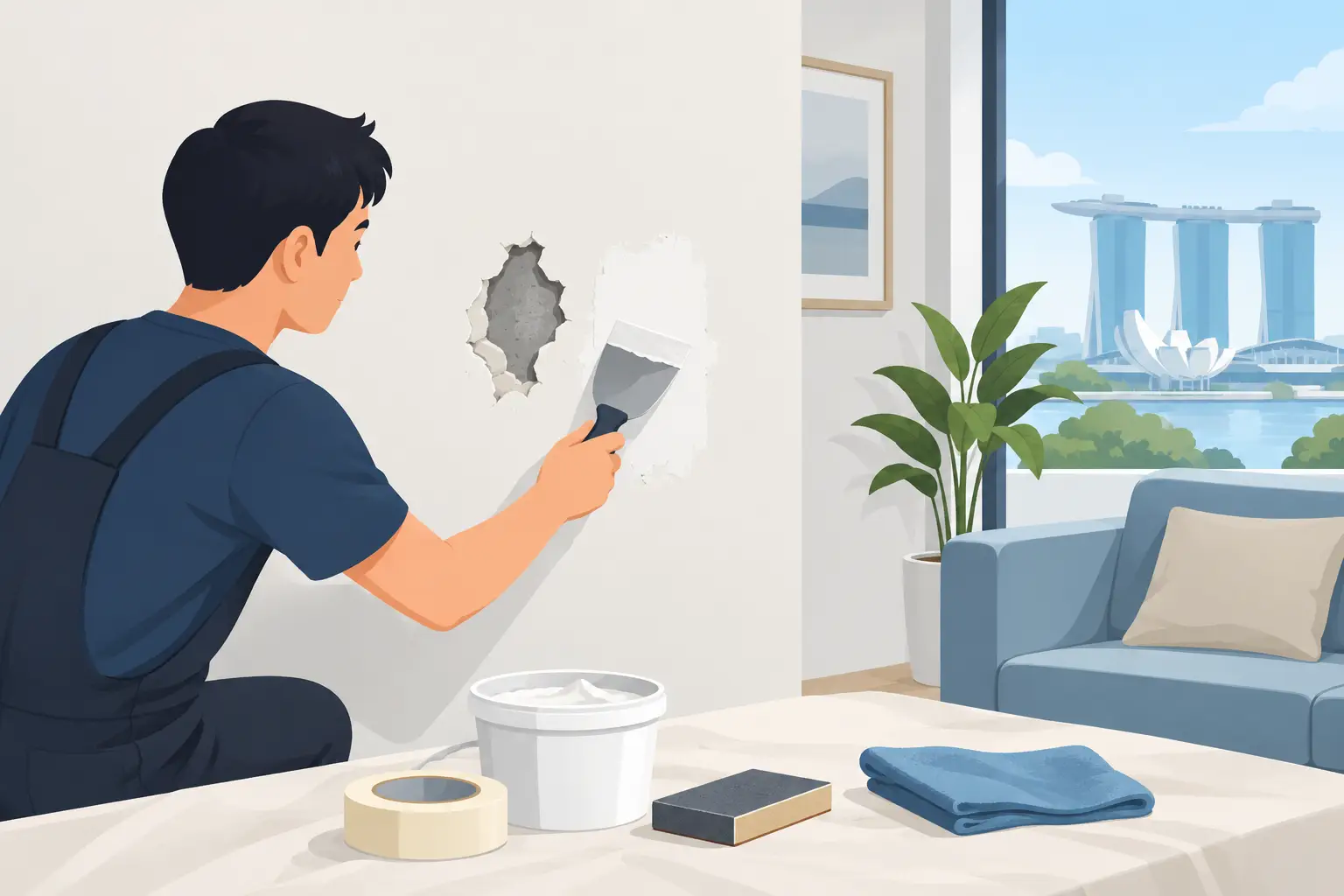
A removed TV bracket, old picture hook or loose wall plug can leave a small hole that looks far worse once light hits it. In an HDB flat or Condo unit, the usual question is not just how to patch wall holes, but whether the repair will blend into the existing paint and whether there are hidden electrical cables behind that solid wall.
The right repair depends on the hole size, wall material and what caused it. A nail mark needs a different approach from a torn gypsum-board partition or a failed anchor pulled from concrete. Rushing straight to filler is how a simple touch-up becomes a visible lump, crack or peeling patch a few weeks later.
First, identify the wall and the cause
Most internal walls in HDB flats, Condos and landed homes are solid concrete or masonry, particularly around bedrooms, living rooms and kitchens. These are hard walls that usually hold a screw well when the correct wall plug and drill bit are used. Some newer layouts, offices and renovated units also have gypsum-board partitions, which sound hollow when tapped and need backing support for larger holes.
Before repairing anything, remove loose paint, crumbling filler and any failed plastic wall plug. If the hole is damp, stained brown, surrounded by mould or soft to the touch, do not cover it yet. Find the water source first. A leaking water tap, concealed pipe issue, condensation around an air-conditioner trunking, or water seepage from the unit above can make new filler fail quickly.
Also pause if the hole appeared after a screw was removed near a power point, switch, DB box or kitchen appliance connection. Electrical cables in Singapore homes may run vertically or horizontally from fittings. Never push metal tools deep into an unknown hole or enlarge it with a drill until the area has been checked.
How to patch wall holes by size
Tiny nail holes and picture-hook marks
For pinholes, nail holes and shallow chips, use a fine wall filler. Press a small amount into the hole with a flexible scraper, then pull the scraper across the surface so the filler sits flush rather than proud of the wall.
Let it dry fully according to the product instructions. Lightly sand with fine sandpaper until smooth, wipe away dust, then touch up with matching paint. In practice, paint is often the hardest part. Even if you still have the original colour code, aged walls can fade or become slightly yellow in Singapore’s humidity. For one or two tiny marks, feathering a small amount of paint can work. For a more noticeable repair, repainting the full wall from corner to corner gives the cleanest result.
Screw and wall-plug holes in concrete walls
When a wall plug has been removed, use pliers to pull it out if it comes easily. If it is firmly lodged, carefully trim it flush with the wall rather than digging aggressively around it. The goal is a stable opening that can be filled, not a larger crater.
Vacuum or brush out dust, then press in a cement-based repair compound or suitable wall filler in thin layers. Deep holes should not be packed with one thick layer. The outside may look dry while the centre remains soft, leading to shrinkage and cracking. Build it up in stages, allow each layer to set, then apply a final skim coat for a level finish.
Once sanded, use primer if bare cement is showing before applying paint. Skipping primer can leave a dull patch that absorbs paint differently from the surrounding wall.
Holes in gypsum-board partitions
A small screw hole in a gypsum-board partition can be filled and sanded like a nail hole. A larger opening needs more support. If the board is torn, dented deeply or missing altogether, filler alone will flex and crack.
For a repair larger than roughly a coin, cut away loose material to create a neat shape, fit a backing piece behind the board, secure a replacement patch, then tape and skim the joints with joint compound. This is a more technical repair than it appears. If the partition is near a bathroom, kitchen or air-conditioning route, check whether moisture has damaged the board or whether services are running behind it.
Larger holes, impact damage and cracked corners
A door handle slammed into a wall, a moved furniture edge or a failed wall-mounted shelf can create a wider hole with cracked paint around it. Do not merely fill the centre. Scrape back all loose edges until you reach firm material, otherwise the repair will detach with the next knock.
For deeper damage, a repair mesh may be needed beneath the skim coat. Corners often need a corner bead repair to restore a straight edge. These are the jobs where a patch can look acceptable from two metres away but obvious at close range if the wall profile is not rebuilt properly.
Preparation makes the repair last
A durable patch starts with a clean, dry surface. Dust is the enemy of adhesion, especially after drilling into concrete. Vacuum the hole and surrounding area, then wipe the surface with a barely damp cloth and allow it to dry.
In humid rooms, check for mould before applying any filler. Treat the mould safely, remove loose paint and solve the moisture problem. Painting over a damp patch may hide it temporarily, but bubbling paint and black marks will return.
Choose the filler for the job. Lightweight ready-mixed filler is convenient for shallow cosmetic marks. Cement-based filler is generally better for deeper damage in solid walls. Joint compound is intended for gypsum-board seams and repairs. The cheapest tub on the shelf is not always the saving if it shrinks, cracks or cannot bond properly to the existing surface.
Avoid these common Singapore home repair mistakes
The most common mistake is treating every hole as a simple cosmetic issue. A wall plug that keeps coming loose may mean the original screw was undersized, the plug was wrong for the wall, or the item mounted was too heavy. Filling it and using the same hardware again just repeats the failure.
Another mistake is mounting heavy items into an unverified wall. Mirrors, TV brackets, fold-down tables and upper kitchen storage need the correct anchors and fixing positions. In an HDB home, do not hack, chase or make major alterations to structural walls simply to hide a cable or repair mounting damage. If you are unsure what is behind the surface, get it assessed first.
Bomb shelter areas deserve particular care. Do not drill into, alter or obstruct the bomb shelter door, frame, ventilation components or locking mechanism. For any mounting near the shelter, follow applicable requirements and avoid improvising around safety features.
Finally, do not ignore management rules. Damage inside your own HDB flat is normally the owner’s responsibility, while defects in common corridors or shared areas may fall under Town Council management. In a Condo, check with the MCST before work affecting common-property finishes, external-facing walls or areas with renovation restrictions. Tenants should photograph the damage and obtain the landlord’s agreement before repairs, especially where the original paint finish must be matched.
When a handyman repair is the sensible option
DIY is reasonable for a few tiny nail marks if you have matching paint and patience. It becomes less worthwhile when there are multiple holes, a visible feature wall, high ceilings, damaged gypsum-board sections or uncertainty about wiring and concealed leaks.
A proper repair service should tell you plainly whether the wall needs filling, patch painting, a full-wall repaint or a new fixing solution. There is no point paying for a full room repaint when a careful local repair will blend properly. Equally, a tiny touch-up is false economy if the surrounding paint has faded so much that the patch will stand out.
For fast, clear advice, send photos of the hole, a wider photo of the wall and the approximate size by WhatsApp to HRD Professional Handyman. You can get a transparent quote before work starts, without vague add-ons for a straightforward repair.
A clean patch is more than filler in a hole. It is a dry, stable wall surface, a paint finish that does not announce itself, and the confidence that the next shelf, mirror or bracket is fixed safely.

0 Comments