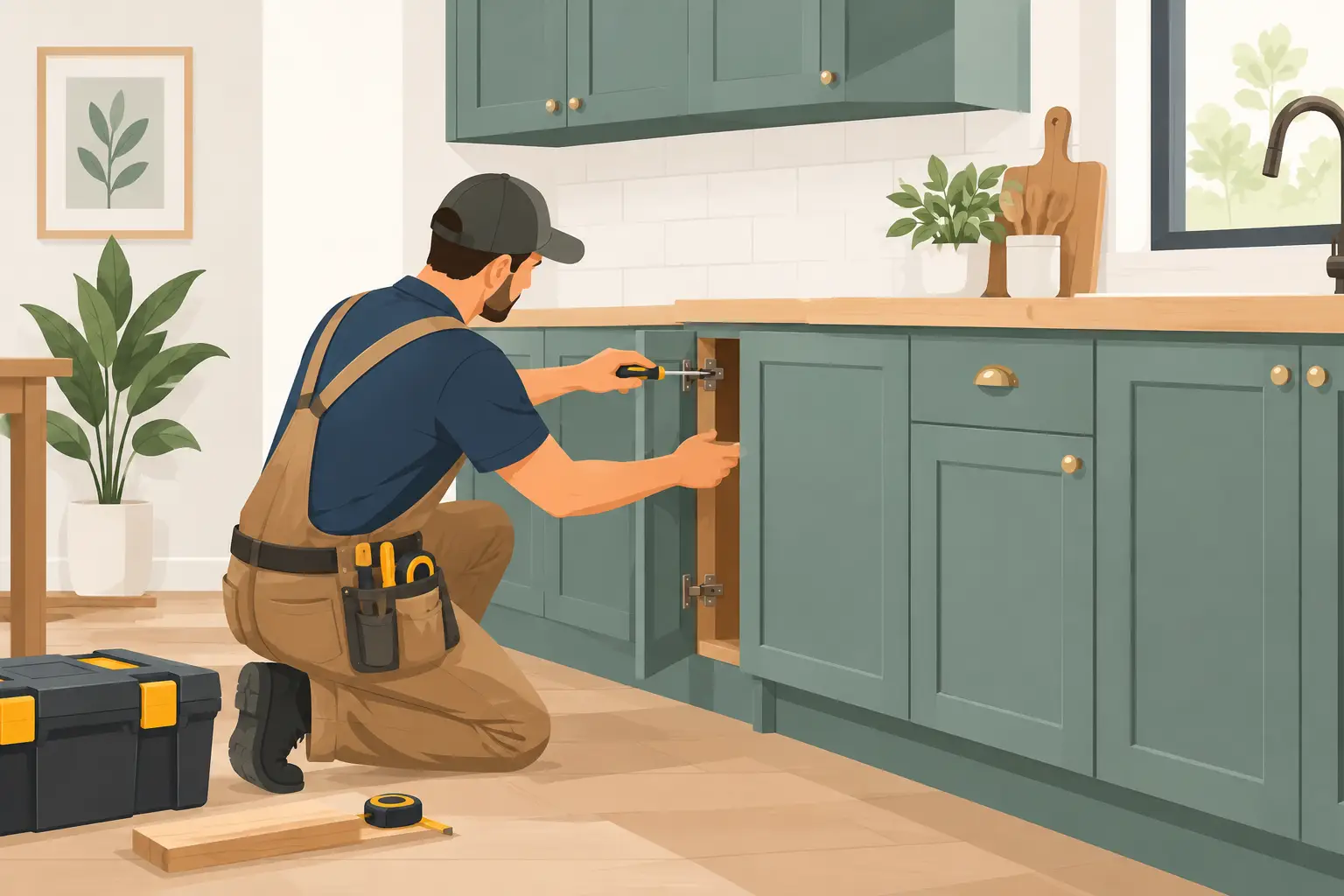
A soft, swollen cabinet base under the kitchen sink is not a reason to tear out an entire kitchen. In many HDB flats and Condo units, the damage is limited to one plinth, side panel or lower carcass section after a slow water tap or pipe leak. The right carpentry services identify exactly what has failed, stop the cause, and replace only the affected section where it is safe to do so.
That distinction can save a homeowner thousands of dollars and several weeks of disruption. It also prevents a common mistake: covering rotten wood with a new laminate sheet, then discovering the cabinet is still crumbling a few months later.
Why kitchen cabinets fail so quickly in Singapore
Singapore’s heat and humidity are hard on engineered wood. Most built-in kitchen cabinets use particleboard or MDF with laminate facing. Once water enters through an exposed edge, damaged seal, loose sink silicone or leaking trap, the board absorbs moisture. It swells, loses strength and eventually breaks down.
The area below the sink is especially vulnerable. Water may drip only during use, so the leak goes unnoticed behind cleaning supplies and bins. By the time the cabinet door catches on a warped base or the plinth begins to peel, the lower panel may already be soft. A leaking washing machine connection, dishwasher hose or concealed water pipe can cause the same problem in a service yard cabinet.
For landlords, this is not merely cosmetic. A tenant may reasonably report a musty smell, loose cabinet door or mould around the sink area. Delaying repair allows the moisture to spread into adjoining units, the kitchen top support and skirting. Fast action keeps a manageable repair from becoming a full kitchen renovation.
When fractional cabinet repair is the better choice
A proper assessment starts with the source of water. Replacing wood before repairing the leak is wasted money. The water tap, sink waste pipe, bottle trap, flexible hose and silicone joints must be checked first. If plumbing work is needed, it should be dealt with before the replacement panel is fitted.
Fractional repair is often suitable when the damage is confined to a lower cabinet base, plinth, vertical side panel or one carcass section, while the adjoining cabinets and kitchen top remain firm and level. The damaged material can be removed, a new moisture-resistant board can be cut to size, and exposed edges can be properly sealed. Where practical, the new section is finished to match the existing cabinet as closely as possible.
This is particularly sensible in an HDB kitchen where the cabinet run is otherwise sound. There is no value in paying for a massive renovation ID package just because one under-sink cabinet has rotted. A targeted job reduces cost, keeps usable storage in place and usually means far less mess in the home.
However, a fractional repair is not the honest answer in every case. Full replacement may be more sensible when water damage has travelled across several cabinets, the kitchen top is sagging, the cabinet frames are unstable, or the same material has swollen throughout the run. Termite damage, severe mould contamination and repeated pipe leaks also require a wider solution. A reliable carpenter should tell you this plainly rather than force a small patch that will not last.
What dependable carpentry services should inspect
Do not accept a quote based solely on a photo of peeling laminate. Photos are useful for a fast preliminary estimate, but the condition behind the panel matters. A trained handyman should inspect whether the board is soft beneath the surface, whether the floor is dry, and whether nearby cabinet sections are still structurally sound.
They should also check the hinges, drawer runners and door alignment. Swelling in the carcass can pull hinges out of their screw holes, causing doors to scrape or hang unevenly. Reusing a sound door is usually possible, but damaged hardware should not be ignored simply to make a quotation look cheaper.
For cabinet repairs, material selection matters. Standard particleboard may be economical for a dry internal shelf, but it is a poor choice directly under a sink if exposed edges are left unsealed. Moisture-resistant boards, correct edge treatment and careful sealing around pipe cut-outs provide better protection. This does not make a cabinet waterproof, so leaks still need immediate attention, but it gives the repaired section a much better chance in Singapore conditions.
Workmanship also includes leaving the site usable. Cabinet interiors should be cleared of loose debris, cut-outs should fit neatly around pipes, and doors should close correctly before the job is signed off. If a repair requires a return visit because replacement material needs to be prepared, that should be explained upfront rather than becoming a surprise delay.
Clear pricing means fewer surprises at your door
Homeowners are right to be cautious when a low quote suddenly grows after the handyman arrives. A transparent quote should state what it covers: labour, replacement board or laminate, hardware where needed, transport, disposal and any plumbing rectification if it is included. If the condition discovered on site differs materially from the photos, the change should be explained and approved before additional work begins.
The final cost depends on access, material, cabinet construction and the extent of hidden damage. An under-sink base replacement in an accessible HDB flat is different from reconstructing a custom cabinet in a landed property. A Condo unit may also have loading-bay booking rules, lift protection requirements and permitted work hours. These are real factors, but they should be discussed clearly, not used as vague excuses for hidden fees.
For property agents and landlords, speed matters as much as the repair itself. A detailed photo record before and after work can help clarify the condition of the unit, especially between tenancies. Office managers have similar concerns when pantry cabinets swell beneath a leaking dispenser or sink. Targeted carpentry limits downtime and avoids closing an entire pantry for a large-scale refurbishment that may not be necessary.
Small checks that prevent another cabinet repair
After a cabinet has been repaired, check below the sink weekly for the first month. Run the water tap, fill the sink and inspect the trap, hose connections and pipe joints for slow drips. Do not store wet mops, dripping bottles or soaked cloths directly on the cabinet base.
If you notice bubbling laminate, a sour smell, black spotting or a cabinet door that has suddenly gone out of alignment, act early. These signs are often easier and cheaper to resolve before the board loses its strength. In a tenant-occupied flat, report leaks in writing and keep photographs. Responsibility can depend on the cause and tenancy agreement, but evidence prevents arguments later.
For HDB residents, understand the difference between common-area defects and fixtures inside your home. Town council matters generally relate to common property, while an internal kitchen cabinet, water tap or sink fitting is normally the owner’s responsibility. New BTO homeowners should also check their defect reporting milestones promptly. A cabinet issue caused by an installation defect may need documentation before any repair changes the original condition.
Common questions about cabinet carpentry repairs
Can a rotten kitchen cabinet base be repaired without replacing the whole cabinet?
Often, yes. If the side panels, back panel and kitchen top support are still sound, the affected base or plinth can usually be removed and rebuilt. The leak must be rectified first, and the remaining cabinet needs to be checked for hidden swelling.
Will the new panel match my existing cabinet colour?
A close match is often possible, especially for common laminates, but an exact match depends on the age, finish and availability of the original material. Sunlight, cleaning products and years of use can change the appearance of existing laminate. An honest contractor will explain this before work starts.
Can carpentry work be done in a Condo unit?
Yes, but MCST rules may affect work hours, lift protection, contractor registration and debris disposal. Share any management requirements before booking so the work can be planned properly and completed without avoidable delays.
Send photos for a straight answer before the damage spreads
HRD Professional Handyman provides practical carpentry repairs across Singapore for damaged kitchen cabinets, swollen plinths, loose doors and water-affected carcass sections. Send clear WhatsApp photos of the damaged area, the cabinet interior, the sink pipes or water tap, and a wider view of the kitchen. You will receive a fast, transparent assessment and upfront quotation, with no hidden transport surprises.
A cabinet that feels slightly soft today can become a collapsed base and a much larger bill later. Send the photos now, fix the leak at its source, and keep the repair as small as the damage allows.

0 Comments