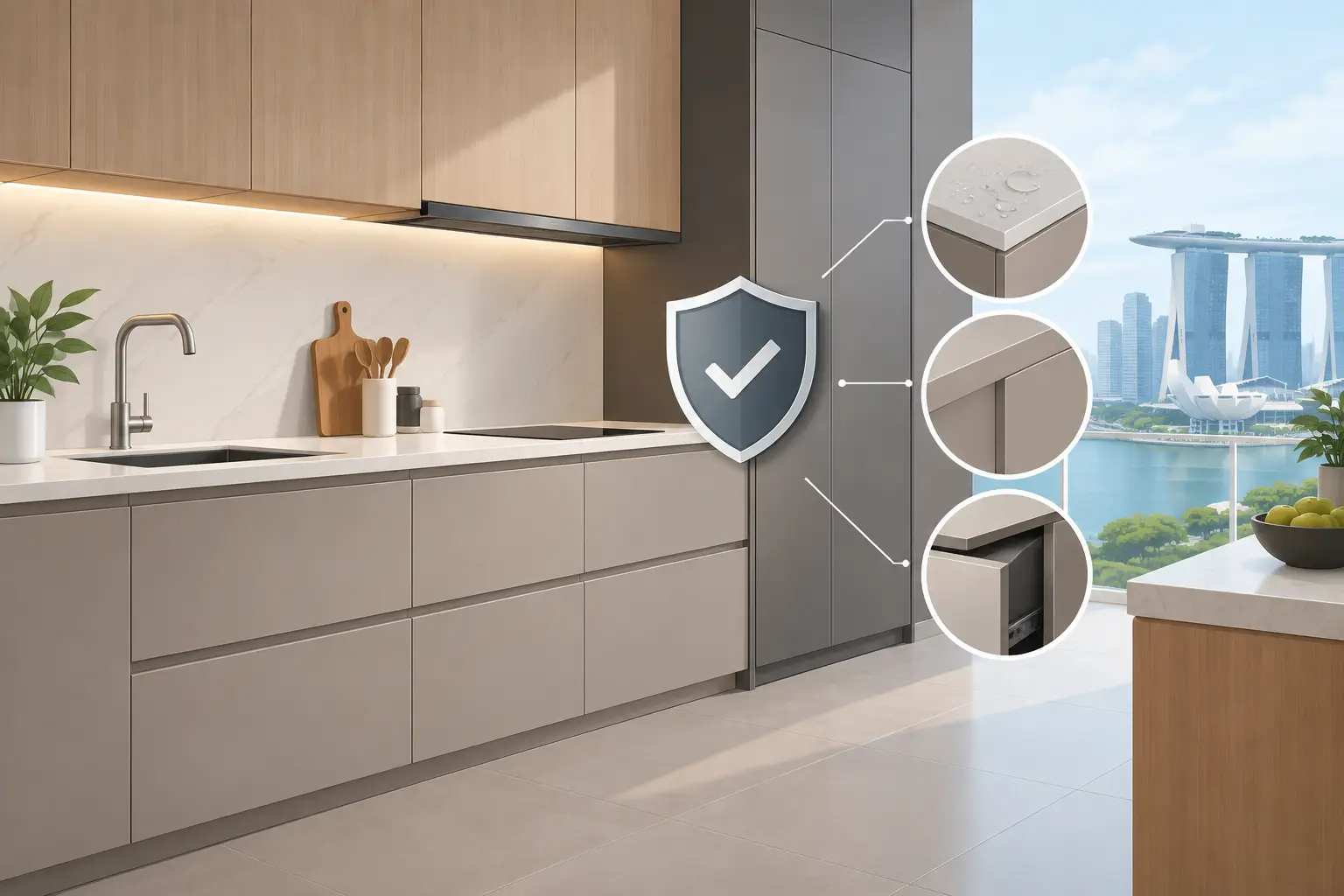
A kitchen sink cabinet can look acceptable from the outside while its base is quietly turning soft, swollen and mouldy underneath. In Singapore, cabinet durability is not just about choosing a nicer laminate colour or thicker door. It is about how well the cabinet survives daily moisture, hidden pipe leaks, steam, poor ventilation and years of cleaning.
For HDB flats, Condo units and landed homes, the cabinet that usually fails first is the one below the kitchen sink. That is where water taps, waste pipes, bottle traps and flexible hoses sit inside an enclosed compartment. A slow drip can soak the same area for months before anyone notices it. By then, homeowners are often told to replace the whole kitchen. That is not always necessary.
What Cabinet Durability Really Means
A durable cabinet is one that stays structurally sound despite normal use. The doors should remain aligned, hinges should hold firmly, the carcass should not bulge, and the cabinet base should stay hard when pressed. Laminate alone does not make a cabinet durable. It only protects the surface until water finds an exposed edge, screw hole, joint or damaged seal.
Most kitchen cabinets in Singapore use one of three board types: particleboard, medium-density fibreboard and plywood. Each has a different price point and tolerance for moisture. The problem begins when a homeowner assumes all boards react to water in the same way.
Particleboard is common in many budget and mid-range kitchens. It is economical and flat, but once water reaches its raw core, it can expand rapidly and lose its holding strength. Screws loosen, hinges pull out and the base becomes crumbly. Medium-density fibreboard has a smoother finish but is also vulnerable if it is not properly moisture-resistant and sealed at every cut edge.
Plywood generally handles occasional moisture better because it is made from layered veneers. However, plywood is not invincible. Low-grade plywood, poor edge sealing or repeated saturation can still cause delamination, staining and mould. The best material can fail if a leaking pipe is left unresolved.
Why Singapore Kitchens Wear Out Faster
Singapore’s humidity gives moisture very little chance to dry out inside a closed cabinet. After cooking, washing up or mopping, warm damp air can remain trapped around the sink cabinet, especially in compact HDB kitchen layouts with limited airflow.
A leak does not need to be dramatic. A waste pipe joint may drip only when the sink is full. A water tap hose may sweat or leak behind stored detergent bottles. A dishwasher connection, water filter line or washing machine inlet can also create hidden moisture. Because the cabinet floor is rarely inspected, damage spreads sideways into the plinth and adjacent carcass panels.
There is also a difference between surface water and structural water damage. A few drops wiped up quickly will usually not cause serious harm. Water that sits along a board edge, enters through a screw hole or seeps below a vinyl liner is the real concern. Once the board absorbs water, simply drying it does not restore its original strength.
Early Warning Signs You Should Not Ignore
The first signs are usually small. You may see laminate lifting near the base, a dark line around the cabinet floor, rusting hinge screws or a musty smell when opening the door. The cabinet may feel slightly soft at the bottom corners, or the doors may start rubbing because the carcass has shifted.
Check beneath the sink with a torch after running water for several minutes. Feel around pipe joints and the cabinet base with a dry tissue. Do not rely on looking alone. Water can travel along a pipe and drip away from the actual leak point.
Pay attention to these four signs, especially if the cabinet is more than a few years old:
- Swollen board edges, bubbling laminate or peeling PVC edging
- Soft, flaky or darkened cabinet bases and plinths
- Persistent damp smells, mould spots or insect activity
- Doors and drawers that no longer close squarely or hinges that keep loosening
If only one small area is affected, acting early can make a major difference to the repair bill. Waiting until the base collapses often turns a panel repair into a larger reconstruction job.
Repair or Replace? The Honest Answer
A full kitchen replacement makes sense when water damage is widespread, several cabinet sections have failed, the kitchen layout needs changing, or the cabinets are already at the end of their serviceable life. But replacing an entire kitchen because one sink cabinet base has rotted is often excessive.
In many cases, a fractional carpentry repair is the sensible option. The damaged base panel, side panel, back panel or plinth can be removed and rebuilt while retaining sound cabinet sections, doors and kitchen top. This approach reduces demolition, keeps the original layout intact and avoids taking the kitchen out of use for a lengthy renovation.
The decision depends on what sits around the damaged section. If the neighbouring carcasses are firm, the kitchen top is stable and the leak has been fixed, targeted replacement can give the cabinet many more useful years. If moisture has travelled through multiple panels or the kitchen top support has weakened, a broader repair may be safer.
Be wary of anyone who gives a replacement recommendation without checking the internal board condition. A proper assessment includes opening the cabinet, testing the firmness of the base and side panels, checking the plinth, locating the water source and confirming whether nearby sections are still sound.
How to Improve Cabinet Durability After a Repair
The repair itself is only half the job. The cause of the water damage must be stopped first. Replacing a rotten panel while leaving a slow pipe leak behind is money wasted.
Start with the plumbing. Check the bottle trap, waste pipe, water tap connections and flexible hoses. If the leak occurs only during drainage, fill the sink and release the water while inspecting underneath. If the leak appears even when the tap is off, the supply line or valve may be the issue. A plumbing fault should be resolved before new carpentry panels are installed.
Then protect vulnerable cabinet edges. Proper edge sealing matters most at cut-outs, joints, screw holes and the cabinet floor near pipe penetrations. A well-fitted protective base liner can help catch minor spills, but it is not a cure for a leaking pipe. Remove the liner regularly to inspect underneath. Moisture trapped beneath it can be worse than an obvious spill.
Avoid packing the sink cabinet so tightly that leaks become invisible. Store cleaning supplies in removable baskets and leave enough space to inspect the pipes. If you use a water filter, ensure its tubing is not kinked or rubbing against sharp cabinet edges.
For landlords and property agents, this is particularly useful between tenancies. A quick inspection before new tenants move in can prevent a dispute over who caused the damage. Take clear photographs of the sink cabinet base, plumbing connections and door condition during handover.
Cabinet Durability in HDB Flats and Condo Units
In HDB flats, kitchen cabinetry is generally the owner’s responsibility, including water damage caused by internal plumbing fixtures. Town councils typically handle common areas and estate matters, not a rotten sink cabinet inside your flat. If a leak may be coming from a neighbouring unit or a shared pipe route, document the damage early and notify the relevant parties before repairs hide the evidence.
Condo owners should also consider MCST rules before arranging major works. A straightforward internal cabinet repair is usually far less disruptive than a full kitchen overhaul, but renovation hours, contractor access and disposal arrangements may still apply. Targeted repairs help minimise noise, dust and lift booking complications.
For new BTO flats, do not assume a newer kitchen is automatically safe from water damage. Check the sink cabinet during your defect inspection period and after the first few months of use. Misaligned pipes, loose fittings and unsealed openings can show up early. Photograph anything suspicious before it develops into swollen board or mould.
A Small Leak Should Not Become a New Kitchen Bill
Good cabinet durability comes down to three things: suitable materials, dry internal conditions and fast action when something changes. You do not need to panic at every water mark, but you should not ignore soft board, mould smells or peeling laminate around the sink.
If your kitchen cabinet has water damage, send clear WhatsApp photos of the affected area, the cabinet interior and the pipes underneath. HRD Professional Handyman can assess whether a targeted panel, plinth or carcass repair may save your kitchen and your budget from an unnecessary full replacement.


0 Comments