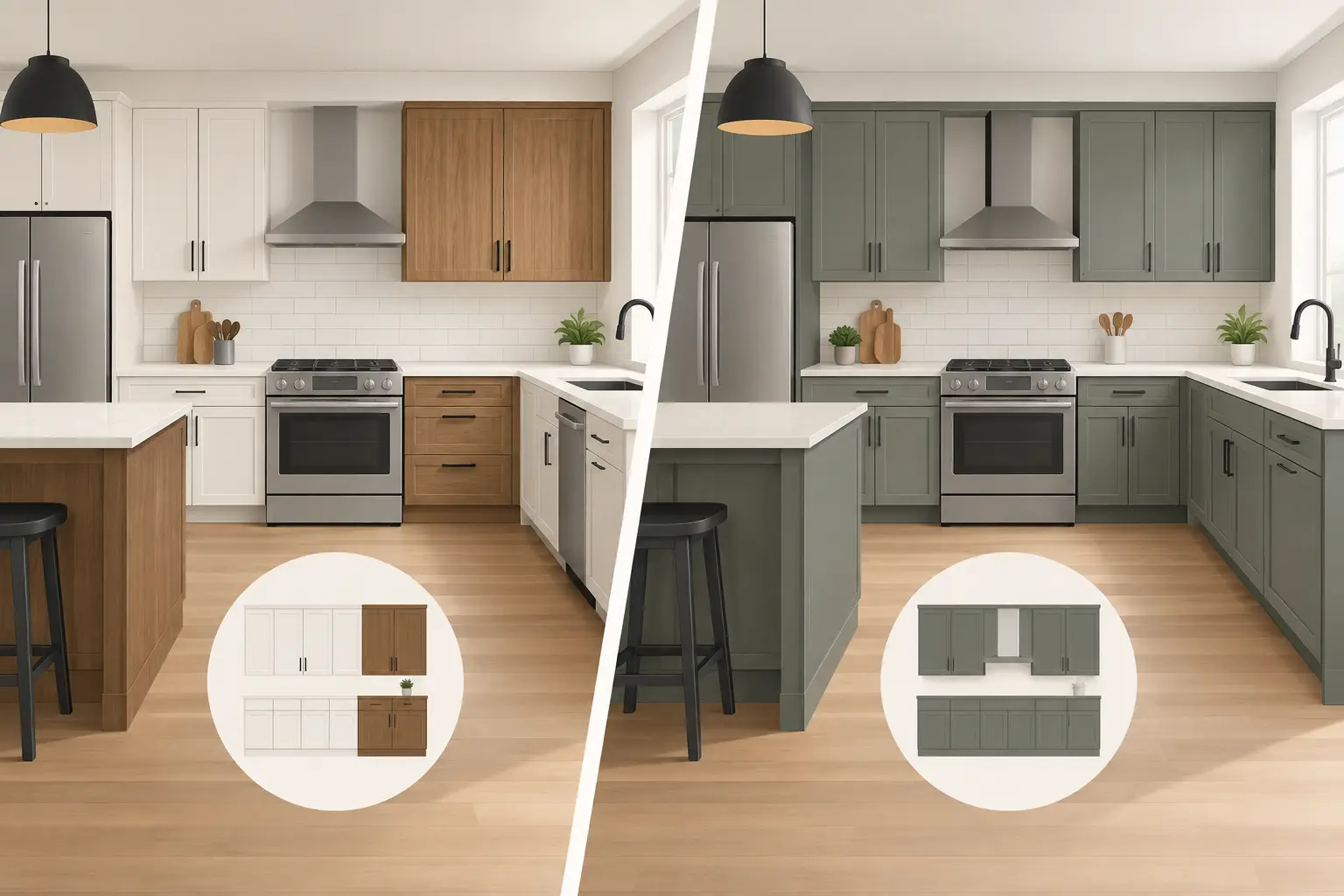
A swollen sink cabinet base does not automatically mean your whole kitchen must be torn out. For Singapore homeowners weighing partial versus full cabinet replacement, the right answer usually comes down to one question: has the damage stayed in one localised area, or has water already compromised the cabinet structure beyond it?
This matters because a kitchen renovation can disrupt an HDB flat or Condo unit for weeks, while a properly planned fractional repair may restore a damaged cabinet section in a far shorter time. The cheapest quote is not always the best option, but neither is a full replacement simply because it produces the largest invoice.
When partial cabinet replacement makes sense
Partial replacement means removing and rebuilding only the affected cabinet components. In a typical under-sink case, this could be the cabinet base, plinth, back panel, one side panel, or a damaged lower carcass section. The kitchen top, doors, adjoining cabinets and internal fittings are retained if they remain sound.
This is often the sensible route when a leaking water tap, bottle trap, flexible hose or pipe joint has caused damage in one contained area. Cabinet boards near the sink are especially vulnerable in Singapore. High humidity slows drying, and even a small unnoticed drip can soak particleboard until it expands, turns soft and develops a musty smell.
A targeted repair is suitable where the surrounding cabinet panels are still firm, the kitchen top is stable, and the cabinet doors still align properly. A handyman should inspect not only what is visible at the front, but also the rear panel, neighbouring carcass, floor contact points and wall-side edging. Hidden rot is common behind stored detergent bottles and bins.
For many HDB kitchens, replacing the affected lower unit materials while preserving the existing layout saves substantial cost. It also avoids unnecessary hacking, new tiling work and the coordination headaches that come with a full kitchen contractor overhaul. Landlords can return a damaged unit to usable condition quickly, while homeowners avoid living around a work zone for weeks.
The result must still look intentional. A good fractional repair is not a loose board screwed over rotten wood. The damaged material is removed back to solid sections, the leak source is resolved, and replacement panels are cut, sealed and fitted to support the original cabinet properly.
Typical signs a fractional repair can work
If the cabinet damage is confined below one sink bowl, along one cabinet plinth, or on a single side panel after a local leak, partial work is worth assessing first. The same applies where only the cabinet back has mould staining but the structure remains dry and firm after the plumbing fault is fixed.
Do not judge by surface appearance alone. Laminate can look acceptable while the board underneath has gone soft. Press lightly around the cabinet base, check for bubbling at the edges, and look for rusty hinges, swollen screws or a cabinet floor that bends under normal cleaning supplies. These are useful clues to send in your photos before booking an inspection.
When full cabinet replacement is the safer choice
Full cabinet replacement becomes more practical when damage is widespread, repeated, or structural. If water has travelled across several lower cabinets, the cabinet bases are collapsing, multiple doors no longer close, and the kitchen top has shifted, patching isolated sections may only delay a bigger failure.
It is also worth considering a full replacement if your cabinets are old and made from low-density board throughout, with recurring leaks over several years. Rebuilding one section beside several weakened sections can create a frustrating cycle: repair the sink cabinet this month, then find the neighbouring cabinet floor swelling after the next heavy wash-up.
In some older HDB flats, a long-term concealed pipe leak can affect cabinetry along the wall or below the kitchen top. Before agreeing to carpentry work, the water source must be identified. Replacing boards without fixing a faulty water tap connection, waste pipe, silicone gap or concealed plumbing issue is wasted money.
A complete replacement may also make better financial sense if you already plan to change the kitchen layout, kitchen top, sink position or appliance arrangement. In that case, trying to preserve old cabinetry can add labour without giving you the finished result you want. The key is to replace fully because the kitchen genuinely requires it, not because no one offered a repair option.
Partial versus full cabinet replacement: compare the real costs
The initial price difference is obvious. Partial replacement uses fewer materials and less labour, particularly when the existing doors, kitchen top and cabinet framework can remain. But the better comparison is the total cost of getting back to a safe, functional kitchen.
A full replacement can involve dismantling cabinets, disposal, delivery timing, installation, plumbing disconnection and reconnection, plus possible touch-up work to tiles or walls. Condo owners may need to observe MCST renovation hours, arrange lift protection and submit contractor details. These are real costs in time and coordination, even when they do not appear clearly on the first quotation.
Partial repair has its own limits. Matching an older laminate colour exactly may not be possible, especially if sunlight, cooking fumes and years of cleaning have changed the original shade. In many under-sink repairs, this is less visible because the replacement is inside the cabinet. Where a visible exterior panel needs changing, an honest contractor should tell you upfront whether the finish will be close, contrasting, or best replaced as a larger matching section.
Ask for a clear scope before work starts. You should know which panels are being removed, whether plumbing leak checks are included, what material will replace the damaged board, whether disposal is included, and what workmanship guarantee applies. A vague low price followed by add-on charges for transport, materials or disposal is not transparent pricing.
What a proper under-sink cabinet repair should include
The repair begins with finding the moisture source. Common culprits include a worn bottle trap washer, loose pipe joint, cracked hose, leaking water tap base, overflowing sink, or water entering through failed silicone around the kitchen top. If the leak is active, carpentry alone cannot solve the problem.
Next, the damaged wood must be assessed. Soft, crumbling or mould-affected board should be removed rather than covered. The area needs drying before new components are installed. Depending on the design, replacement may include a moisture-resistant cabinet base, reinforced supports, a new plinth and properly sealed cut edges.
Access is another practical issue in Singapore homes. Most kitchen cabinet repair work is internal and does not require drilling into solid walls. If surrounding mounting or pipe access is needed, an experienced team should first check for concealed electrical wiring and plumbing. This is especially relevant in BTO flats, where owners may be keen to preserve newer finishes while resolving defects quickly.
After installation, test the cabinet. Run water into the sink, drain it, inspect the pipe connections and feel around the base for fresh moisture. A cabinet repair is only complete when the source of damage has been addressed and the new section sits stable under everyday use.
Local questions homeowners often ask
Is a leaking sink cabinet the Town Council’s responsibility?
Usually, no. Internal kitchen cabinets, sink fittings and water tap connections within your flat are generally the owner’s responsibility. If you are a tenant, check your tenancy agreement and inform the landlord or agent promptly. Do not leave the cabinet closed and hope it dries by itself. The longer wet board remains trapped in humid conditions, the more likely rot and mould will spread.
Can I repair only the cabinet base without changing the doors?
Yes, if the doors, hinges and side panels are still sound and the cabinet structure can support them after repair. This is a common cost-saving approach for localised under-sink water damage. The replacement should be measured carefully so door gaps and alignment remain acceptable.
Will a new panel match my existing kitchen cabinet?
Internal panels can usually be repaired with minimal visual impact. For exposed surfaces, an exact match depends on the original laminate, age and availability. A professional should show you the practical options before starting, rather than promise an invisible match that cannot be delivered.
How quickly should I act after finding water damage?
Act as soon as you notice swelling, a damp smell or a soft cabinet floor. Remove stored items, stop using the affected water source if leakage is active, and place a container under the drip where safe. Early action can mean replacing one panel instead of rebuilding several cabinets.
A damaged cabinet is stressful, but it does not have to become a full renovation project. Send clear photos of the cabinet interior, sink pipes, damaged areas and any visible leak to HRD Professional Handyman on WhatsApp. You can receive a straightforward assessment and transparent quote for the work actually needed, with no pressure to replace a kitchen that can still be saved.


0 Comments