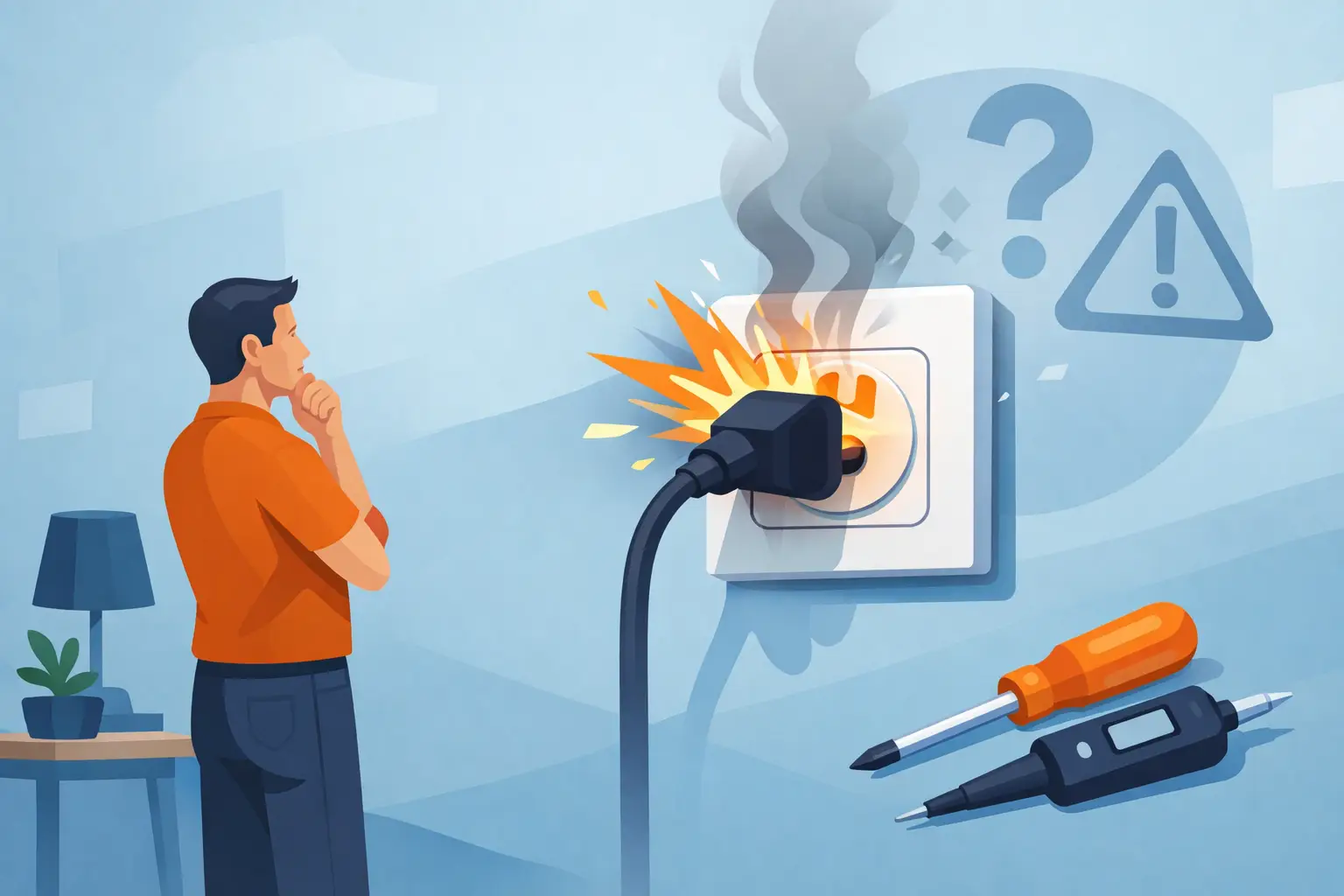
A spark from a wall socket is not something to monitor for a few days. If you are asking, why is my socket sparking, treat it as a potential electrical fault first and an inconvenience second. In an HDB flat, Condo unit, office, or landed home, a sparking outlet can indicate loose wiring, heat damage, moisture ingress, or an overloaded circuit. Any of these can lead to melted fittings, a tripped circuit breaker, or fire.
The immediate job is simple: stop using that socket. Switch off the affected circuit at the distribution board if you can identify it safely. Do not keep plugging appliances in and out to “test” whether the spark has stopped. A quiet socket is not necessarily a safe socket.
Why Is My Socket Sparking? The Common Causes
A tiny blue spark at the plug pins can occasionally happen when you switch on a high-load appliance such as a kettle, iron, microwave, or hair dryer. That brief electrical arc occurs as current starts flowing. It should be small, momentary, and only happen as the plug is inserted or removed.
A spark inside the socket, repeated crackling, a flash when nothing is being plugged in, or any burning smell is different. Those signs point to a fault that needs proper inspection.
Loose connections behind the faceplate
Singapore homes commonly have socket outlets installed on solid concrete walls, often with concealed wiring behind the faceplate. Over time, cable terminals can loosen due to repeated use, ageing fittings, poor previous workmanship, or heat from heavy appliances. A loose terminal creates resistance. Resistance creates heat, and that heat can cause arcing – the electrical jumping that you see or hear as sparking.
This is especially common at sockets used daily for kitchen appliances, television consoles, workstations, and extension leads. The faceplate may feel warm, look slightly yellowed, or show brown marks around one pin opening. Do not ignore these clues just because the appliance still works.
An overloaded socket or extension lead
One wall socket should not be asked to power a whole home office or kitchen corner. Plugging an air fryer, microwave, kettle, coffee machine, and mobile phone chargers into one extension block can overload the outlet or the extension lead itself. The same applies to portable air-conditioners, washing machines, tumble dryers, and powerful gaming or computer setups.
A quality extension lead does not increase the amount of power a wall socket can safely supply. It only gives you more places to plug in. If the plug, adaptor, or socket feels hot, stop using it immediately. Heat is often the warning sign that appears before visible sparking.
A damaged plug or faulty appliance
Sometimes the socket is not the original problem. A bent plug pin, cracked plug casing, loose cable, or damaged appliance can create a poor contact and cause sparking at the outlet. Check from a distance first. If you see blackening on the plug pins, melted plastic, exposed wire, or a loose cable entry, do not reconnect that appliance to another socket.
A useful clue is whether the problem follows the appliance. If the same appliance causes sparking at another known-good outlet, the appliance or plug may be faulty. If several appliances spark only at one outlet, the wall socket or its wiring is the likely issue. Either way, do not use trial and error as a repair method.
Moisture near the socket
Water and electricity do not mix, but moisture problems are not limited to obvious flooding. In Singapore’s humid climate, condensation, leaking air-conditioner trunking, a kitchen sink cabinet leak, or water seepage along a wall can affect electrical points nearby.
Kitchen sockets deserve particular attention. In many HDB kitchens, sockets sit close to the kitchen top, water tap, or sink cabinet. A slow leak below the sink can rot the cabinet base and also create damp conditions around nearby wiring routes. If a socket sparks after cleaning, a pipe leak, or a water overflow, switch off the circuit and keep the area dry. Do not remove the faceplate while the circuit is live.
Ageing, poor-quality, or damaged socket fittings
A socket faceplate that is cracked, loose, discoloured, or no longer grips a plug firmly is due for replacement. Worn contacts can cause a loose connection between the plug pins and the socket terminals. That movement creates heat and can produce sparks.
Cheap adaptors, travel adaptors used permanently, and multi-plug converters are also frequent culprits. They may fit physically but make poor contact or lack the correct rating for the appliances connected. Use properly rated fittings suitable for Singapore’s Type G plug system, but remember that a new adaptor will not solve a damaged wall socket.
What to Do Immediately When a Socket Sparks
If you see a flash, hear crackling, smell burning, or notice smoke, switch off the circuit breaker at the distribution board. If you cannot confidently identify the circuit, switch off the main supply only if it is safe to do so and you know how your board operates. Keep children, pets, and anyone else away from the outlet.
Do not touch a wet socket, spray it with water, cover it with tape, or push the plug back in. Never use water on an electrical fire. If there is active smoke, flames, or a strong burning smell that continues after power is switched off, leave the area and contact emergency services.
Once the power is isolated, take clear photos of the socket faceplate, plug, adaptor, scorch marks, and the appliance involved. These details help an electrician assess what may be required before attending. They also help avoid vague quotations based on guesswork.
When a Brief Plug Spark May Be Less Serious
A small, single spark at the pins when plugging in a switched-on appliance can be caused by inrush current. That is the initial surge drawn by some equipment. It is more likely with appliances that have heating elements or motors.
Even then, change your habit. Switch the socket off before inserting or removing the plug, then switch it on only after the plug is fully seated. This reduces arcing and wear on both the plug and socket. If the spark is large, happens repeatedly, comes with a popping sound, or leaves marks, it is no longer a minor issue.
Do Not Attempt a DIY Socket Repair
Replacing a faceplate may look straightforward in an online video, but the danger is behind it. Incorrectly tightened terminals, damaged cable insulation, reversed connections, or a poor earth connection can leave a hidden fault in the wall. In older flats, previous renovation work may also mean wiring routes are not as expected.
A proper electrical inspection should check the socket condition, terminals, cable integrity, earth connection, loading, and whether the circuit breaker or residual current protection has reacted correctly. The repair might be as simple as replacing a burnt outlet and re-terminating a loose cable. If heat has travelled along the wiring, more investigation is needed. The honest answer depends on what is found behind the faceplate, not on a one-size-fits-all replacement quote.
For tenants, report the issue to the landlord or managing agent promptly and keep photographs. For Condo units, internal socket faults are generally a unit maintenance matter, while shared building electrical systems may involve MCST management. In HDB estates, the outlet within your flat is usually the owner’s responsibility; common-area electrical points are a separate Town Council matter. Do not wait for responsibility discussions before making the outlet safe.
A Fast, Clear Way to Get It Checked
A sparking socket deserves urgent attention, but that does not mean you should accept a vague emergency price or unnecessary rewiring proposal. Ask what has failed, whether the socket itself is heat-damaged, whether any cable needs replacement, and what the quoted work includes. A clear diagnosis protects both your home and your budget.
Send HRD Professional Handyman clear photos of the socket, plug, and any damage through WhatsApp for an upfront, transparent assessment and rapid island-wide attendance. If the socket is warm, blackened, crackling, or smells burnt, keep the circuit off until it has been checked. A few minutes without power is far cheaper than repairing fire damage later.
0 Comments