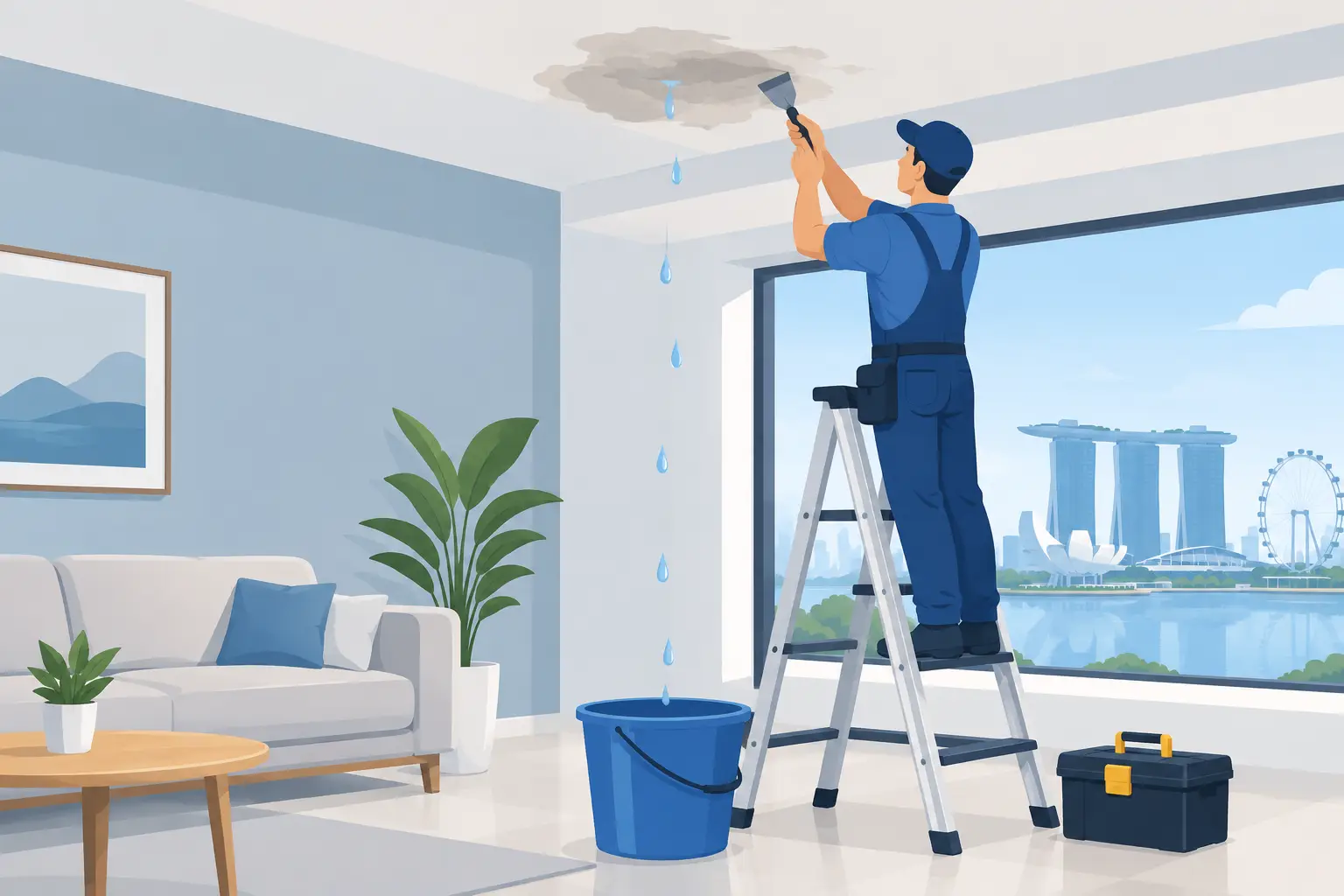
A brown water mark above the toilet, a bubbling patch of paint in the kitchen, or water dripping from a ceiling light is not a painting problem first. Homeowners asking who repairs leaking ceilings need the right trade at the right stage: stop the water source, make the area safe, then repair the damaged ceiling properly. Doing this in reverse is how a freshly painted ceiling ends up stained again within weeks.
In Singapore, the person responsible for the repair depends on where the water is coming from and whether you live in an HDB flat, Condo unit, or landed property. A reliable handyman can assess and restore the visible damage, but a ceiling will only stay dry when the hidden leak has been traced and fixed.
Who repairs leaking ceilings? Start with the leak source
There is no single answer because a leaking ceiling can be caused by plumbing, failed waterproofing, a roof defect, air-conditioning condensation, or a common-property issue. The correct specialist is determined by the source, not by the stain.
If water is actively dripping, especially near a light fitting, switch off the affected electrical circuit at the DB box if it is safe to do so. Do not touch a wet light, fan, or exposed wiring. Place a pail underneath the drip, move furniture away, take clear photographs and videos, then arrange urgent inspection. A licensed electrician may be required if water has entered electrical fittings.
A plumber is usually the first call when the leak is linked to a pipe, floor trap, water tap, toilet cistern, washing machine point, or concealed water supply line. In many HDB bathrooms, a leak from the upstairs unit can travel along the concrete slab and appear some distance from its real source. The wet patch directly below is a clue, not proof.
A waterproofing specialist is needed when the issue is failed waterproofing in the unit above. This is common around upstairs bathrooms, shower areas, balconies, roof terraces and kitchen wet zones. If the upstairs neighbour has no visible pipe leak but water appears whenever they shower, wash the floor, or use the toilet, failed waterproofing becomes more likely.
A ceiling repair handyman or painter comes in after the water source has been stopped and the concrete ceiling has dried. The repair may involve removing loose paint and hollow plaster, treating surface staining, patching damaged areas, sanding, priming and repainting. This final stage matters. Simply painting over a damp patch traps the problem and produces peeling paint, mould marks and an uneven finish.
Common ceiling leak causes in Singapore homes
Singapore’s humidity means ceilings dry slowly, particularly in poorly ventilated bathrooms, enclosed service yards and older kitchens. That does not mean every damp mark is condensation. Persistent staining, soft plaster, active drips or a spreading patch should always be investigated.
In HDB flats, the most frequent causes are leaks from the upstairs bathroom, leaking concealed pipes, faulty floor traps, cracked toilet bowls, and worn bathroom waterproofing. Top-floor flats may also face roof-related leaks during heavy rain. In that case, Town Council may need to inspect common areas or the roof structure, depending on the block and the source of entry.
For Condo units, report the issue to the managing agent or MCST early, especially where common pipes, external walls, roof areas or shared drainage may be involved. They can advise on access rules, approved work hours and whether the issue may involve common property. Do not assume the MCST will automatically pay for an inter-floor leak. Responsibility can depend on the inspection findings, the strata rules and whether the source is within a private unit.
In landed homes, roof tiles, flashing, gutters, external walls and concealed plumbing are common suspects. A leak that appears only during rain points towards the roof or external envelope. A leak that continues in dry weather is more likely plumbing or a bathroom-related issue.
Air-conditioning drainage is another possibility. A blocked condensate pipe or overflowing fan coil tray can send water into a false ceiling. This needs an air-conditioning technician, followed by ceiling repair once the area is dry.
The right repair order saves money
The expensive mistake is authorising a full ceiling replacement before identifying the source. A second mistake is hiring someone who promises to fix everything by applying sealant or paint from below. Waterproofing cannot be reliably repaired from the underside of a concrete ceiling when the failure is above.
A proper job follows a sensible sequence. First, inspect the pattern of moisture and identify what activities trigger the leak. Next, test and repair the source, whether that means plumbing repairs, waterproofing work, roof repairs or air-conditioning drainage clearing. Then allow the affected area to dry fully before restoring the ceiling surface.
The ceiling repair itself should match the actual damage. A small, dry stain may only need local preparation, stain-blocking primer and repainting. Flaking or loose plaster needs to be removed and patched. Where a false ceiling board has swollen, softened or grown mould, partial board replacement may be safer than trying to save it.
This is also where an honest inspection prevents overspending. You may not need to repaint the entire flat because of one isolated patch. Conversely, a cheap touch-up is not a bargain if the paint around the patch is already loose and will fail shortly afterwards. The repair should blend properly with the surrounding ceiling, but the scope should stay proportionate to the damage.
HDB, Condo and BTO: who should you inform?
For an HDB inter-floor leak, speak to the upstairs neighbour promptly and keep the conversation factual. Share photographs, note when the leak occurs and arrange access for testing. Do not accuse the neighbour before inspection, because the source could be a common pipe or another defect.
If you are a tenant, notify your landlord or managing agent immediately. Do not arrange major waterproofing or ceiling works without written approval unless there is an urgent safety issue. Landlords and property agents will need proper documentation for insurance or tenancy discussions.
For new BTO flats still within the developer’s defects process, report the issue quickly through the proper channel and retain dated photographs. Do not cover the evidence with a rushed paint job before the inspection. If the ceiling damage is from an upstairs unit’s renovation or plumbing alteration, document the timeline and contact the relevant parties.
For a Condo unit, management may require contractor registration, insurance documents, lift protection and approved working hours before works begin. A fast repair still has to follow MCST rules. Getting this sorted early avoids a contractor arriving only to be turned away at the guardhouse.
What you can do while waiting for repair
Do not poke a bulging ceiling, drill into the affected area, or run a fan directly at a wet electrical fitting. Keep children away from the area and protect the floor with a pail and towels. If safe, improve ventilation by opening nearby windows or the bathroom door.
Take photos of the stain each day and record whether it worsens after rain, showering, flushing, using the washing machine or running the air-conditioner. This simple record often helps the plumber or waterproofing specialist narrow down the source faster.
If your kitchen sink cabinet is also swollen or the plinth is turning soft, deal with that leak quickly too. In Singapore’s humidity, damp chipboard can rot fast. Often, only the affected cabinet panel, base or carcass section needs replacing rather than the entire kitchen cabinet run.
Get the ceiling repaired only after the leak is fixed
HRD Professional Handyman helps homeowners, landlords and office managers restore water-damaged ceilings after the source has been resolved. Expect a clear assessment of what needs local patching, what needs repainting and what can be left alone. No vague scope, no surprise transport charges, and no pressure to replace more than necessary.
Send clear photos and a short video of the leaking ceiling via WhatsApp for a fast, transparent quote. Include your property type, the room affected, whether water is still dripping and whether the leak happens after rain or use of the upstairs bathroom. The sooner the source is identified, the more likely you are to save the ceiling, the paintwork and the cost of a bigger repair.


0 Comments