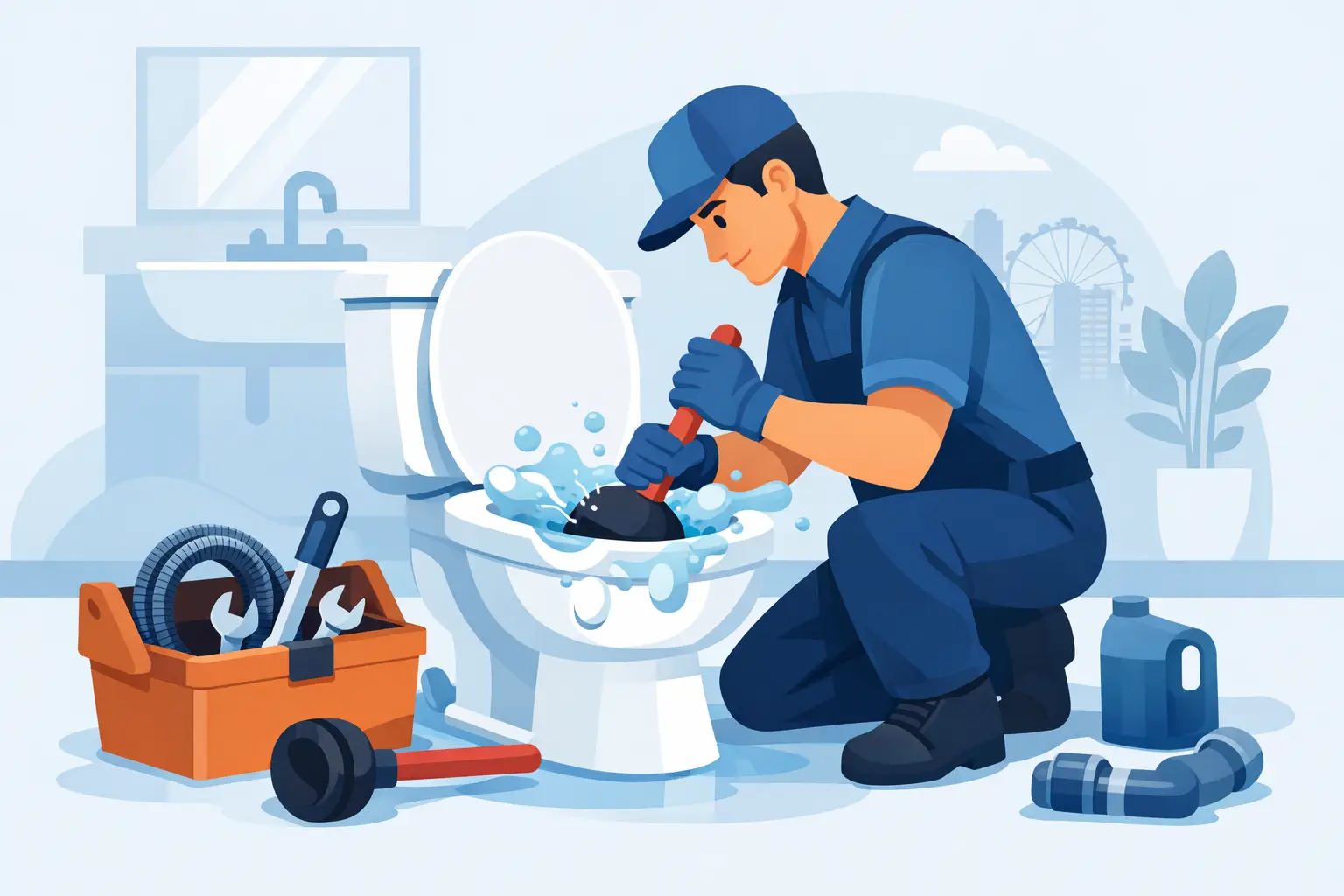
A choked toilet never happens at a convenient time. Usually it is right before work, before guests arrive, or just after a tenant hands over keys and you realise the flush is not clearing. In Singapore, toilet choke repair is one of those urgent jobs that can quickly turn from a minor blockage into overflow, bad odour, and complaints from downstairs if wastewater backs up where it should not.
The good news is that not every toilet choke means a major plumbing replacement. The bad news is that many people make it worse by forcing repeated flushes, pouring random chemicals inside, or jamming the wrong tools into the bowl. If you want the fastest, cleanest fix, it helps to know what is actually causing the blockage and when a simple clearance is enough.
What usually causes a toilet choke in Singapore
Most toilet chokes come down to one of two issues. The first is a localised blockage inside the WC pan or trap. The second is a deeper blockage further down the waste pipe. The repair approach is different, and that matters for cost, time, and whether the problem is likely to come back.
In HDB flats and Condo units, the usual causes are wet wipes, sanitary products, excessive toilet paper, tissue bundles, or children dropping small items into the bowl. Even so-called flushable wipes are a common problem. They do not break down fast enough, especially once they catch on bends in the pipe.
In older properties, pipe scale, misalignment, or partial obstruction in the soil pipe can also slow discharge. In some cases, the toilet itself is fine, but the floor trap, branch line, or main sanitary line is already carrying a build-up. Then the toilet becomes the first place where you notice the symptom.
For landlords and office managers, there is another issue – repeated misuse. A unit with high turnover, short-term occupants, or shared staff toilets may keep choking because people treat the toilet bowl like a bin. If that usage pattern does not change, even a proper repair will only buy time.
Signs your toilet choke repair may be more than a simple plunge
If the water level rises and drains away slowly after flushing, that is often an early warning. If the bowl fills almost to the brim and stays there, the blockage is likely more solid. Gurgling sounds from nearby floor traps or another toilet can suggest a deeper line issue rather than a blockage only at one pan.
You should also pay attention if foul smell appears even when the toilet looks clear, or if wastewater backs up in the shower area when the WC is flushed. In HDB and Condo bathrooms, this can mean the discharge path is restricted further down the line.
One more red flag is recurrence. If the same toilet chokes again within days or weeks, the problem was probably not fully cleared the first time. Temporary relief is not the same as repair.
Safe first steps before professional toilet choke repair
The first rule is simple – stop flushing. One extra flush can turn an ordinary blockage into a bathroom cleaning job.
If the water level is high, wait and let it settle. Then check whether there is an obvious visible obstruction near the mouth of the trap. If there is, and it can be reached safely with gloves, remove it carefully. Beyond that, a proper plunger is the only sensible DIY tool for most people.
Use a flange plunger, not a flat sink plunger. Make sure there is enough water in the bowl to cover the rubber cup, then plunge with steady pressure. Wild pumping is not better. Sometimes a few controlled strokes are enough to shift soft blockage.
What should you avoid? Do not pour boiling water into the bowl, especially if your toilet pan is ceramic and already under stress. Do not use metal rods or improvised wire hangers that can scratch the trap or get stuck. And do not mix drain chemicals. In a small bathroom with poor ventilation, that can create a dangerous mess very quickly.
How professional toilet choke repair is actually done
A proper technician does not just attack the toilet blindly. First, the blockage has to be assessed. Is it isolated to one WC? Is there backflow elsewhere? Is the choke likely inside the pan, at the outlet, or further down the line?
For straightforward cases, the repair may involve manual extraction or specialist plunging. For more stubborn blockages, a toilet auger or drain snake is used to break up or retrieve the obstruction without damaging the pan. This is usually the right move when tissue compaction or foreign objects are trapped just beyond reach.
If the choke is deeper in the branch line, additional drain-clearing equipment may be needed. In some properties, access can be more awkward because bathroom layouts are tight and pipe routes are concealed. That is why local experience matters. HDB flats, Condo units, and landed homes all have different access realities, and a rushed contractor can waste time trying the wrong fix first.
Where the issue appears to involve the main sanitary line or common stack, the repair path changes again. For Condo units, MCST rules may affect access and responsibility. For HDB properties, whether it is owner scope or a common-area issue depends on where the blockage sits. A transparent handyman or plumber should tell you clearly if the problem goes beyond your unit instead of charging you for guesswork.
When replacement parts are needed and when they are not
Most toilet choke repair jobs do not require toilet replacement. That is worth saying because some owners get pushed towards unnecessary change-out work.
If the bowl is cracked, the flush mechanism is failing badly, or the WC outlet connection has been compromised, replacement may make sense. But for an ordinary choke, the aim should be targeted clearance first. Paying for a new toilet when the real issue is a blocked line is simply wasting money.
The same applies to repeated dismantling. Sometimes removing the WC is necessary, but not as a first move in every case. It depends on the blockage location, the toilet model, and whether previous failed attempts have made access worse.
Why some toilet chokes keep coming back
Recurring choke problems usually point to an incomplete diagnosis. Either the original blockage was only partly cleared, the pipe has an ongoing restriction, or user habits have not changed.
In family homes, the cause may be young children using too much paper or dropping items in accidentally. In rental units, occupants may not know the system is already sensitive. In offices, pantry tissue, cleaning wipes, and other unsuitable materials often end up in the WC.
There is also the issue of old plumbing. In some older landed or ageing residential properties, internal pipe condition contributes to slow waste movement. The toilet is blamed, but the real problem is downstream. In that situation, repeated spot clearing is cheaper in the short term, but not always in the long term. Honest advice should reflect that.
Cost, transparency, and what customers should ask first
Before agreeing to any job, ask what the quoted price includes. Does it cover inspection, basic clearing, and testing? Is there any extra charge for after-hours attendance, parking, or additional equipment? If the contractor cannot answer clearly, that is your warning sign.
For Singapore property owners, pricing transparency matters because emergency plumbing is where hidden fees often appear. A fair toilet choke repair quote should be clear about scope. If the blockage turns out to be deeper than expected, that should be explained before extra work starts, not after.
Photos and a short video can help speed things up. If you can show the water level behaviour, whether other floor traps are affected, and the toilet model or layout, a technician can often narrow down the likely cause before arriving. That means faster diagnosis and fewer wasted steps on site.
Toilet choke repair for HDB, Condo, and landed homes
The same symptom can mean different things depending on property type. In HDB flats, compact bathroom layouts and shared stack realities mean the surrounding drainage behaviour matters. If multiple fixtures are acting up, the issue may not be isolated.
In Condo units, access timing and MCST procedures may matter if common services are involved. If there is concern about leakage affecting another unit, speed is even more important. Delay can turn a simple choke into a complaint trail.
For landed houses, older pipe runs, renovations done by different owners, and mixed bathroom additions can complicate diagnosis. A basic unblock may still solve it, but inspection should not be rushed.
HRD Professional Handyman handles these jobs the way customers actually want them handled – fast response, clear WhatsApp communication, upfront pricing, and no nonsense about adding mystery charges later.
If your toilet is choking now, do not keep flushing and hope for the best. Send clear photos or a short video on WhatsApp, mention whether it is HDB, Condo, office, or landed property, and say if other floor traps or toilets are affected. You will get a direct, transparent assessment of the likely repair scope before things get messier than they need to be.
A toilet choke is stressful, but it does not need drama. The right repair is usually the one that clears the problem quickly, protects your flooring and fittings, and does not push you into paying for work you never needed in the first place.
0 Comments