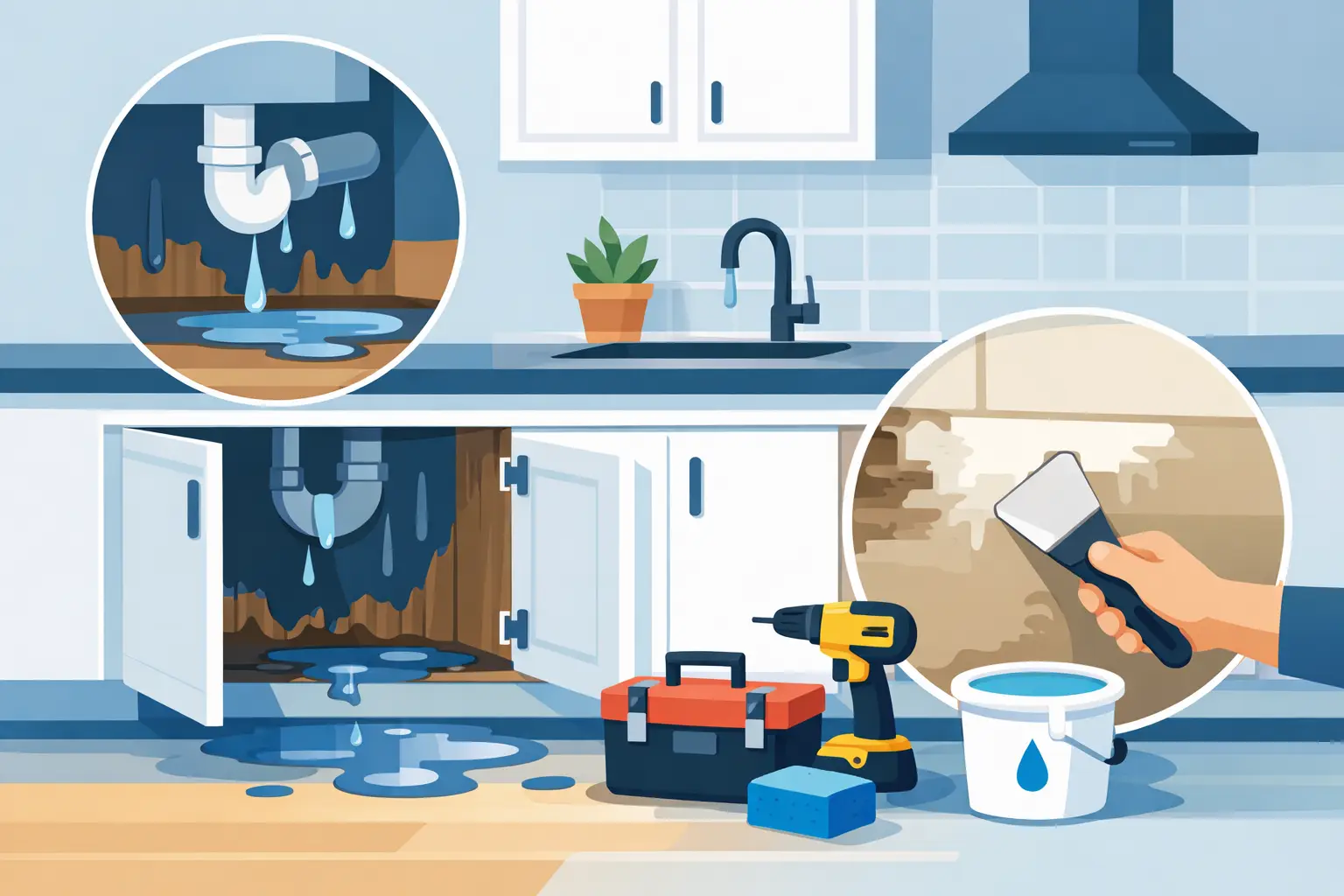
That swollen panel under the kitchen sink usually starts with something small – a slow water tap drip, a loose bottle trap, or condensation nobody noticed for weeks. Then one day the cabinet door no longer closes properly, the base feels soft, and the wood starts giving way. Kitchen cabinet water damage repair is often far more affordable than homeowners expect, especially in Singapore where many cases involve one damaged section rather than an entire built-in kitchen.
The problem is that water damage looks worse than it is in some homes, and not serious enough in others. A puffed-up laminate edge may be cosmetic. A spongy cabinet floor, blackened side panel, or crumbling plinth usually means the board has already failed. If you replace everything blindly, you may spend thousands unnecessarily. If you ignore it, the damage spreads, the smell gets worse, and pests start finding a home in the damp timber.
When kitchen cabinet water damage repair is enough
In many HDB flats, Condo units, and landed kitchens, the worst damage is concentrated around the sink cabinet. That is the good news. The leak source is often localised, and the rot is often limited to the cabinet base, one side gable, the back panel, or the bottom front plinth. If the upper cabinets are dry, the doors are still aligned, and the adjoining carcass sections are structurally sound, a fractional repair usually makes more sense than a full tear-out.
This matters because full replacement is disruptive. You may need to remove the sink, disconnect plumbing, protect the kitchen top, manage debris removal, and wait for new carpentry fabrication. For many homeowners and landlords, that means more cost, more downtime, and more coordination than necessary. A precise repair focuses only on the damaged sections and preserves what is still usable.
That said, there are limits. If the leak has travelled into multiple cabinet bays, the internal carcass has lost strength across a long run, or the whole lower kitchen has been exposed to repeated flooding, patching one section may not hold up well. Good advice here should save you money, not push you into the biggest invoice.
What usually causes cabinet rot in Singapore kitchens
Singapore kitchens have their own patterns of damage. High humidity accelerates swelling once chipboard or MDF is exposed. In older flats, long-term seepage around sink joints, wall points, or ageing trap connections is common. In newer BTO flats, defects can show up earlier than owners expect, especially if a minor plumbing issue is left unchecked during the first months of occupation.
The most common causes are simple: leaking sink waste pipes, loose water supply points, cracked silicone near the sink edge, overflowing floor traps, and wet mops or detergent bottles stored directly inside the cabinet. In some homes, condensation around pipes keeps the cabinet damp even without an obvious drip. In others, previous contractors sealed over a damaged board instead of replacing it, trapping moisture inside.
This is why the first job is never carpentry alone. If the water source is still active, any repair will fail again.
Signs the damage is structural, not just cosmetic
A lot of owners message only when the laminate has bubbled badly, but the earlier signs come first. A musty smell inside the sink cabinet, rusted hinges at the lower door corners, discoloured screw heads, or a cabinet floor that feels uneven are all warning signs. If the board flakes when touched or a screwdriver sinks in with light pressure, the internal material has already broken down.
Watch the door gaps too. When one side panel swells, the hinge screws lose grip and the alignment shifts. You may think the hinge is the issue, but the real problem is the weakened board behind it. Likewise, if the plinth at the bottom looks expanded or cracked, there is a fair chance water has been sitting on the cabinet base for some time.
In Condo units, management rules can affect working hours and disposal arrangements, so early action helps avoid unnecessary scheduling delays. In tenanted properties, small cabinet damage can become a landlord dispute very quickly if no one establishes whether the cause is wear and tear, a plumbing fault, or misuse.
How a proper repair should be approached
A reliable kitchen cabinet water damage repair starts with isolation of the leak source. Plumbing must be checked first. There is no point cutting and replacing timber while water is still entering from the trap, tap hose, stop valve, or sink edge.
Once the leak is handled, the damaged cabinet parts need to be assessed individually. This is where experience matters. Not every swollen board can be saved, but not every affected cabinet needs full rebuilding either. A sound repair may involve removing only the rotten cabinet base, replacing one side panel, fitting a new plinth, re-supporting the sink area, and matching the visible finish as closely as practical.
In Singapore homes, many built-ins are site-fitted around piping, solid walls, and tight service spaces. That means the work often needs careful measurement and selective dismantling, not reckless hacking. For HDB units especially, keeping the repair contained matters. Most owners do not want a simple under-sink problem turning into a full kitchen mess.
Drying is part of the process too. If moisture is trapped behind the carcass or along the wall-facing side, the area has to be properly aired and treated before new material goes in. Otherwise the new board may look fine initially but deteriorate from the hidden side.
Repair or replace – what actually saves money?
Here is the honest answer: it depends on how far the damage has travelled and what the cabinets are made of. If one under-sink section is rotten but the neighbouring units are stable, fractional replacement is usually the clear winner. You keep most of the original kitchen, spend far less, and get the function back quickly.
If the lower run is already failing in several places, the laminate is delaminating across multiple doors, and the carcass has absorbed moisture over a long period, repeated partial fixes may become false economy. At that stage, selective repair can still be possible, but expectations need to be realistic about finish matching and lifespan.
This is where transparent advice matters more than sales talk. Some contractors push full renovation because it is a bigger job. Others do a cheap patch that looks acceptable for a month and then caves in again. The right recommendation is the one that fits the actual condition of your cabinets and your budget.
Local practical issues owners often miss
In HDB flats, owners sometimes assume moisture from adjacent areas is town council responsibility. Usually, the cabinet itself and internal plumbing under your sink are owner issues, while external common-area defects follow different rules. If the leak source is from within the flat, waiting for someone else to handle it often just means more rot.
For Condo owners, access timing, noise limits, lift protection, and disposal rules can affect scheduling. A good repair team should already know how to work within MCST requirements rather than springing surprises on you later.
For landlords and agents, speed matters because a damaged sink cabinet affects hygiene, storage, and tenant confidence. A delayed repair can easily become a bigger reinstatement cost between tenancies.
And for anyone thinking of a DIY patch with sealant and shelf liners – that only hides the issue if the board is already soft. Once chipboard has swollen and broken down, it does not regain strength just because the surface looks drier.
What to prepare before asking for a quote
If you want a fast, accurate assessment, send clear photos of the full cabinet exterior, the inside base, the side panels, the plumbing pipes, and any swollen edges or collapsed sections. A short video helps if there is active dripping. Mention whether you are in an HDB flat, Condo unit, shop, or landed property, and say if there are any access restrictions.
This saves time because the repairer can judge whether the issue is likely cosmetic, partial structural, or extensive enough to require a more detailed site check. It also reduces the usual back-and-forth that customers hate.
At HRD Professional Handyman, this is exactly how many sink cabinet cases are handled efficiently – with a direct photo-based assessment, clear scope, and no nonsense about hidden transport charges appearing later. If a fractional carpentry repair can save you money, that should be said plainly.
If your sink cabinet is already swelling, smelling musty, or turning soft at the base, do not wait for the doors to drop off. Send photos on WhatsApp and get a transparent quote before a small localised repair turns into a much bigger kitchen problem. A quick, honest diagnosis now is usually the cheapest part of the whole job.

0 Comments