
A damp patch under the kitchen sink is not a small inconvenience in Singapore. In an HDB flat or Condo unit, a slow leak can soak the cabinet base, swell the chipboard, attract mould and eventually turn one damaged panel into a costly cabinet replacement. Good home repairs stop the damage at its source before your kitchen, toilet or electrical system becomes a bigger disruption.
The practical question is not always, “Do I need to replace everything?” More often, it is, “What has actually failed, and what is the most sensible way to fix it?” A reliable handyman should give you a straight answer, a clear scope of work and a price before work starts – not surprise transport fees or vague add-ons after the job is done.
Home Repairs Start With the Real Cause
Singapore homes face a specific combination of problems: high humidity, frequent use of compact kitchens and toilets, concealed pipework, solid concrete walls and tightly fitted carpentry. A visible issue is often only the symptom.
Take a rotten kitchen sink cabinet. Water may have entered through a leaking water tap connection, a worn waste pipe, a loose sink seal or an overflowing bottle trap. Replacing the swollen cabinet board without rectifying the leak is money wasted. The new board will absorb moisture and fail again.
The same principle applies to electrical faults. A tripping circuit may be caused by a failing appliance, moisture near a socket, a damaged cable or an overloaded circuit. Resetting the DB box repeatedly is not a repair. It can leave your household without power at the worst time and may hide a fault that needs proper testing.
For toilets, a slow flush, foul smell or recurring choke could come from a blockage within the sanitary line, a faulty flush valve, poor water flow or an issue beyond the unit’s internal pipework. The right repair depends on where the responsibility lies. Internal fittings are generally the owner’s responsibility, while certain common-area or external pipe issues may require the Town Council, MCST management or building management to step in.
The Repairs That Should Not Wait
Some issues are safe to monitor for a day or two. Others become more expensive every hour they are ignored. A leak near electrical points, water pooling at a cabinet base, a burning smell from a socket or a toilet that threatens to overflow needs prompt attention.
Do not assume a tiny leak is harmless because you can place a pail underneath. In many HDB kitchens, the cabinet carcass is made from particleboard. Once its edges have absorbed water, the board expands and loses strength. Hinges pull loose, doors stop closing properly and the plinth may crumble. In a humid home, mould can develop behind the visible surfaces as well.
Cracks or loose fittings also deserve attention when they affect safety. A curtain rail, wall shelf, television bracket or ceiling-mounted item can become dangerous if it was installed with the wrong anchors or drilled into unsuitable material. Most HDB and Condo walls are solid concrete, so mounting needs the correct drill bit, plugs and fixing depth. A quick screw into a wall is not enough for a heavy load.
Save Money With Fractional Carpentry Repairs
Kitchen cabinet water damage is where many homeowners are pressured into paying for a full renovation package. Sometimes full replacement is justified, particularly when the damage has spread across multiple cabinet sections, the kitchen top has been compromised or the entire carcass has deteriorated. But it is not the automatic answer.
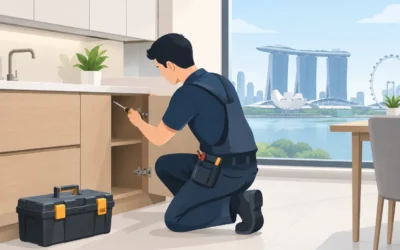
If rot is confined to the sink cabinet base, a side panel, a plinth or one section of the carcass, a fractional repair can often restore the cabinet without tearing out the whole kitchen. The affected board is removed, the leak is addressed, and a replacement panel is cut and installed to match the structure as closely as practical. Doors, hinges and usable sections can stay in place if they remain sound.
This approach saves money because you are paying for the failed section, not a complete contractor overhaul. It also reduces downtime. A full kitchen renovation can disrupt cooking, cleaning and daily family routines for weeks. A properly planned sectional repair is usually far less invasive.
There are trade-offs. A repaired section may not look identical if your existing laminate or cabinet finish is old, discontinued or sun-faded. A good handyman will tell you this upfront rather than promise an impossible perfect match. The priority is a dry, stable and usable cabinet, followed by the best practical visual finish.
Before approving cabinet work, ask whether the quote includes leak investigation, removal of damaged material, replacement board type, edging or laminate treatment, reinstatement of doors and hinges, and disposal. Clear details prevent misunderstandings.
Repairs in HDB Flats, Condos and Landed Homes
The property type affects how a repair is planned. In a new BTO flat, homeowners may be dealing with defect inspection periods, uneven fittings, hollow-sounding tiles or doors that need adjustment after settling. Document the issue with photos before rectification work if you are still pursuing the developer for a defect claim. Independent repairs may be necessary for urgent problems, but keep your records.
Condo residents should check MCST rules before noisy drilling, work involving common services or jobs requiring access arrangements. Some developments impose contractor registration, working-hour limits, lift protection requirements or renovation deposits. A professional handyman can work around these rules, but management approval is not something to leave until the technician arrives at your door.
Landed properties bring a different set of concerns, including external pipe runs, roof-adjacent leaks, older electrical wiring and timber exposed to weather. The repair scope can be larger, but the same rule applies: identify the source before replacing damaged finishes.
For bomb shelters, do not drill casually. These walls and doors have restrictions, and unsuitable mounting can create safety and compliance problems. If you need shelves, racks or organisational fittings near a household shelter, get the mounting location assessed first. There are usually safer alternatives that do not compromise the space.
What a Transparent Repair Quote Should Tell You
A quote should be understandable without contractor jargon. You should know what is being repaired, what materials are included, whether troubleshooting is separate from the repair itself, and whether there are charges for urgent attendance, parking or disposal.
Photos help enormously. For a kitchen cabinet issue, send a wide photo of the sink area, close-ups of the swollen or rotten board, a picture inside the cabinet and an image of any visible leak. For electrical problems, show the affected socket or light point and the DB box only if it is safe to do so. Never remove DB box covers or touch exposed wiring to take a better photograph.
For mounting work, include the item’s dimensions, estimated weight and the intended wall location. A television bracket, mirror, pull-up bar and kitchen cabinet each place very different loads on a wall. This information allows the handyman to arrive with suitable fixings instead of turning a straightforward visit into a second appointment.
At HRD Professional Handyman, the focus is on giving homeowners the repair that solves the problem without charging them for work they do not need. That means explaining when a partial cabinet reconstruction is sufficient, when a component can be replaced, and when a larger replacement is genuinely the safer option.
When DIY Makes Sense and When It Does Not
Simple tasks such as replacing a worn silicone bead around a dry, clean surface or tightening a loose cabinet handle can be manageable if you have the right tools. Stop if you find swollen wood, active leakage, mould behind panels, cracked tiles, repeated electrical tripping or a fitting that carries significant weight.
DIY repairs often go wrong when the visible finish is treated but the underlying failure is missed. Sealing over wet wood traps moisture. Using excessive sealant around a leaking pipe does not repair a failed connection. Fitting a larger screw into a loose concrete wall hole can reduce holding strength rather than improve it.
The money-saving move is not always doing it yourself. It is avoiding repeat work, unnecessary full replacements and damage that spreads while you wait.
Send Photos Before the Damage Spreads
If you have a leaking sink cabinet, faulty socket, choking toilet, peeling paint, damaged door, loose fixture or mounting job, send clear photos and a short description by WhatsApp for an upfront quote. Include your property type, area in Singapore and any Condo or management restrictions. You will know the likely repair approach before booking, with no guessing and no hidden-fee drama.
A small fault does not have to become a renovation bill. Deal with the cause early, choose the repair scope that fits the actual damage, and keep your home dry, safe and working properly.
0 Comments