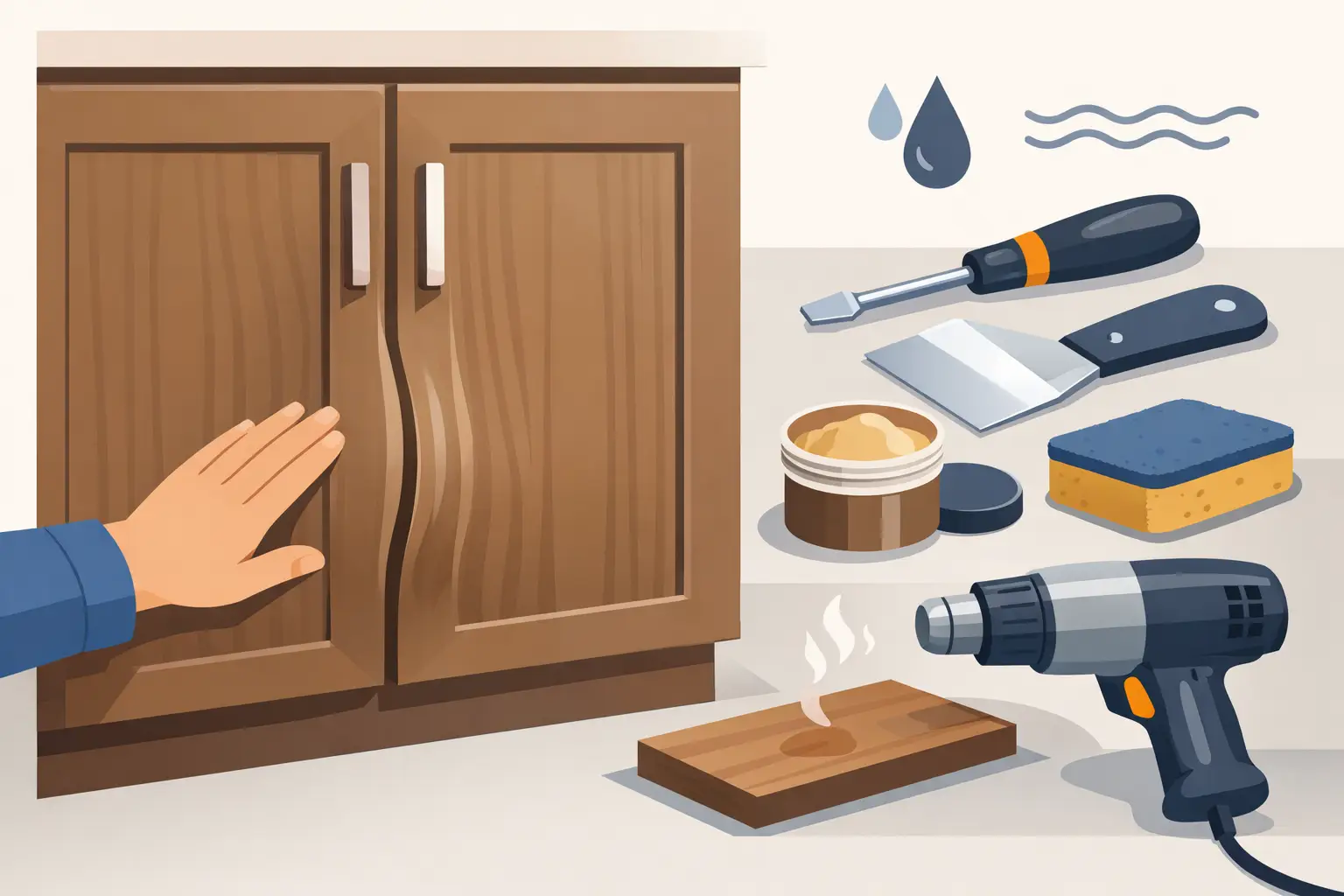
That cabinet door under the kitchen sink usually gives itself away before it fully fails. It starts rubbing, the laminate edge lifts slightly, the bottom corner turns puffy, and suddenly the door will not shut properly. If you are trying to fix swollen cabinet doors, the first thing to know is this – not every swollen door needs a full cabinet overhaul, but not every door can be saved either.
In Singapore homes, especially HDB flats and Condo units, this problem is common because kitchen cabinets sit in a high-humidity environment and often take repeated water exposure from sink leaks, wet mopping, dripping bottles, or a loose water tap connection inside the cabinet. The right fix depends on whether the board has only absorbed slight moisture or has already broken down internally.
Why cabinet doors swell in Singapore homes
Most swollen cabinet doors are made from chipboard, particle board, or MDF with laminate finishing. These materials look neat and cost less than solid timber, but once water gets past the laminate or enters from an exposed edge, the board starts expanding. After that, the damage rarely stays cosmetic.
In many local kitchens, the most common source is not a dramatic pipe burst. It is a slow leak that goes unnoticed for weeks. A bottle trap may drip only a little. A flexible hose may sweat. A cleaning pail stored in the cabinet may keep the area damp. In older flats, previous patch jobs with silicone sometimes hide the real issue while moisture continues soaking the cabinet base and lower door edges.
Humidity alone can also worsen things, particularly in enclosed kitchens with poor ventilation. But humidity by itself usually causes minor warping, not the severe bloating and soft edges people see near the sink area. If the door feels spongy or crumbly, water intrusion is the real culprit.
Can you fix swollen cabinet doors or do they need replacement?
This is where many owners get pushed into spending far more than necessary. A contractor may tell you to replace the whole kitchen set. That is sometimes true, but often it is not.
If the swelling is very mild and the board is still structurally firm, a repair may be possible. That can mean drying the area fully, sanding the swollen edge, resealing exposed sections, adjusting hinges, and touching up the finish where practical. This only works when the internal board has not disintegrated.
If the cabinet door has puffed up visibly, the laminate is lifting, the corners have become soft, or the hinge screws no longer hold tightly, repair becomes temporary at best. In that case, the more sensible option is fractional replacement – replacing only the affected door or the damaged cabinet section instead of tearing out the whole kitchen carpentry.
That distinction matters because many Singapore homeowners do not need a full renovation. They need one honest assessment and one targeted fix.
How to assess swollen cabinet door damage
Before you try any repair, inspect the door carefully. Look at the bottom edge, hinge side, and areas closest to the sink bowl or piping. If swelling is only along one edge and the surface is still hard, there may still be some room to salvage it.
Press the damaged area lightly. If it feels solid, that is a better sign. If it dents easily, feels flaky, or sheds fibrous dust, the board has already degraded. At that point, no amount of sanding or repainting will restore its strength.
Also check the carcass, base panel, plinth, and inner side walls. A door is often just the visible part of the problem. In many HDB kitchens, the lower cabinet base takes the worst of the water first, and the door swells after that. If you replace only the door while the base remains wet and rotten, the issue will return.
How to fix swollen cabinet doors when the damage is minor
If the swelling is slight and you caught it early, there is a limited repair path.
First, stop the moisture source completely. There is no point repairing carpentry while a hidden drip continues. Check the bottle trap, inlet hoses, sink joints, and any stored wet items. Dry the interior thoroughly and leave the cabinet open for ventilation. In some cases, a fan helps speed this up, but natural drying still takes time.
Once dry, the swollen edge can sometimes be sanded back carefully so the door clears the frame again. This is delicate work. Remove too much and the edge looks uneven. Remove too little and the door still catches. After sanding, exposed areas should be sealed to reduce further moisture entry. Hinges may also need realignment because swelling often throws the door slightly out of square.
This kind of repair is best seen as damage control. It can buy time if the cabinet is otherwise sound. It is not a miracle cure for soaked board.
When replacement is the smarter and cheaper option
If the board has expanded badly, proper replacement is usually more cost-effective than repeated patching. That does not mean replacing every cabinet door in the kitchen.
A good handyman or carpentry repair specialist should be able to assess whether only one door, one base panel, one plinth, or one side section needs to go. That is the practical route for many sink cabinet issues in Singapore. You keep the usable parts, match the replacement as closely as possible, and avoid paying for a full kitchen contractor package you do not need.
There are trade-offs. Older laminate designs may not match perfectly if the original finish is discontinued. Some colour variation can happen, especially in sun-aged kitchens. But for many owners, a neat, durable partial repair is far better than spending thousands for a complete rebuild just because one lower section took water damage.
Common mistakes when trying to fix swollen cabinet doors
The biggest mistake is painting over the problem. Paint or edge tape may hide swelling for a short while, but they do not reverse internal board expansion.
The second mistake is forcing the door shut. This often tears the laminate further, strains the hinges, and chips nearby panels. A swollen door that no longer closes properly is already telling you the material has changed shape.
The third mistake is ignoring the leak because the water seems minor. Small leaks destroy chipboard quietly. By the time the smell appears or the board turns black at the edges, the internal damage is usually more extensive than expected.
Another common issue in Condo units is delaying repair due to MCST access concerns or fear of a long messy job. In reality, a localised cabinet repair is usually much faster and less disruptive than a full renovation project. For landlords and property agents, that speed matters because it reduces vacancy time and avoids ugly handover disputes.
What HDB and Condo owners should check before works start
In HDB flats, internal kitchen cabinet repairs are generally the owner’s responsibility unless there is a larger building-related issue causing water ingress from elsewhere. If swelling is due to your sink plumbing or usage, it is not a town council matter.
In Condo units, small internal carpentry repairs are usually straightforward, but if the work involves noisy cutting, disposal timing, or common area protection, management rules may apply. A proper service team should already know how to work around these site conditions without turning a one-door repair into a long admin problem.
If your kitchen is tight, which is normal in many HDB layouts, access also matters. Skilled repair work in compact cabinet runs needs accurate measurement and clean installation, not rough hacking that damages the adjacent solid wall, kitchen top, or nearby drawer fronts.
The best long-term fix for swollen cabinet doors
The best fix is not just replacing the damaged board. It is removing the cause and restoring only what is necessary.
That may mean changing a failed trap, resealing around the sink area, replacing one bloated door, rebuilding one softened cabinet base, and leaving the rest of the kitchen intact. This is the practical middle ground many homeowners are looking for – not a cosmetic patch, and not an expensive full replacement pushed by someone chasing a larger job.
If you want a clear answer, send photos before the damage spreads. A good close-up of the swollen door, the inside cabinet base, the sink piping, and the wider kitchen layout usually tells an experienced repair team a lot. From there, you can get a direct recommendation on whether the door can be adjusted, repaired, or replaced fractionally.
If you need to fix swollen cabinet doors in Singapore, do not wait until the hinges rip out or the base collapses. Send clear photos on WhatsApp and ask for a transparent quote upfront – no vague site promises, no hidden transport charges, and no pressure to replace the whole kitchen when a targeted carpentry repair will do. HRD Professional Handyman handles this type of water-damaged cabinet repair every week, and a fast honest assessment can save you a lot of money and a lot of downtime.
A swollen cabinet door rarely gets better on its own, but it also does not always mean your whole kitchen is finished.

0 Comments