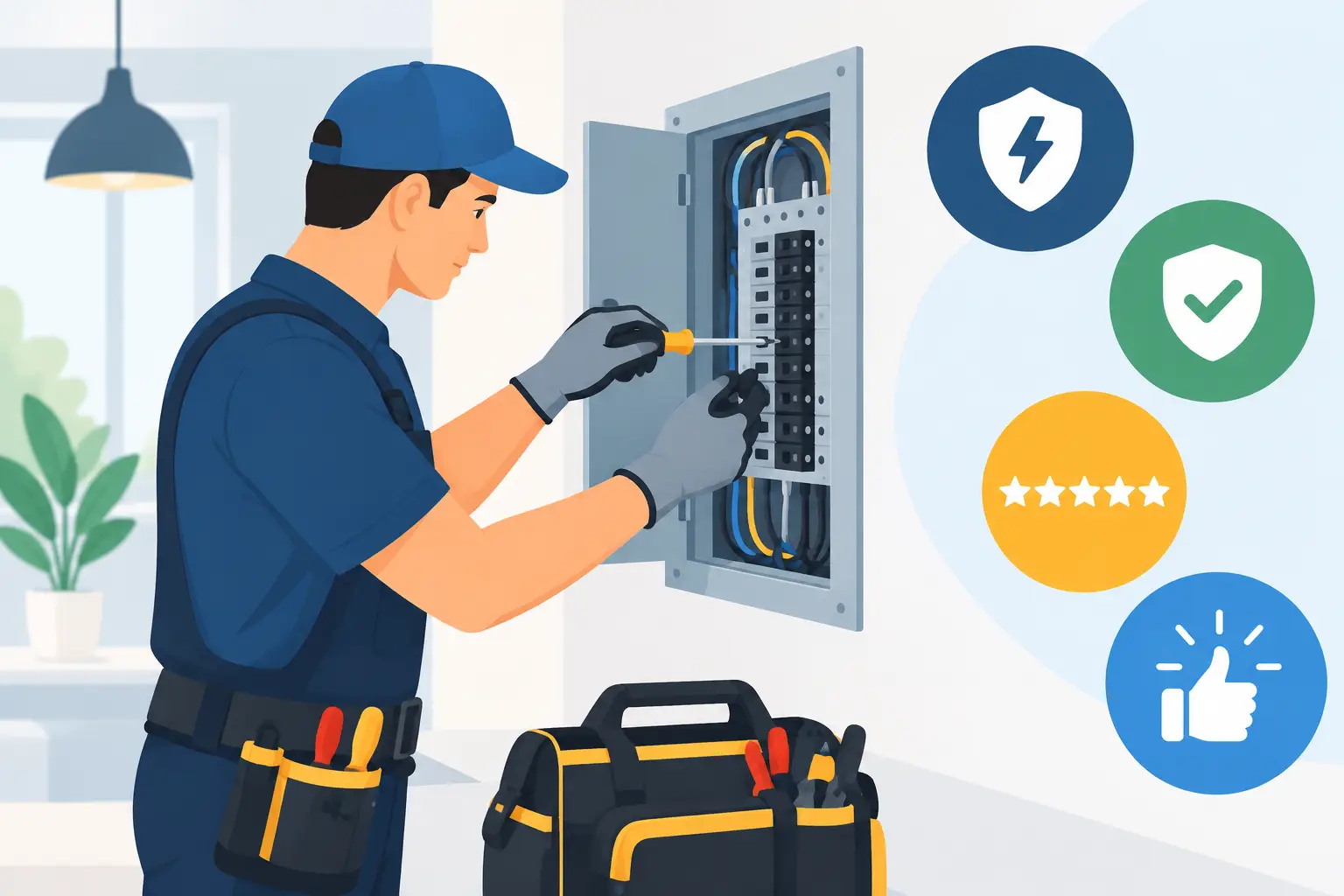
A useful electrical repair service review is not about whether the technician arrived with a toolbox and got the lights back on. In a Singapore HDB flat, Condo unit or office, the real test is whether the fault was properly traced, the price was stated clearly, and the repair remains safe after the technician leaves.
A flickering light, repeatedly tripping circuit breaker or dead wall socket can look minor. But behind it may be a loose connection, overloaded circuit, water intrusion, damaged cable or faulty appliance. Guesswork is where small electrical problems become expensive ones.
What a Good Electrical Repair Service Review Should Check
The first thing to look for is whether the review describes the actual problem and repair, not just a vague “good service” comment. A detailed review may mention that the technician isolated a tripping circuit, tested the socket points, found a burnt connection, explained the replacement part, then checked the circuit again. That tells you far more than a five-star rating alone.
For Singapore properties, the technician should also understand the layout and restrictions of the site. HDB solid walls, concealed wiring routes, DB box access, false ceilings and Condo management rules all affect how work should be carried out. Drilling blindly into a solid wall near an existing power point is not acceptable. Nor is bypassing a repeatedly tripping breaker simply to restore power quickly.
Look for comments on three practical matters: punctuality, diagnosis and clean-up. If you are a landlord handing over a unit, an office manager dealing with a failed lighting circuit, or a family with no power at the kitchen area, you need a technician who communicates clearly and works without creating another problem for you to chase.
Clear pricing is part of good workmanship
The common frustration is not always the repair bill itself. It is the surprise charges that appear after the job starts – transport, inspection, parking, urgent call-out, extra labour or “small materials” with no explanation.
A trustworthy service explains the assessment charge, labour scope and replacement costs before proceeding where the fault can be identified on site. Some faults need testing before a final figure can be confirmed. That is fair. What is not fair is starting work without approval and presenting a larger bill at the end.
For a simple replacement of a damaged switch, socket faceplate or light fitting, pricing can usually be discussed upfront from photos and a clear description. For a DB box trip or intermittent fault, a diagnosis visit may be necessary because the root cause is not visible. The technician should tell you this plainly rather than promise a fixed price without seeing the issue.
Electrical Repairs That Need Proper Diagnosis
A good review often reveals whether the technician repaired the symptom or found the cause. This distinction matters most with recurring faults.
If your circuit breaker trips whenever the washing machine runs, replacing the breaker may not solve anything. The appliance, its plug, the socket outlet or a moisture-affected connection could be at fault. Likewise, a kitchen light that fails repeatedly may have a loose fitting connection, a failing driver, heat damage or an issue within the switch line.
Be particularly careful if you notice any of the following signs:
- A burning smell, warm socket, buzzing sound or discolouration around a switch or plug point.
- A circuit breaker that trips repeatedly after being reset.
- Lights that flicker when a high-load appliance starts.
- Water leaks near electrical points, especially under a kitchen sink or around a bathroom ceiling.
Turn off the affected circuit if it is safe to do so and avoid repeatedly resetting the breaker. Do not tape over a damaged switch, use an overloaded extension lead as a permanent solution or continue using a socket that feels hot. These are not jobs to postpone until the weekend.
DB box issues are not a quick-fix job
Your distribution board protects the circuits in your flat or commercial unit. When it trips, it is doing its job by cutting power in response to a fault or unsafe condition. A technician should identify which circuit is involved, test logically and explain what was found.
The right person for the task depends on the scope. Simple electrical troubleshooting and replacement work may be straightforward, while work involving regulated installations, major supply issues or changes to electrical systems should be assessed and handled by the appropriately licensed electrical professional. A reliable service will be direct about this instead of taking on work outside its proper scope.
Questions to Ask Before You Book
You do not need technical knowledge to avoid a poor contractor. Send clear photos of the affected point, the DB box if a breaker has tripped, and any visible damage. State when the issue happens: for example, “kitchen sockets trip only when the oven is on” or “bedroom light flickers after ten minutes”. This helps the technician arrive prepared and reduces wasted time.
Ask whether the quote includes transport, labour and basic materials. If a site inspection is required, ask what it covers and whether the assessment will be explained before repair work begins. For Condo units, check whether your MCST requires a work permit, approved working hours or contractor registration. For HDB flats, consider whether the issue falls within your own unit or involves a shared building area that may need Town Council attention.
A strong electrical repair service review will often mention good communication before arrival. That matters because electrical faults are stressful. You should know the appointment window, what access is needed and whether you need to switch off appliances or move furniture away from the work area.
How Reviews Can Mislead Homeowners
Five-star ratings are useful, but they are not the full picture. Some reviews are written immediately after a fast visit, before the customer has had time to see whether the repair lasts. Read across several months and look for repeat comments about transparent pricing, fault diagnosis, tidy work and follow-up support.
Be cautious with reviews that praise a very low price but give no detail about the scope. The cheapest call-out can become costly when a technician changes only the visibly damaged part and the fault returns two days later. On the other hand, a contractor who insists that every old fitting must be replaced may also be overselling.
The sensible approach is targeted repair. Replace what is damaged, unsafe or no longer reliable. Keep what is sound. This is the same principle HRD Professional Handyman applies to practical home repairs: solve the actual fault, explain the options and avoid pushing a full replacement where a focused repair will do the job safely.
Practical FAQs for Singapore Properties
Is a tripping circuit breaker always an emergency?
Not always, but it should not be ignored. A one-off trip after an overloaded extension lead may have a simple cause. Repeated trips, burning smells, water exposure or a breaker that will not stay on need prompt professional attention. If there is smoke, sparking or a suspected electric shock risk, keep clear of the area and seek urgent help.
Can a technician drill anywhere to install a new socket or light?
No. Singapore homes commonly have concealed wiring in solid concrete walls. The intended cable route, existing points and wall condition must be considered before drilling. In Condo units, management rules may also limit drilling times and renovation work. Bomb shelter walls have additional restrictions and should not be treated like an ordinary wall for mounting or electrical alterations.
Who pays if an electrical problem affects a rental unit?
It depends on the tenancy agreement and cause. Normal wear, ageing fittings or a building-related issue may fall to the owner, while damage caused by misuse may be charged differently. The practical first step is documentation: take photos, report the fault quickly and get a written explanation of the repair scope before arguments start.
Why does a kitchen electrical fault need quick attention?
Kitchen areas combine water, humidity and high-use appliances. A leaking water tap or damaged sink cabinet can allow moisture to reach nearby socket points, extensions or concealed connections. Fix the leak and assess the electrical area together. Treating only one side of the problem can leave a hidden hazard behind.
When you need an electrical repair, send photos and a short description by WhatsApp for an upfront, transparent assessment. A clear quote, proper fault tracing and a repair that respects your time are worth far more than a cheap visit that leaves you with the same problem tomorrow.

0 Comments