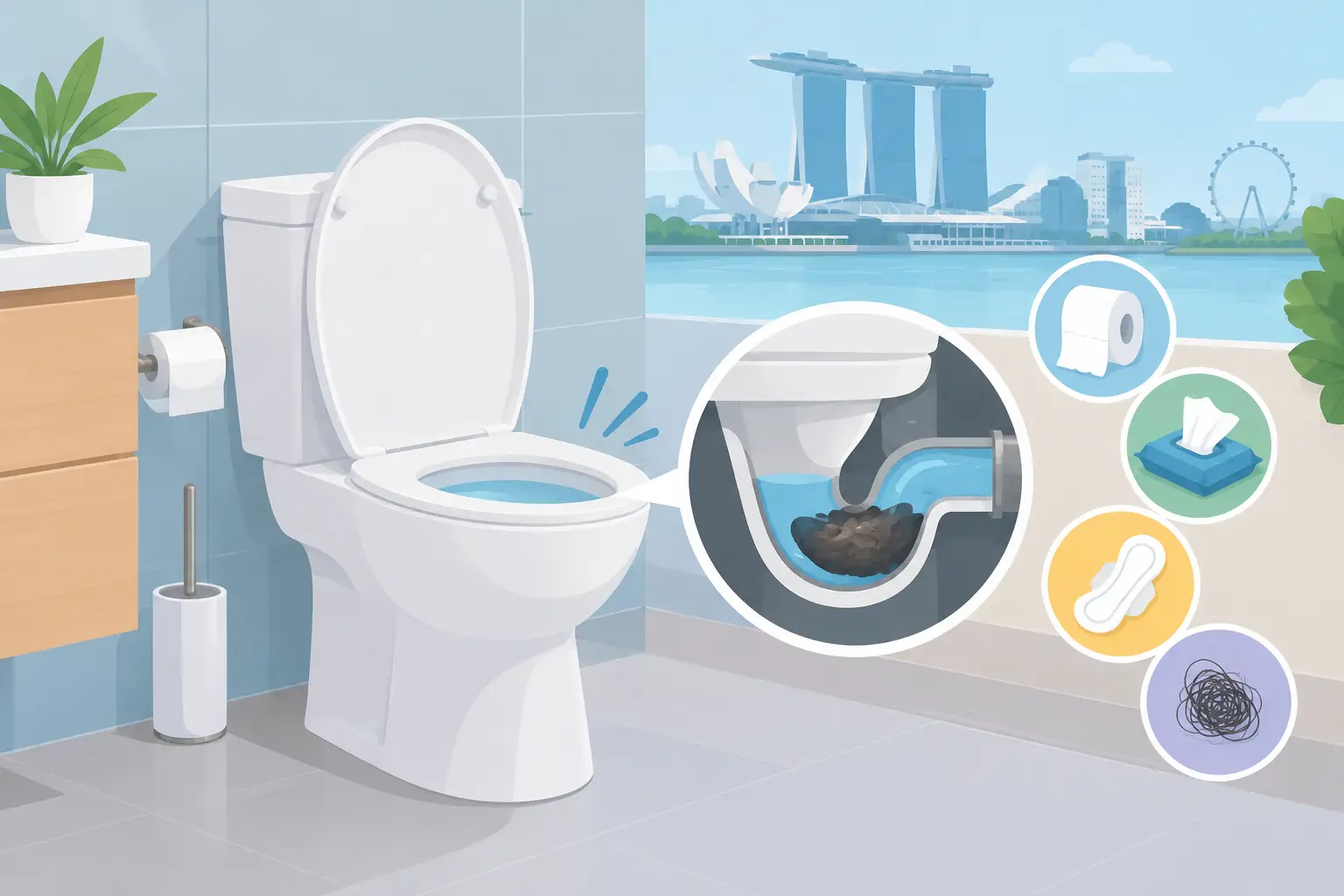
A toilet that rises instead of flushing down is not a minor inconvenience, especially in an HDB flat or Condo unit with only one bathroom. One more flush can send dirty water across the floor, into cabinet bases, and through gaps around the WC pan. The question is usually simple: what causes toilet choking and can it be cleared without turning a small blockage into a plumbing emergency?
Most toilet chokes are caused by unsuitable material entering the bowl, but Singapore homes have a few added factors: older shared pipes, renovation debris, low-flush cisterns, and drainage stacks that serve multiple units. The right fix depends on where the blockage sits. A choke inside your own WC trap is very different from a problem deeper in the soil pipe.
What causes toilet choking most often?
The toilet is designed for human waste and a reasonable amount of toilet paper. It is not a general disposal point. Many household products are marketed as “flushable”, yet they do not break down quickly enough in the pipework. They can snag at bends, collect more waste behind them, and eventually stop the flush completely.
The usual culprits are wet wipes, tissue paper used in large quantities, sanitary pads, tampons, cotton buds, dental floss, facial tissues, diapers, and paper towels. Kitchen towels are particularly troublesome because they hold together when wet. Small objects also cause sudden choking: children’s toys, air freshener blocks that slip into the bowl, cleaning caps, and toothbrushes are all items plumbers regularly retrieve.
In Singapore, shared bathrooms can make the problem harder to trace. A tenant may flush wipes once or twice without seeing an immediate issue. Days later, another person uses more tissue, and the partially blocked pipe finally chokes. The final flush is not always the original cause.
Too much toilet paper at one time
Even ordinary toilet paper can create a blockage when a very large wad is flushed at once, particularly in older flats with ageing pipework or a toilet with a weak flush. This is usually one of the easier problems to clear with a proper flange plunger, provided the water is not already near the rim.
If the toilet repeatedly struggles after normal use, do not assume everyone must use less paper forever. There may be a partial obstruction further down, an underperforming cistern, or poor flow caused by an internal fault in the WC pan.
Wet wipes and hygiene products
Wet wipes are the most common avoidable cause of serious toilet choking. They remain largely intact in water and can bind together like fabric. Sanitary pads and diapers expand when wet, so they can fill a pipe bend very quickly.
Do not attempt to break these down with strong chemical drain liquid. Chemicals rarely dissolve the material, and they can splash back when you later use a plunger or when a plumber opens the line. Place all wipes and hygiene products in a lined bin instead.
When the problem is not inside your toilet
A choke can be local to one WC, or it can come from the main soil pipe serving the unit or building. Knowing the difference prevents wasted money on repeated minor clearing.
If only one toilet is slow, gurgling, or backing up while other sanitary fittings drain normally, the blockage is likely in that toilet trap or its branch pipe. If several toilets are slow, or you notice floor trap water rising when the toilet is flushed, the issue may be further down the line.
In an HDB flat, the responsibility can depend on the exact pipe section and cause. Internal fittings and misuse-related blockages are commonly the owner’s responsibility. A defect in a shared stack or common pipe may need assessment through the relevant managing party or Town Council. In a Condo, report a suspected common-pipe issue to the MCST or management office promptly, especially if wastewater is appearing at a floor trap or affecting more than one unit.
For landlords and property agents, photographs and a short video of the flush behaviour are useful records. They help establish whether the blockage appears isolated to the unit and let a handyman or plumber arrive prepared rather than charging for repeated visits.
Weak flushing can lead to repeat choking
Not every apparent choke is caused by something stuck in the pipe. Sometimes the toilet simply does not deliver enough water or force to move waste through properly. This creates repeat partial blockages that become worse over time.
Common signs include a lazy swirl, a cistern that does not refill fully, a flush button that sticks, or water continuing to run into the bowl after flushing. A worn flush valve, incorrect water level, blocked rim holes, or scale build-up can all reduce flush performance.
Modern water-saving toilets use less water by design, which is sensible, but they still need the correct volume and a healthy flush mechanism. If the cistern is faulty, repeatedly pressing the flush button may overflow the bowl rather than solve the choke. Repairing the cistern first can be cheaper than calling for pipe clearing several times a year.
Warning signs to act on before an overflow
A complete choke rarely happens without some warning. The bowl may drain slowly after flushing, make bubbling sounds, or leave the water level unusually high. You might also smell sewer gas around the bathroom, see waste return into a nearby floor trap, or find that the toilet needs two flushes more often than before.
Do not ignore these signs because the toilet still eventually clears. A partial blockage gives waste something to catch on, and the next large flush can cause a full backup. In a bathroom with timber vanity panels or a cabinet beside the WC, overflow water can soak into board edges and trigger swelling, peeling laminate, and mould growth. Fast action can save both the plumbing bill and the carpentry repair bill.
What you can safely do first
Stop flushing the moment the water rises higher than usual. Remove the cistern lid only if you know where the shut-off valve is, then close the water supply valve near the toilet to prevent accidental refilling. Keep children away and protect the floor with old towels if water has escaped.
For a minor blockage, use a proper toilet flange plunger, not a small flat sink plunger. Ensure there is enough water in the bowl to cover the rubber cup, create a seal over the outlet, and use controlled firm strokes. Do not jab aggressively. Several steady plunges are more effective and reduce the risk of splashing dirty water.
A toilet auger can reach deeper than a plunger, but it must be used carefully to avoid scratching the ceramic or damaging internal components. It is not suitable for every situation, especially if an object may be lodged in the trap. Never push wire hangers, bamboo sticks, mops, or metal rods into the bowl. These improvised tools often compact the blockage deeper or crack the WC pan.
Avoid boiling water as well. Sudden high heat can damage ceramic or seals, and hot water does not remove wipes, pads, or solid objects. Chemical drain cleaners are equally poor value for a toilet choke. They are harsh, unpredictable, and can make professional clearing more hazardous.
When to call for professional toilet choke clearing
Arrange professional help if plunging does not clear the blockage, wastewater has overflowed, the same toilet chokes repeatedly, or more than one drainage point is affected. A proper assessment may involve manual augering, removing a lodged object, checking the cistern, or using suitable drain-clearing equipment for a deeper line blockage.
Be direct when booking. Share a photo of the toilet, tell the technician whether water is rising or slowly draining, and mention anything that may have been flushed. If the flat is in a Condo, confirm any access rules, lift protection requirements, or working-hour restrictions with management before the appointment. Clear information means less downtime and fewer surprises.
HRD Professional Handyman provides straightforward toilet choke checks and plumbing repairs across Singapore, with upfront discussion of the likely work before proceeding. Send clear photos or a short video by WhatsApp for a transparent quote and fast advice on whether you need urgent clearing.
A toilet should disappear into the background of daily life. Keep wipes, hygiene products and small objects out of the bowl, respond at the first slow flush, and you are far less likely to face the most unpleasant kind of bathroom repair.
0 Comments