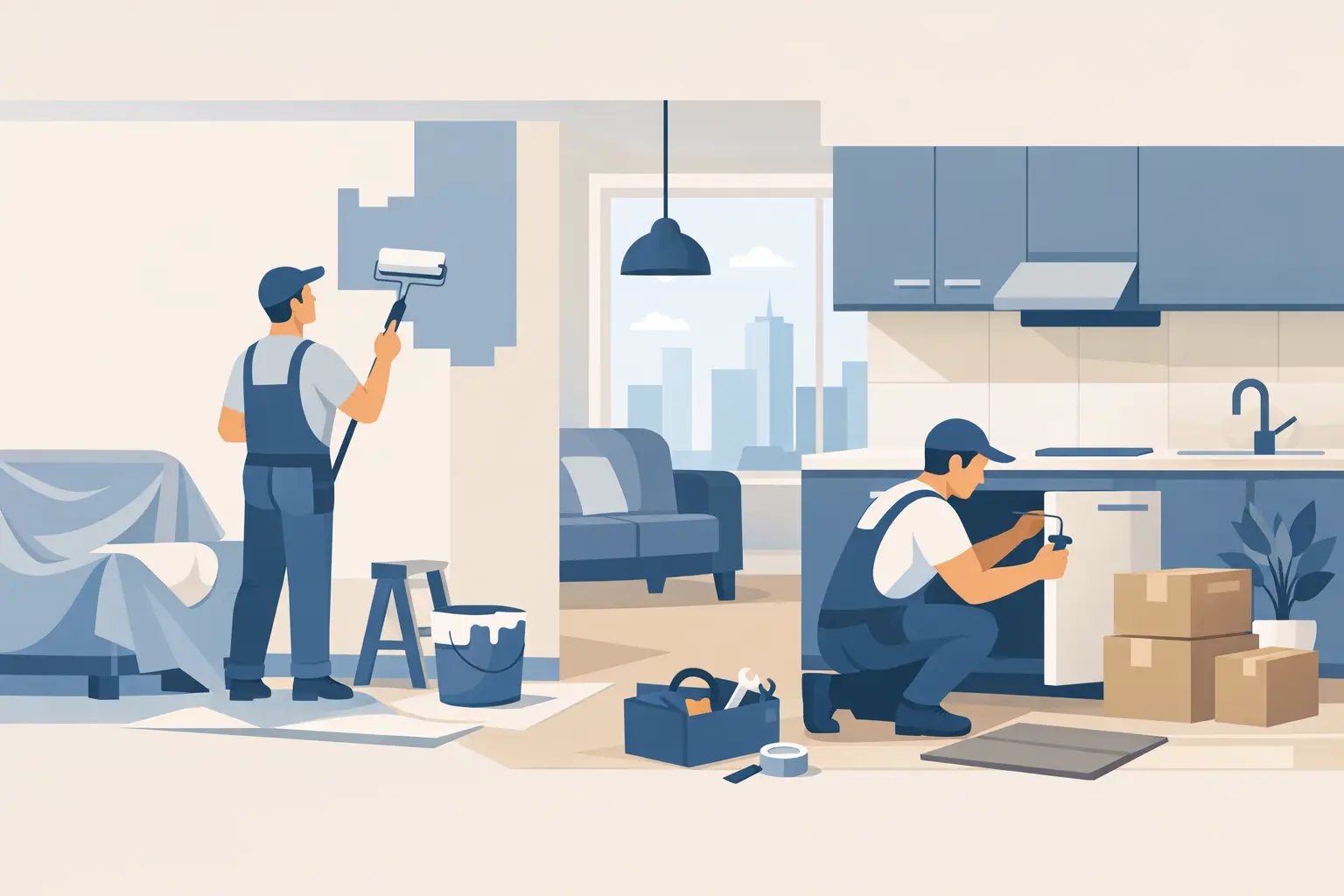
A small nail hole can become a deduction. A swollen kitchen cabinet below the sink can become a dispute over an entire cabinet run. What people call rental flat make good works is the practical job of returning an HDB flat or Condo unit to the agreed handover condition – without paying for damage you did not cause, or accepting a rushed, poor-quality repair.
For tenants, the goal is to protect the security deposit. For landlords and property agents, it is to get the unit ready for the next viewing or tenant quickly. Both sides need clear evidence, a sensible repair scope and workmanship that will hold up after the keys change hands.
What rental flat make good works usually cover
The tenancy agreement and the original condition report are the starting point. They matter more than assumptions such as “normal wear and tear” or “the owner will handle it”. Check what was present at move-in, what was installed later and whether written approval was given for alterations.
Common make good work includes patching drilled holes in solid walls, removing adhesive hooks and TV brackets, repainting affected areas, replacing damaged light fittings, repairing loose cabinet doors and removing tenant-installed shelves. The flat should also be properly cleaned, including kitchen surfaces, toilets, air-conditioner areas and built-in storage.
However, not every imperfection justifies a full replacement. Minor paint fading, ordinary wear to flooring and ageing silicone are different from a cracked kitchen top, burnt laminate, broken drawer runners or water damage caused by an unattended leak. The real question is whether the condition is reasonable for the flat’s age and whether the damage was caused during the tenancy.
A good handyman does not simply quote for the largest possible job. If one kitchen cabinet base panel is rotten from a water tap or pipe leak, it may be possible to replace only the affected plinth, carcass section or door panel. That is often far cheaper and faster than stripping out a whole kitchen cabinet system that is otherwise sound.
Start with the handover evidence, not the repair quote
Before anyone starts work, walk through the unit with the tenancy agreement, inventory list and move-in photographs. Take fresh, date-stamped photos and short videos in daylight. Open every cabinet, test doors and drawers, switch on lights, run the water tap and flush each toilet.
Pay close attention to areas where Singapore’s heat and humidity expose problems quickly: under-sink cabinets, bathroom vanity units, window-side carpentry, laminate flooring near balcony doors and wardrobes against external walls. A cabinet may look acceptable from the front but have swollen chipboard or mould behind the plinth.
For a Condo unit, check whether any work requires MCST approval, especially drilling, noisy repair work, disposal arrangements or contractor access. Many developments have prescribed working hours and require a deposit or renovation form even for straightforward jobs. For HDB flats, remember that common corridor issues, façade matters and some shared building defects may fall under Town Council responsibilities, while damage inside the unit is generally the owner’s or tenant’s issue depending on the agreement.
If there is a disagreement, photographs from move-in and move-out are more useful than a long WhatsApp argument. Record the exact location, such as “two screw holes behind bedroom door” or “water-swollen cabinet side panel below kitchen sink”, rather than writing “damage in kitchen”.
The repairs that often cause deposit disputes
Wall holes, mounted items and paint touch-ups
Singapore flats are built with solid concrete walls. Removing a wall-mounted TV, mirror, curtain rail or shelf can leave anchors, chipped paint and uneven patches. Pulling out anchors without repairing the hole properly often creates a larger crater.
The correct fix depends on wall type, hole size and paint condition. Small screw holes can be filled, sanded and touched up. Larger mounting holes may need stronger filler and a wider paint blend. If the original paint colour is unknown or the surrounding wall has faded, a small patch can look worse than the hole. In that case, repainting the full wall is usually the cleaner option.
Do not drill or mount anything on a bomb shelter door, frame or ventilation areas. These are not ordinary walls. If a previous installation has affected a bomb shelter area, assess it carefully before promising a cosmetic fix.
Water-damaged kitchen cabinets
This is one of the most expensive-looking problems in a rental flat, and one of the most commonly overquoted. Water damage under the kitchen sink usually starts with a slow pipe joint leak, loose waste trap, damaged seal around the kitchen top or splashing from the water tap.
First, stop the leak. Replacing swollen wood while the pipe still drips is wasted money. Then inspect the cabinet base, side panels, back panel, hinges and adjacent units. Fractional carpentry repair works when damage is contained and the existing cabinet structure remains stable. The affected panel can be removed and rebuilt with suitable material, then colour-matched as closely as practical.
If moisture has spread through several carcasses, the kitchen top is compromised or termites are present, a wider replacement may be more sensible. An honest assessment should explain that difference before work begins.
Electrical fittings and plumbing changes
Tenants sometimes replace lights, install ceiling fans, add water heaters or change water taps for convenience. At handover, these must either remain with the landlord’s agreement or be reinstated safely.
Electrical work is not a cosmetic job. Loose outlets, exposed wiring, faulty switches and tripping circuits need proper troubleshooting, not a quick cover-up before inspection. Likewise, a leaking toilet inlet hose or damaged basin trap should be fixed at the source. Water stains and swollen cabinets will return if the underlying fault remains.
Avoid false savings on cleaning and repairs
A cheap patch job can cost more when the landlord rejects it and appoints another contractor. The same applies to end-of-tenancy cleaning. Grease inside the cooker hood area, mouldy silicone, clogged floor traps and dust on fan blades are easy to miss during a rushed clean but obvious at inspection.
That said, do not agree to a blanket instruction to “restore everything to brand new”. A ten-year-old flat will not look like a newly completed BTO unit, and it should not be priced as though it must. Ask for each deduction or repair request to be tied to a specific item, photo and agreed tenancy obligation.
Where an owner wants upgrades before reletting – new lights, a different paint colour, additional shelving or a full kitchen refresh – keep those improvements separate from genuine make good work. This prevents tenants from being charged for the landlord’s renovation plans.
A practical handover sequence
Give yourself enough time. For a straightforward unit, inspect the flat two to three weeks before handover, not the night before. This allows time for paint to dry, replacement parts to arrive and any hidden leak to be resolved.
Remove personal items first, then photograph the empty unit. Confirm the repair scope in writing before works begin. Once repairs and cleaning are complete, conduct a final test of lights, water taps, toilets, doors, windows and air-conditioners. Take a final set of photos and record meter readings where applicable.
Keep receipts, invoices and WhatsApp messages. For landlords, these support a fair deduction if one is needed. For tenants, they show that agreed works were completed and reduce the chance of vague last-minute claims.
FAQs about rental flat make good works
Is repainting always required when a tenant moves out?
No. It depends on the tenancy agreement, paint condition and whether there is damage beyond ordinary use. Small marks may be cleaned or touched up, while extensive stains, unauthorised paint colours and damaged walls may require repainting.
Who pays for a leaking kitchen sink cabinet?
It depends on the cause. A pre-existing plumbing defect or ageing fitting may be the landlord’s responsibility. Damage caused by misuse, delayed reporting or a tenant-installed fitting may fall to the tenant. Document the leak as soon as it is found, because delay can turn a minor plumbing repair into major carpentry damage.
Can a tenant repair wall holes themselves?
Small holes can be repaired well if the tenant has the right materials and can match the finish. For visible areas, large anchors or multiple TV bracket holes, professional patching and painting usually gives a better handover result.
Must a landlord use the tenant’s contractor?
Usually no, but the tenant should be allowed a reasonable opportunity to rectify agreed damage before a deduction is made, subject to the tenancy terms and handover timeline. Clear written communication avoids unnecessary disputes.
Do not wait until key collection day to find out what needs fixing. Send clear photos of wall holes, damaged cabinets, leaks, loose fittings or handover defects by WhatsApp to HRD Professional Handyman for a fast, transparent quote. You will know whether a targeted repair is enough, what the work involves and what it costs before the job starts – so the flat can be handed over cleanly, safely and without paying for repairs that were never necessary.
0 Comments