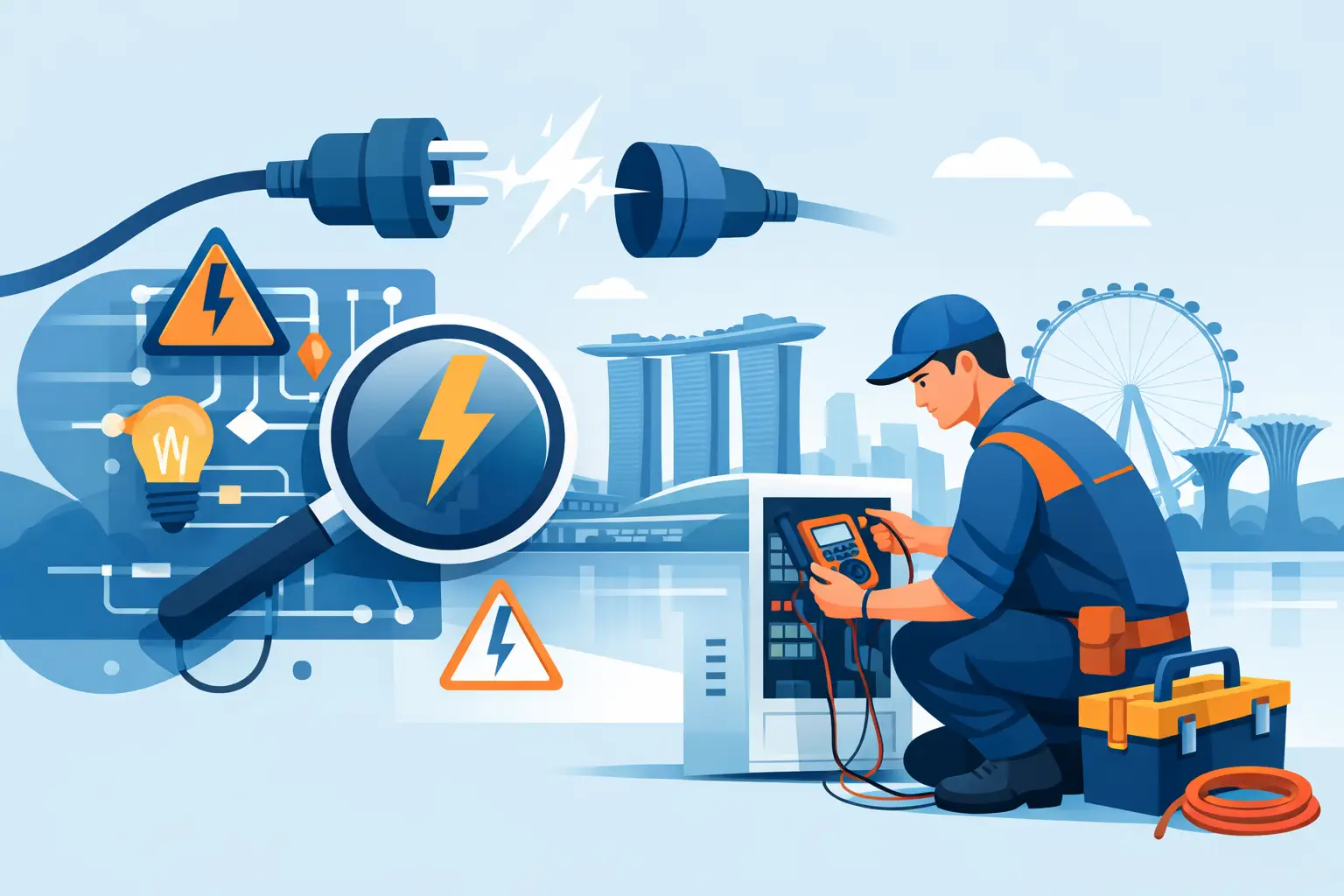
A tripping circuit breaker at 11pm is not a small inconvenience when the fridge, Wi-Fi and kitchen lights are all on that same circuit. A proper electrical troubleshooting service finds the actual fault before anyone starts replacing parts blindly. For Singapore homes and offices, that means checking the affected circuit, the DB box, sockets, switches and connected appliances methodically – then explaining what needs repair, what can wait, and what it will cost.
When an electrical fault needs prompt attention
Some electrical problems are obvious. Your power trips the moment you turn on the water heater, a socket sparks when a plug is inserted, or the lights flicker across several rooms. Others are quieter: a burning smell near a switch, a warm socket faceplate, a circuit breaker that trips only after an hour, or a ceiling light that keeps failing despite new bulbs.
Do not keep resetting a breaker repeatedly to make the problem disappear. A breaker is doing its job by cutting power when it detects an overload, short circuit or earth leakage condition. Resetting it without identifying the cause can damage appliances and, in a worst-case situation, create a fire or shock risk.
Switch off the affected circuit if it is safe to do so. Keep children away from the area, unplug accessible appliances, and arrange a fault check. If there is smoke, visible arcing, a strong burning smell or water entering electrical points, isolate power at the main switch only if you can do so safely and seek urgent professional help.
What a proper electrical troubleshooting service checks
Fast service should not mean guesswork. In an HDB flat, Condo unit or office, the first job is to narrow down whether the fault is coming from the supply, the circuit, a fitting, an appliance or moisture damage. The answer affects both safety and price.
The DB box and circuit breaker behaviour
The distribution board, commonly called the DB box, tells an experienced technician a great deal. Is one MCB tripping, or is the RCCB or ELCB cutting power to multiple circuits? Does it trip instantly, only when a particular appliance is used, or after rain and high humidity?
A single tripping circuit may point to a faulty socket, damaged cable, overloaded extension lead or one appliance. A whole-home trip can indicate earth leakage or a more significant fault. The repair is not always a major rewiring job. Sometimes it is a failing water heater, an old power strip hidden behind the TV console, or moisture reaching a kitchen socket near the sink.
Sockets, switches and light points
Loose sockets, cracked switches and dimming lights are not merely cosmetic issues. In older HDB flats, wear inside a frequently used socket can create poor contact and heat buildup. In renovated units, a poorly connected light fitting or concealed wiring disturbed during drilling may only show symptoms later.
Testing should include the points you actually use, not only the one that stopped working. For example, if the kitchen socket circuit trips, the checks may cover the cooker hood, fridge point, microwave socket and nearby water heater isolator where applicable. This avoids a quick reset followed by another trip the next morning.
Appliances and hidden overloads
Many faults are caused by what is plugged in, rather than the fixed wiring. Singapore homes often run a kettle, air fryer, coffee machine and microwave from limited kitchen socket points. Add an extension lead under the kitchen top, and the circuit can be pushed beyond what it should carry.
The solution depends on the load and existing circuit arrangement. Removing a daisy-chained adaptor may be enough. If your household genuinely needs more power points, a correctly planned electrical installation may be the safer long-term answer. Cheap multi-plug adaptors are not a substitute for proper capacity.
Water and humidity exposure
Singapore humidity is hard on homes, especially in bathrooms, service yards and kitchens. A slow leak under the sink can rot a cabinet base while also wetting cables, socket connections or an extension lead tucked out of sight. Condensation around an air-conditioner trunking route can produce similar trouble.
Electrical repairs and water-leak repairs should be handled together where they meet. Fixing a socket without stopping the leak is false economy. The same practical approach applies to damaged kitchen cabinets: replace only the swollen or rot-affected panel or carcass section when the rest is structurally sound, instead of paying for a full kitchen rebuild.
Common electrical problems in Singapore properties
New BTO flats can have defects even when everything looks fresh. A loose connection, faulty light point or incorrectly functioning switch should be documented early, particularly while you are within the relevant defects period. Take clear photos and videos showing the fault, including the DB box label and which breaker trips. This gives you a useful record for the developer or managing party.
Older HDB flats may have aged fittings, legacy wiring arrangements or socket points that no longer match modern appliance use. A direct inspection matters more than assumptions based on the flat’s age. Some older homes have been partly upgraded; others have not.
Condo residents also need to consider MCST rules. Work involving common areas, external walls, ceiling access or approved contractor procedures may require management approval. Internal socket and lighting faults are usually more straightforward, but do not authorise drilling, cable routing or access work that conflicts with your Condo’s renovation rules.
In landed properties, faults can extend beyond internal room circuits. Outdoor lighting, gate motors, water features and weather-exposed connections need particular care. Rain, ageing conduit and pest damage can all affect cable condition.
For offices, downtime is usually the main pressure point. One failed circuit can take out workstations, routers, pantry equipment or display lighting. The fastest route back to normal is to isolate the affected load, confirm the source and repair only what is necessary – not disrupt the entire office with unnecessary work.
What you can do before the technician arrives
You do not need to touch live wiring to provide useful information. Note what happened immediately before the trip, whether a particular appliance was running, and which areas have lost power. A photo of the DB box with the tripped switch visible is particularly helpful.
Unplug portable appliances on the affected circuit if they are safe to reach. Do not open socket faceplates, remove the DB cover or attempt to reconnect burnt wires. Also avoid using tape as a repair for cracked plugs or frayed appliance cords.
If a water leak is nearby, take photos of both the leak and the affected electrical point from a safe distance. This helps establish whether the work requires a coordinated plumbing, cabinet and electrical repair rather than separate call-outs that leave the original cause untouched.
Clear pricing starts with the right diagnosis
The cheapest quoted repair is not always the lowest-cost outcome. A contractor who immediately recommends replacing every socket, rewiring a whole room or changing the full DB box without testing may be selling scope rather than solving the fault. Equally, a tiny patch that ignores a burnt connection or recurring leak is not a real repair.
A transparent service should tell you the call-out or inspection charge, what testing is being carried out, the likely repair options and any parts required before work proceeds. If a job requires licensed electrical work or further investigation beyond the initial fault, that should be stated plainly. No surprise transport charges after the technician has arrived, and no vague promise that the price will be decided only when the bill is presented.
Who is responsible: owner, tenant, Town Council or MCST?
Responsibility depends on where the fault sits and what caused it. A tenant may be responsible for damage from misuse or a privately owned appliance, while the owner generally handles fixed electrical fittings within the unit. Town Council responsibility can apply to common-property or estate infrastructure, not ordinary internal sockets in an HDB flat. In a Condo, the MCST may be involved where a fault affects common property or shared services.
When in doubt, document the issue first. Clear photos, the circuit affected and the timing of the fault make it easier to speak to your landlord, property agent, Town Council or Condo management without losing days to back-and-forth messages.
Get the fault checked before it becomes property damage
Electrical faults rarely become less inconvenient with time. A breaker that trips once a month can become a full power loss, while a warm socket near a leaking kitchen cabinet can become two repairs instead of one. The sensible move is to identify the cause early and pay only for the repair your property actually needs.
For a fast, transparent assessment, send photos of the affected socket, switch, light point or DB box by WhatsApp to HRD Professional Handyman. Include your property type, location and a short description of when the fault occurs. You will get a clear view of the likely work before your day is disrupted further.

0 Comments