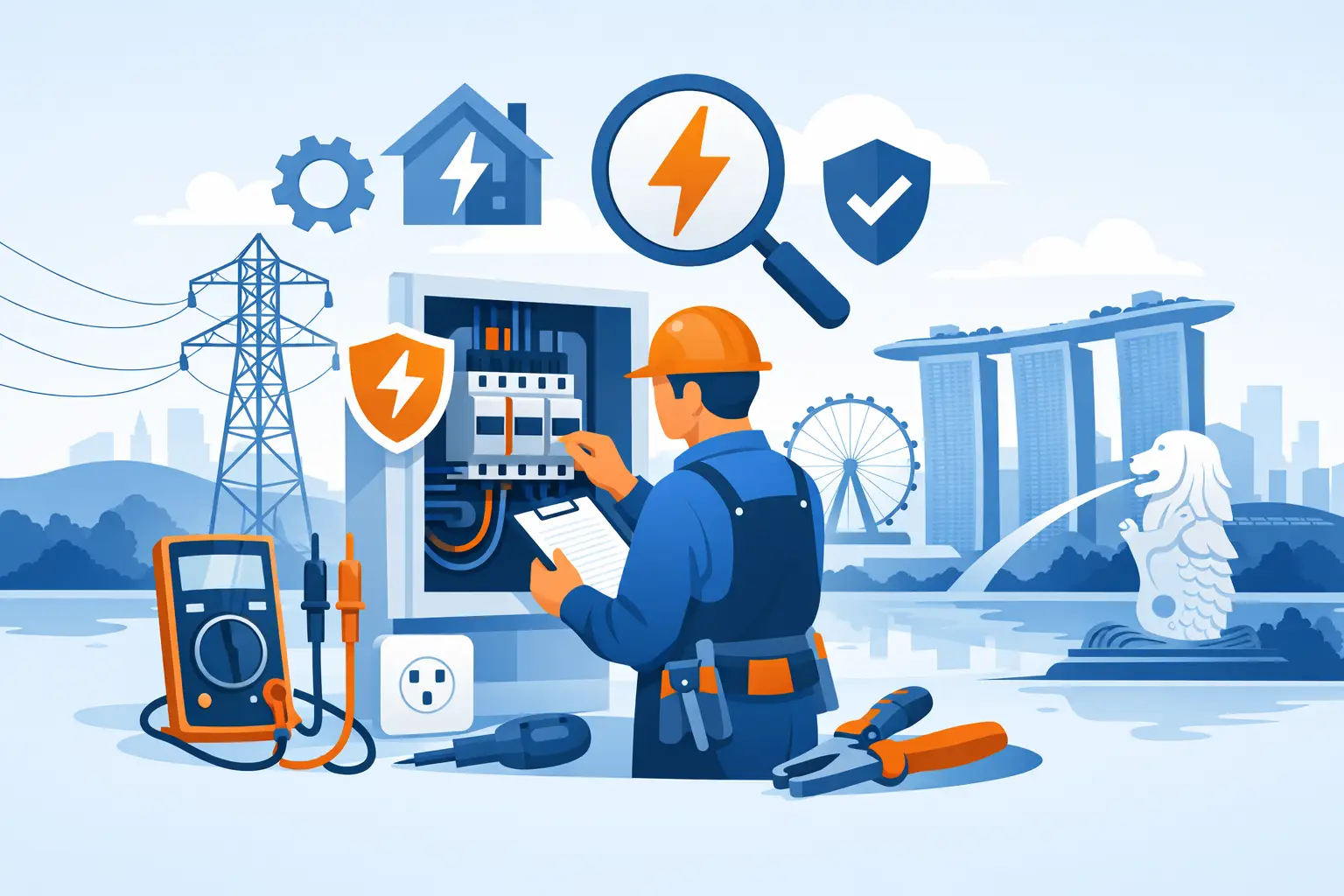
A tripping breaker at 10.30pm is not just irritating. In a Singapore flat or office, it can point to heat build-up behind a socket, ageing wiring in a damp service yard, or a DB box that has not been checked properly in years. This electrical safety inspection guide is written for people who want clear answers before a small fault turns into burnt wiring, appliance damage, or a dangerous shock risk.
Most property owners do not need a lecture on theory. They need to know what to look for, what is normal, what is not, and when to stop touching anything and call a professional. That is especially true in Singapore, where humidity, heavy daily air-con use, compact kitchen layouts, and frequent high-load appliances can put real stress on a home electrical system.
Why an electrical safety inspection matters in Singapore
Electrical faults rarely announce themselves politely. More often, they show up as little patterns people ignore for too long – lights flickering when the kettle runs, a power point that feels warm, a water heater that trips the breaker now and then, or a burning smell that disappears before anyone finds the source.
In HDB flats, newer BTO units, older resale homes, Condo units, and landed properties, the risk profile is different. Older flats may have ageing wiring or past alteration work of uncertain quality. Newer units can still have defects, poor accessory installation, or overloaded multi-plug usage because there are never quite enough power points where people want them. In offices, the usual problem is load creep. One printer becomes three, one extension lead becomes a cluster, and suddenly one circuit is doing too much.
An inspection is not about finding problems for the sake of it. It is about catching the expensive and dangerous ones early, before they affect your family, tenant, staff, or property.
Electrical safety inspection guide – what should actually be checked
A proper inspection starts at the distribution board, because that is the control centre of the property. The DB box should be clearly labelled, accessible, and free from scorching marks, corrosion, cracked casings, or loose blanking plates. If labels are missing or inaccurate, that is not a minor paperwork issue. It slows down fault isolation during an emergency.
The next thing is breaker behaviour. Breakers should not trip randomly. If one keeps tripping, there is usually a reason – overload, earth leakage, moisture ingress, a faulty appliance, or a wiring defect. Resetting it again and again without finding the cause is not a fix.
Sockets and switches then need close attention. Burn marks, buzzing sounds, cracked faceplates, wobbling fittings, or discolouration around the edges can point to overheating or loose connections. In Singapore homes, this often happens in kitchen areas, utility zones, and bedrooms where extension use grows over time. A socket should not feel hot after normal use.
Fixed appliances also matter. Water heaters, hoods, ovens, induction units, air-con isolators, washing machines, and storage heaters place different demands on a circuit. If they were added after the original fit-out, the installation quality matters more than many owners realise. A good inspection checks whether the load arrangement makes sense and whether the isolation points are suitable and safely installed.
Lighting points are often ignored because people assume a flickering light means a bad bulb. Sometimes it does. Sometimes it means a loose connection, failing driver, poor switch contact, or a broader circuit issue. If multiple fittings flicker, that is a sign to investigate rather than replace lamps one by one and hope for the best.
Signs your property should not wait for a full inspection
Some warning signs mean you should arrange a check soon, not next month when your schedule clears up. If you smell burning near a switch or socket, feel tingling when touching an appliance, hear crackling from a power point, or see repeated tripping from the same circuit, stop using that point if it is safe to do so.
Water and electricity are a particularly bad combination in local homes. We see this around kitchen sinks, service yards, water heater points, and toilet areas where moisture can travel further than expected. If there has been a leak into cabinetry or along a wall, do not assume the damage is only cosmetic. Damp can affect concealed wiring routes, accessories, or appliance connections.
Renovation history matters too. If you bought a resale flat and have no clear record of previous electrical work, an inspection is a sensible step. The same applies to landlords between tenancies and office managers taking over a unit with old fit-out leftovers.
What homeowners can check safely, and what they should not
There is a useful middle ground between doing nothing and trying to become your own electrician. You can safely observe patterns. Note which circuit trips, what appliances were running at the time, whether a socket is physically loose, and whether issues happen during rain, after cleaning, or only under heavy use.
You can also check for obvious non-technical risks such as overloaded extension leads, adaptors stacked into one point, cables trapped under furniture, or power points blocked by carpentry that makes isolation difficult. In many HDB and Condo units, custom carpentry looks neat but leaves no practical access when something goes wrong.
What you should not do is open sockets, remove DB box covers, touch suspected live parts, or keep resetting a breaker that immediately trips. You should also not ignore a fault because the power came back after a while. Intermittent faults are often harder to trace, and that is exactly why early testing matters.
HDB, Condo and landed property differences
An electrical safety inspection guide should be local, because property type affects both access and responsibility. In HDB flats, internal unit wiring is generally the owner’s responsibility, while common area issues may fall elsewhere. If a fault is inside the flat, waiting for someone else to solve it can waste time.
In Condo units, access rules can slow urgent work if the management office requires permit procedures or approved timing. That does not reduce the need for inspection. It just means work should be planned properly, especially if shutdowns or noisy access are involved.
Landed properties can have more complex layouts, outdoor points, gate systems, garden lighting, and older extension work done across different periods. In those properties, tracing faults can take longer because additions may not follow one neat installation phase.
When inspections are especially worth doing
There are a few situations where inspection is not just advisable but financially sensible. Before renting out a unit, it helps reduce disputes over what failed during tenancy. Before moving into a resale property, it helps you separate cosmetic renovation wants from actual safety needs. After a leak, it helps confirm whether moisture reached any live components. After repeated air-con, oven, or water heater issues, it helps determine whether the appliance is the problem or the supply arrangement is poor.
This is also relevant for offices with workstations, pantry appliances, and server or router loads. One hidden fault can cause downtime that costs more than the inspection itself.
What a good electrician should tell you plainly
You do not want vague phrases and theatrical concern. You want direct findings. Is the breaker undersized, failing, or doing its job because the circuit is overloaded? Is the socket damaged and ready for replacement, or simply loose at the faceplate? Is the fault isolated to one appliance, one circuit, or a broader wiring issue?
A trustworthy professional will also tell you when a full rewiring job is not necessary. Sometimes the real fix is limited and specific – replacing damaged accessories, isolating a faulty appliance point, correcting a bad connection, or sorting out one wet area issue. Honest advice saves money and avoids unnecessary hacking.
That straightforward approach is the same reason many customers use HRD Professional Handyman for electrical troubleshooting and repair work. The goal is not to inflate a small problem into a renovation-scale bill. The goal is to make the property safe, working, and clearly priced.
How to prepare for an electrical safety inspection
If you want the inspection to move faster, gather the practical details first. Note when the fault started, which rooms are affected, whether any recent renovation or mounting work happened, and whether there was a leak or appliance change around the same period. Clear access to the DB box, sockets, and built-in carpentry panels if relevant.
Photos help, especially for scorch marks, cracked switches, tripped breakers, or water-damaged areas near power points. In Singapore homes where every minute matters, that can cut out a lot of guesswork before the technician even arrives.
If your flat, Condo unit, or office has electrical issues you do not fully trust, do not wait for a complete failure. Send clear photos on WhatsApp and explain what is happening. You should get a direct, transparent assessment of what can be checked, what may need repair, and what it is likely to cost before work starts. That is the fastest way to protect your time, your property, and the people using it every day.
A safe electrical system should not be something you hope for. It should be something you verify before the next trip, spark, or burning smell decides the timing for you.

0 Comments